
 English
 Español
 عربى
عربى


Industry News
Anti-Scratch PP Decorative Film: Properties, Applications & Selection
2026-07-07
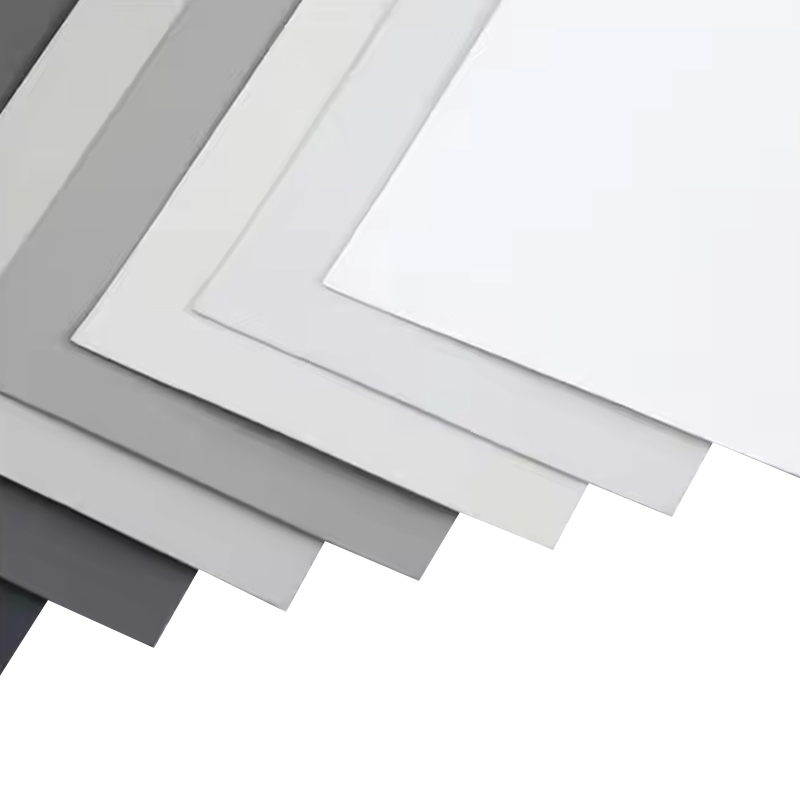
Anti-scratch polypropylene decorative film achieves its surface protection through a combination of hard-coated top layers and precisely engineered polymer formulations that raise the surface pencil hardness from the base PP value of 2B-3B up to F, H, or even 2H. The core challenge is that native polypropylene is inherently soft, with a low surface energy and a tendency to scratch white under even mild abrasion. The anti-scratch solution is not a single technology but a layered system: a biaxially oriented polypropylene base film for dimensional stability, a decorative print or pigment layer for the visual design, and a clear, cross-linked hard coat applied as the outermost surface. This top layer provides the actual scratch resistance while the PP substrate retains the conformability, lightweight nature, and cost efficiency that make the film an attractive decorative material for automotive interiors, consumer electronics, and appliance panels.
Content
- 1 The Scratch Challenge Intrinsic to Polypropylene
- 2 Hard Coat Chemistry and Surface Engineering
- 3 The Role of BOPP Film Substrate Quality
- 4 Decorative Integration: Print, Pigment, and Surface Texture
- 5 Testing and Quantifying Scratch Performance
- 6 Application-Specific Selection Criteria
- 7 Thermoforming and Post-Processing Compatibility
- 8 Cost-Performance Optimization and Future Directions
The Scratch Challenge Intrinsic to Polypropylene
Polypropylene is a semi-crystalline thermoplastic with a glass transition temperature hovering around 0°C. At room temperature, a significant fraction of the polymer exists in a rubbery amorphous state rather than a rigid crystalline state. When a sharp asperity is dragged across the surface, the amorphous regions yield and plastically deform. This deformation creates micro-grooves and drawn-out fibrils that scatter visible light, producing the familiar white scratch mark even when minimal material has actually been removed. The scratch visibility is disproportionately amplified relative to the actual depth of damage.
The industry-standard test for quantifying scratch resistance in PP films is the pencil hardness test per ASTM D3363, where graded graphite pencils are dragged across the surface at a 45-degree angle under a fixed load of 500g or 1kg. Untreated PP film gouges and whitens under a 2B pencil, which is essentially the hardness of a standard writing pencil. An effective anti-scratch film must survive a scratch from at least an H pencil without visible deformation, and premium automotive-specification films are tested up to 2H under a 1kg load.
Hard Coat Chemistry and Surface Engineering
The anti-scratch function is delivered almost entirely by a transparent hard coat applied to the decorative film surface. The three dominant chemistries used in commercial anti-scratch PP films are outlined in the table below, each with distinct trade-offs between scratch performance, flexibility, and cost.
| Hard Coat Chemistry | Achievable Pencil Hardness | Flexibility / Formability | Typical Application |
|---|---|---|---|
| UV-Cured Acrylate | H to 3H | Good, survives thermoforming | Automotive interior trim, formed parts |
| Thermal-Cured Melamine | H to 2H | Moderate, risk of micro-cracking on bend | Flat panel lamination, appliance fascias |
| Polysiloxane / Silicone Hard Coat | F to H | Excellent, retains flexibility at low temp | Flexible electronics covers, curved surfaces |
UV-cured acrylate systems are the dominant technology in volume applications because they cure in seconds under UV lamps, enabling high-speed roll-to-roll production. The acrylate oligomers are formulated with multi-functional monomers that create a highly cross-linked network. The cross-link density directly correlates with scratch resistance: higher cross-linking raises the hardness but reduces the elongation at break, creating a brittle coating that may craze when the film is subsequently thermoformed into a three-dimensional shape. The formulation art is balancing these competing requirements for the specific post-processing the film will undergo.
The Role of BOPP Film Substrate Quality
The hard coat receives most of the attention, but the base film substrate is an equal partner in scratch performance. The hard coat is typically between 2 and 10 microns thick. Under the concentrated point load of a scratch event, the stress field extends well beyond the coating into the underlying PP substrate. If the substrate yields, the coating fractures from below. This is called the "eggshell effect," where a hard but thin shell collapses because its soft support deforms.
Biaxially oriented polypropylene (BOPP) film is the preferred substrate because the orientation process stretches the polymer chains in both the machine and transverse directions, inducing significant strain hardening. This increases the surface hardness of the raw PP from the soft, as-cast state to a much firmer film. High-quality BOPP for anti-scratch decorative applications is typically produced with a balanced orientation ratio of approximately 5:1 in the machine direction and 8:1 in the transverse direction. This anisotropic stretching creates a film with a higher modulus in the transverse direction, which helps resist the lateral deformation that occurs during a scratch event. Some specialty films incorporate a very thin co-extruded surface layer of a harder polyolefin copolymer, such as a PP-cyclic olefin copolymer blend, to further raise the substrate hardness before the hard coat is applied.
Decorative Integration: Print, Pigment, and Surface Texture
An anti-scratch PP decorative film is not just a clear protective layer; it is a complete visual system. The decoration can be achieved through surface printing on the reverse side of a clear film, through bulk pigmentation of the PP substrate itself, or through lamination of a printed interlayer. Reverse-printed clear films are the dominant construction in automotive and high-end consumer applications because the print is physically protected between the PP substrate and the adhesive layer that bonds the film to the final part, making it impossible to abrade the ink directly.
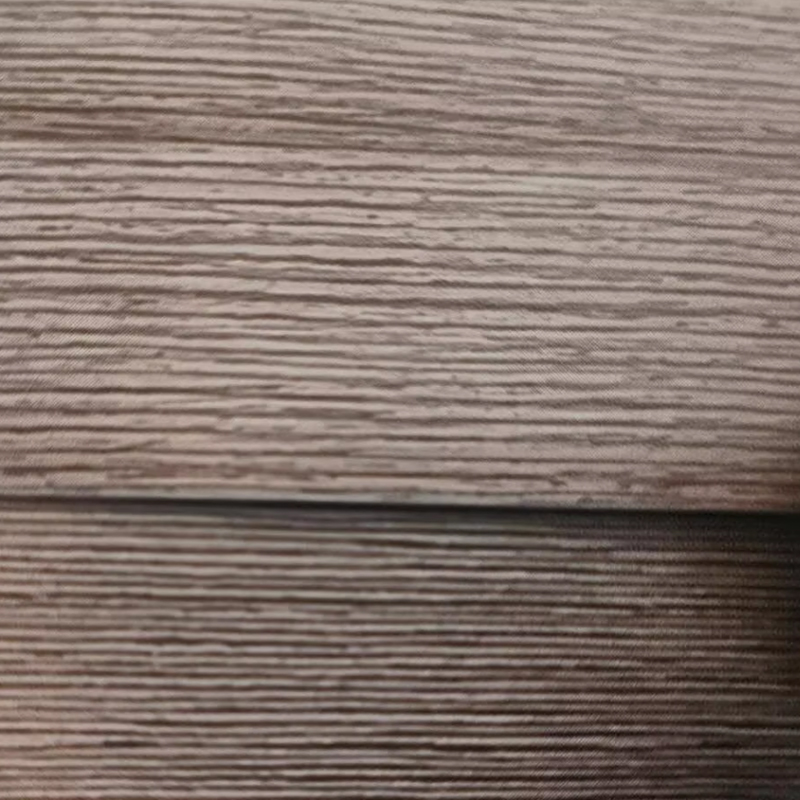
Surface texture adds another dimension to scratch management. A high-gloss, mirror-finish surface reveals every micro-scratch. Many manufacturers intentionally engineer the film with a fine matte or hairline-brushed texture on the outer surface. This texture reduces the visible contrast of any scratch that does occur because the random surface roughness scatters light in multiple directions, masking the uni-directional scattering from a scratch groove. A gloss level measured at 60° geometry below 30 GU (gloss units) is considered effective for scratch-hiding in interior applications, while luxury automotive specifications may require a piano-black high-gloss finish above 90 GU, placing maximum demand on the hard coat performance.
Testing and Quantifying Scratch Performance
Pencil hardness is a quick go/no-go gauge, but it is insufficient to fully characterize anti-scratch performance in real-world conditions. Automotive OEMs in particular have developed multi-faceted test protocols. The most common advanced tests applied to PP decorative films include:
- Taber Scratch Test (ASTM D7027): A diamond-tipped stylus applies a linearly increasing load from 1N to 20N across the surface. The critical load at which a visible scratch first appears is recorded. A premium anti-scratch film should show no visible scratch below a critical load of at least 8N to 10N.
- Crockmeter Test (ASTM D6279): A fabric-covered finger rubs the surface under a fixed load for a set number of cycles. This simulates repeated cleaning or casual contact. Gloss retention after 100 cycles of dry crocking should exceed 90% for an interior decorative film.
- Steel Wool Scratch Test: A pad of 0000-grade steel wool is rubbed across the surface under a fixed weight. The change in haze is measured with a spectrophotometer. This test is particularly sensitive to the micro-scratching that accumulates over years of cleaning.
- Amtec-Kistler Car Wash Simulator: For exterior-grade films, a rotating brush test with a quartz-sand slurry simulates the accumulated damage of multiple automatic car wash cycles.
The key metric in all these tests is delta-haze: the increase in measured haze after the scratch event compared to the pristine surface. An anti-scratch film should exhibit a delta-haze of less than 2% under the Taber linear scratch test at 10N load, whereas untreated PP can show delta-haze values of 15-20% or more under the same conditions.
Application-Specific Selection Criteria
Selecting the correct anti-scratch PP decorative film requires matching the film's property set to the specific demands of the end-use environment. The automotive interior center console presents fundamentally different requirements from a washing machine control panel or a laptop cover.
Automotive Interior Trim
This is the highest-volume and most demanding application. The film must survive a temperature range from -40°C cold-soak to over 110°C on a dashboard in direct sun, without delamination, yellowing, or cracking. Sunscreen and hand-cream chemical resistance is critical. The hard coat must be UV-stabilized; a non-stabilized acrylic coating will yellow within months. Automotive-spec films are tested for over 2,000 hours of xenon-arc weathering per SAE J2412, with a maximum color shift of delta-E less than 3.0. The adhesive system must also be heat-activated and capable of bonding permanently to ABS, PC/ABS, or polypropylene substrates.
Consumer Electronics and Appliances
Here, the scratch threat comes from fingernails, keys in pockets, and cleaning chemicals. The cycle time for decoration is shorter, so fast UV-cure hard coats are standard. Fingerprint resistance becomes a parallel requirement, often addressed by incorporating a fluorinated additive into the hard coat or applying a second, ultra-thin oleophobic top layer. The haze specification is tighter because electronic displays sit behind the decorative panel in many designs, and any haze scatters the transmitted light.
Building and Interior Decoration
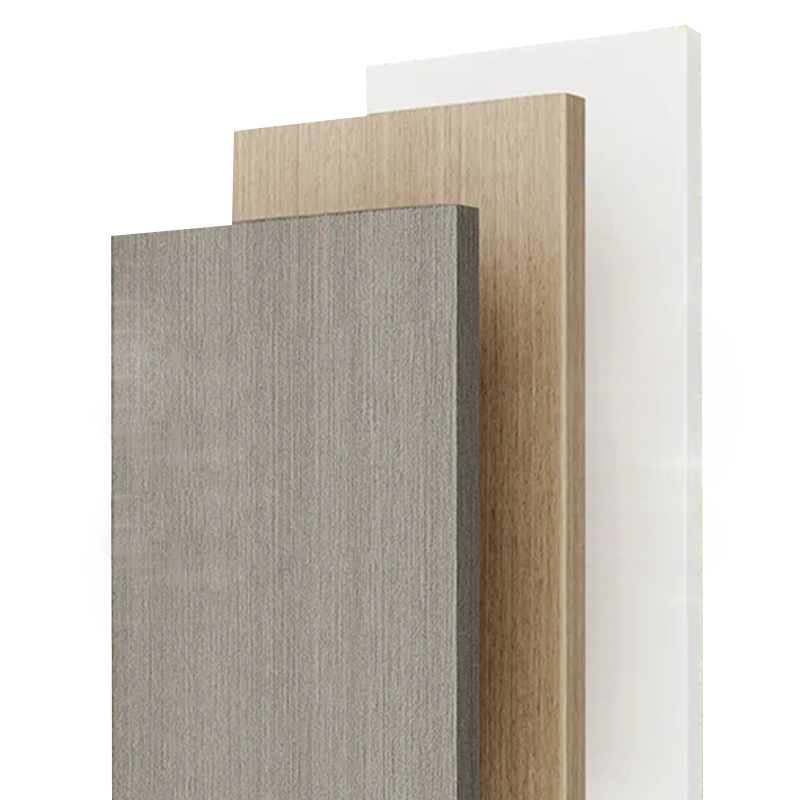
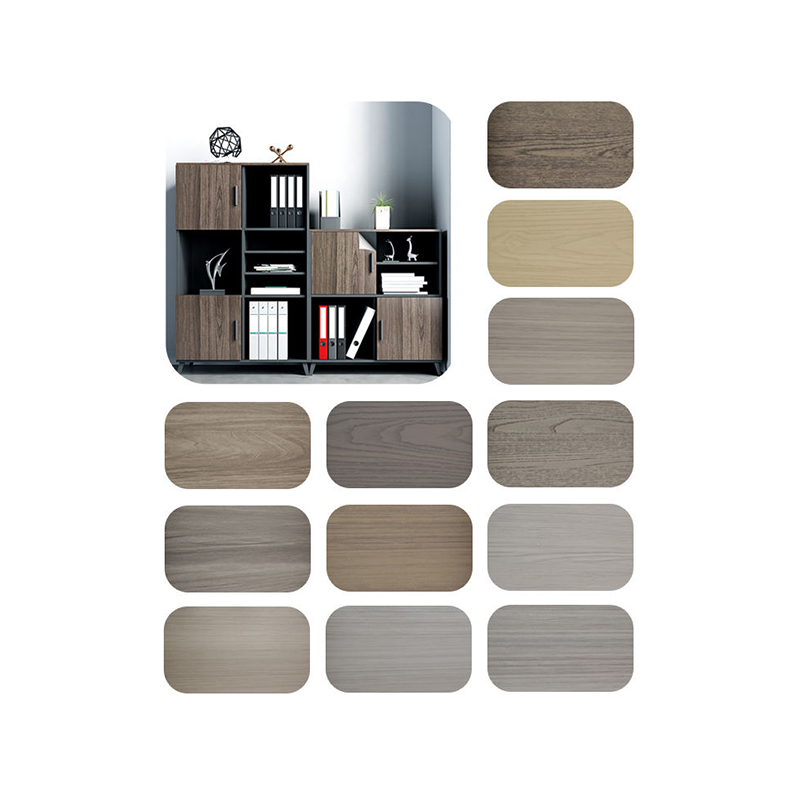
Wall panels, furniture surfaces, and elevator interior cladding use anti-scratch PP films laminated onto rigid substrates. These applications demand wide-format film and a more aggressive adhesive for permanent bonding to wood, MDF, or metal. The scratch performance requirement may be slightly relaxed compared to automotive, but the fire-retardant rating becomes critical. Films used in public spaces must often meet a Class A or B fire rating per ASTM E84, which requires the incorporation of flame-retardant additives into the PP substrate formulation.
Thermoforming and Post-Processing Compatibility
Many anti-scratch PP decorative films are applied via in-mold decoration (IMD) or insert-mold labeling (IML) processes, where the flat film is thermoformed into a three-dimensional shape and then injection-molded behind to create a finished part. This process imposes significant mechanical strain on the film and, critically, on the hard coat. The hard coat must elongate to match the draw ratio of the thermoformed shape without cracking or delaminating. A draw ratio of up to 1:3 (depth to width) is achievable with specially formulated flexible UV acrylate coatings, but the film supplier must validate the specific geometry.
The thermal profile of the injection molding step also matters. Molten PP at 220-240°C contacts the back of the decorative film, re-melting the surface layer of the substrate and fusing it to the injected resin. The hard coat must survive this transient thermal spike without blistering or losing adhesion to the PP substrate. A properly cross-linked UV hard coat has no melt point and will survive contact with molten polymer for the few seconds before the mold cools the interface below the PP crystallization temperature.
Cost-Performance Optimization and Future Directions
The anti-scratch property adds cost to a base PP decorative film, and over-specifying the scratch resistance wastes money. A film destined for a dashboard insert that is never touched needs less scratch protection than a film on a door handle recess. The industry is moving toward tiered product portfolios where a single film manufacturer offers a standard hard coat, a premium hard coat, and a super-premium ceramic-enhanced hard coat, each with a clearly specified performance envelope. The latest development is self-healing coatings based on reversible polymer networks that can recover from light scratches when exposed to heat, a technology that has moved from automotive clear coats into the film coating space and promises to further extend the effective aesthetic life of PP decorative films.
Recommended Articles
-
1.1 What is PP Decorative Film? PP decorative film is a type of surface material made primarily from polypropylene, a versatile and widely used thermoplastic po...
View More -
Is your furniture looking tired, outdated, or damaged? Imagine transforming it effortlessly into something stunning, durable, and uniquely yours. Enter PVC deco...
View More -
1.Introduction Edge banding is a crucial finishing process used in woodworking and furniture manufacturing to cover and seal the exposed sides of materials such...
View More
Xuanyi

Feel free to contact us
Xuanyi, dedicated to the application and research and development of new materials. Furniture Decorative Film Maufacturers and Factory.
Product Fast Links
Contact Information
-
 Room G, 4th Floor, Bailingshi Building, Haizhou Street, Haining City, Jiaxing City, Zhejiang Province, 314400, China
-
 [email protected]
-
 +86-15059290610
-
 +86-15059290610
Copyright © 2024Jiaxing Xuanyi International Trade Co.,Ltd All Rights Reserved. PVC/PP/PET Lamination Film for MDF WPC Plywood

