
 English
 Español
 عربى
عربى
 Home / Blog / Industry News / Interior Design Material Selection: A Practical Guide for Specifiers and Fabricators
Industry News
Interior Design Material Selection: A Practical Guide for Specifiers and Fabricators
2026-10-08
Content
- 1 The Finish Is the Last Decision, Not the First
- 2 How a Decorative Film Is Built, and Why Each Layer Matters
- 3 Putting Materials Side by Side
- 4 The Numbers Buyers Rarely See
- 5 Where Decorative Surfaces Actually End Up
- 6 A Selection Workflow That Survives Production
- 7 Maintenance, Compliance, and the Paper Trail
- 8 What to Do on Monday Morning
The Finish Is the Last Decision, Not the First
A membrane-pressed kitchen door can look flawless in a sample room and still fail three months after installation, and the colour is almost never the reason. When decorative surface problems are traced back to their origin, they nearly always land in one of four places: the wrong base film, a process window the material cannot survive, an adhesive that does not match the board, or a specification written for a showroom instead of a working kitchen.
That is why the order of decisions matters more than any single material choice. Lock the environment first, then the lamination process, then the film chemistry, and treat colour and texture as a separate decision made later.
The short version
- Substrate chemistry, whether PVC, PP or PET, sets the ceiling on heat resistance, chemical resistance and how tightly a film can be wrapped.
- The lamination method decides how much stretch and heat the film must survive. Vacuum pressing, flat lamination and profile wrapping ask very different things of the same roll.
- Surface treatment, not the printed pattern, determines scratch resistance and light fastness.
- Décor is the last ten percent of the job, and by far the easiest part to change.
Get the first three right and the fourth becomes a catalogue exercise rather than a commercial risk.
How a Decorative Film Is Built, and Why Each Layer Matters
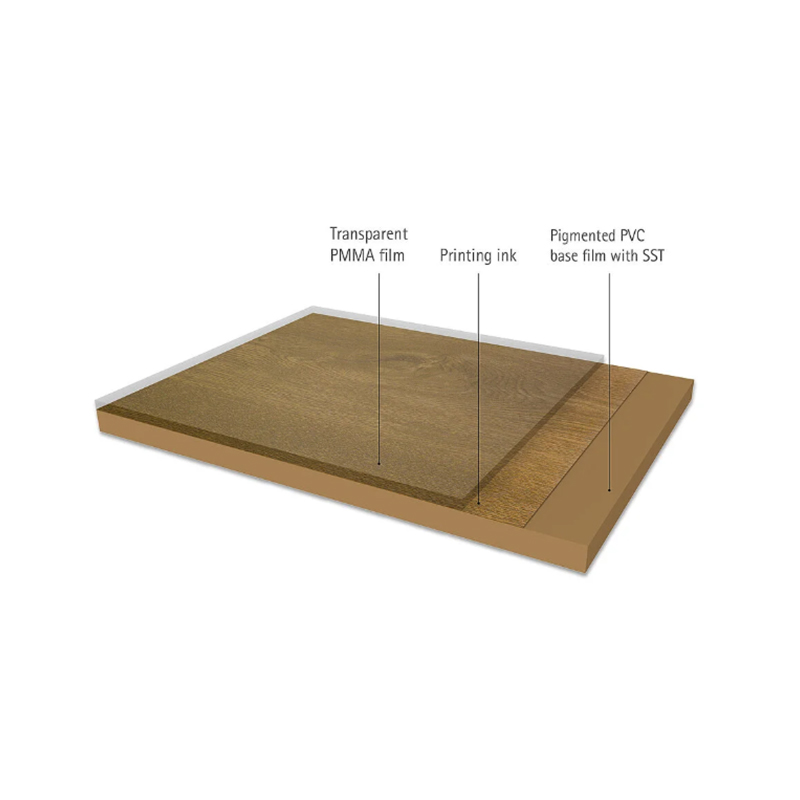
A decorative film is not a printed plastic sheet. It is a stack: base film, print layer, protective surface, and usually a primer or adhesive on the reverse. Each layer answers a different question from the buyer, and each one fails in a different way.
PVC base film
Plasticised PVC is the most forgiving base to work with. It stretches well in a vacuum press, wraps around three-dimensional profiles and accepts deep embossing, which is why it dominates membrane-pressed doors and kitchen cabinetry. Its limits show up in heat and light: plasticiser migration, yellowing and shrinkage are the usual failure modes.
PP base film
Chlorine-free and noticeably lighter, polypropylene holds up well against moisture and household chemicals and can be recovered in mono-material recycling streams. It is stiffer, so it belongs on flat lamination lines and flooring rather than deep three-dimensional wrapping.
PET base film
The hardest and most dimensionally stable of the three. PET gives the cleanest high-gloss and the sharpest print detail, which makes it the default for flat panels, wardrobe fronts and high-gloss wood grain. It barely stretches, so it is a lamination film, not a wrapping film.
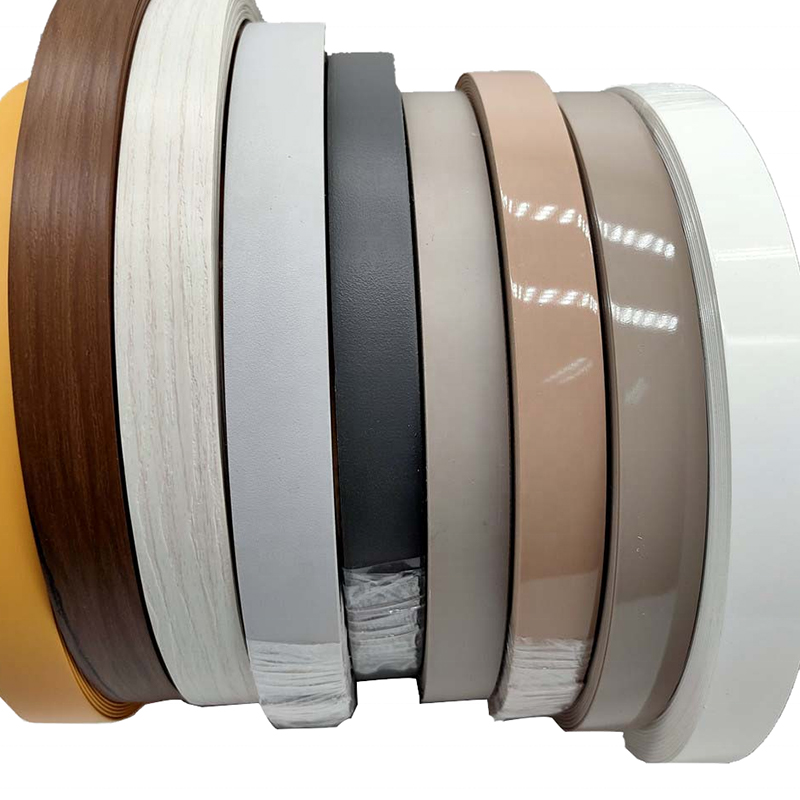
Edge banding follows exactly the same logic. ABS offers better impact resistance and heat tolerance, PVC offers easier colour matching and lower cost, and the anti-whitening grade matters far more than the colour code once you are running tight radii on a curved door.
Soft-touch is the newest variable in this stack. Water-based skin-feel coatings deliver a matte, low-glare surface without the solvent load of older lacquers. It is a genuinely different feel under the hand, but it is also a surface that needs its own cleaning instructions and its own press trial. Because the base film, the print layer and the topcoat are produced in sequence, a supplier with vertically integrated manufacturing can adjust formulation and coating weight together rather than buying a finished roll and hoping it matches the board.
If a technical data sheet does not state the base chemistry, the coating type and the recommended press temperature, it is not a specification — it is a brochure.
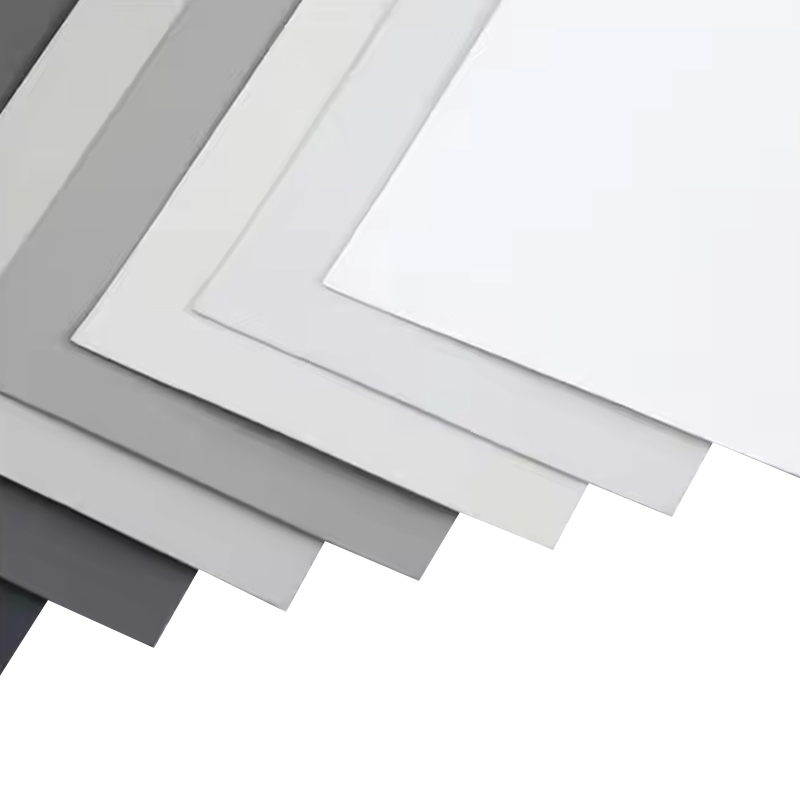
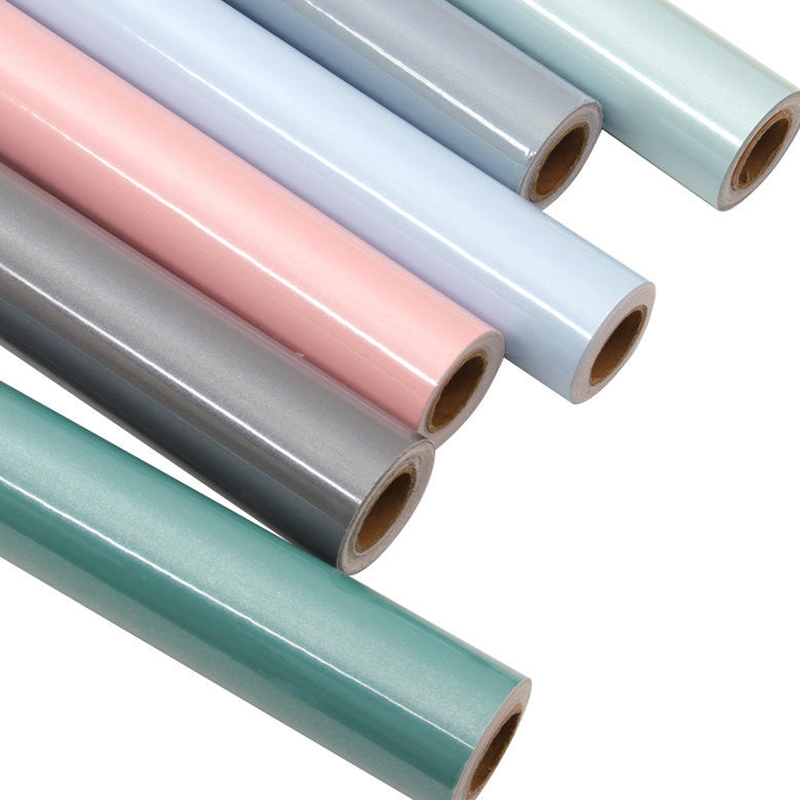
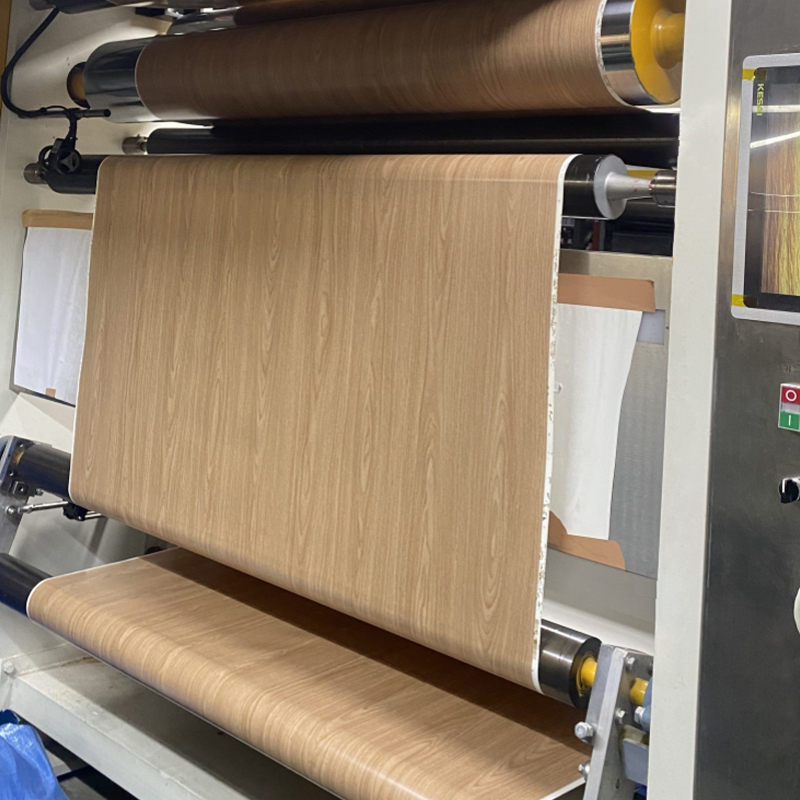 Super Matte Soft Touch PVC Decorative FilmPure-color PVC decorative film with matte micro-textured, skin-feel surface; suited for furniture, electronics, automotive interiors, and medical equipment where fingerprints, scratches, and stains matter.View Product →
Putting Materials Side by Side
The grid below is the comparison sheet worth filling in before anyone books a press trial. It is deliberately short: five lines and six attributes usually decide a specification.
Base film
Best lamination fit
Surface hardness
Heat and moisture
End-of-life path
Relative cost
Standard PVC
Vacuum press, 3D wrap
Medium
Moderate; watch 60 °C and above
Downcycling or energy recovery
Low
Water-based skin-feel PVC
Vacuum press, flat lamination
Medium, matte
Moderate; sensitive to abrasion
Lower solvent load in coating
Low to medium
PP
Flat lamination, flooring
Medium to high
Good chemical and moisture resistance
Mono-material recycling
Medium
PET
Flat lamination only
High
Very good dimensional stability
Mono-material recycling
Medium to high
ABS edge banding
Edge gluing, 2D and 3D radii
High impact resistance
Good, stable at radiators
Monomer recovery in theory
Medium to high
Indicative comparison for early specification discussions. Confirm every value against current supplier data sheets and your own press trial before releasing a purchase order.
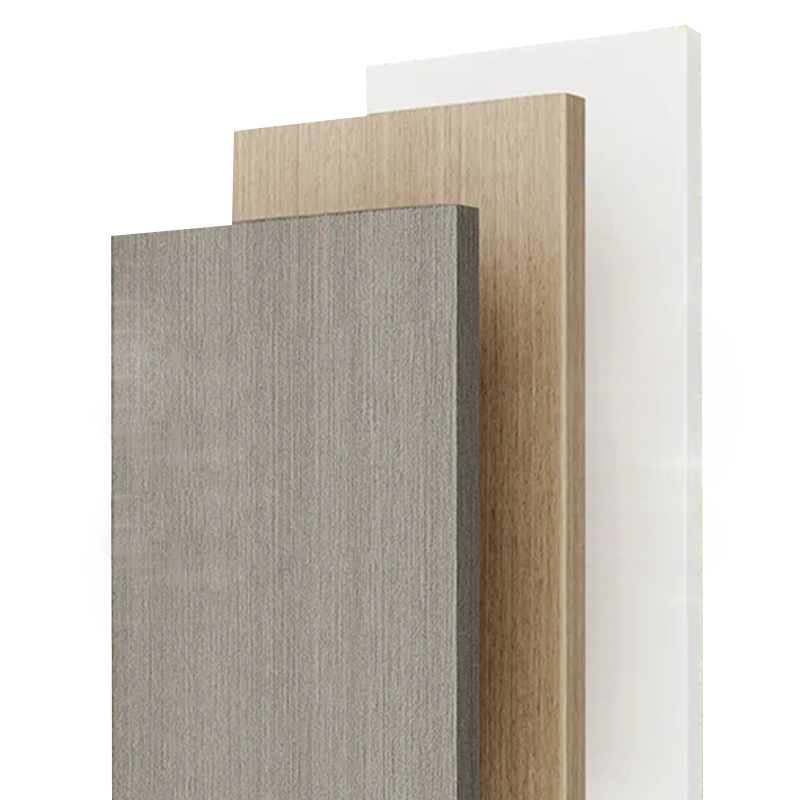
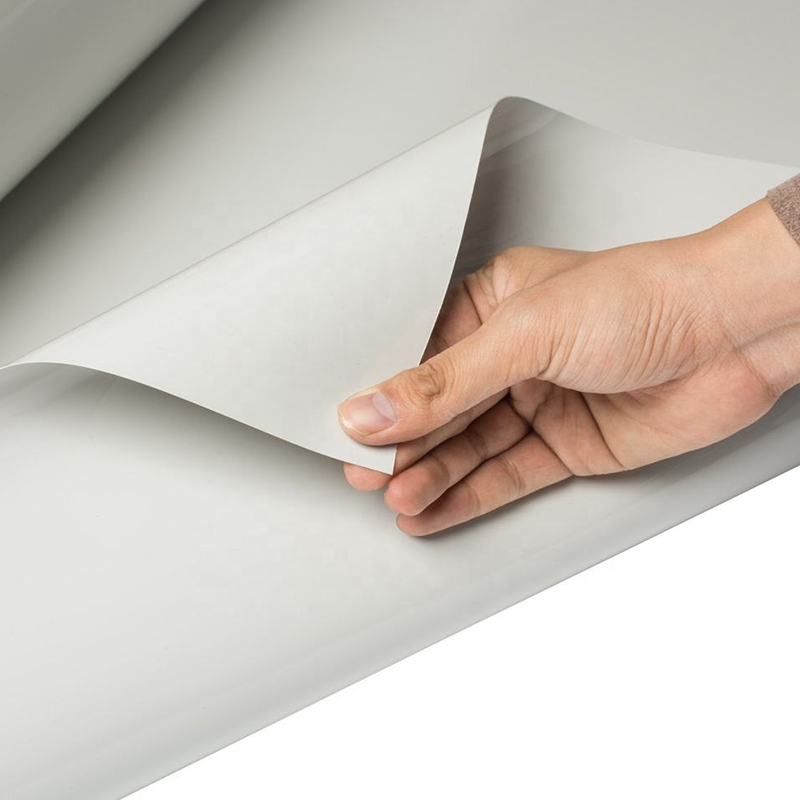
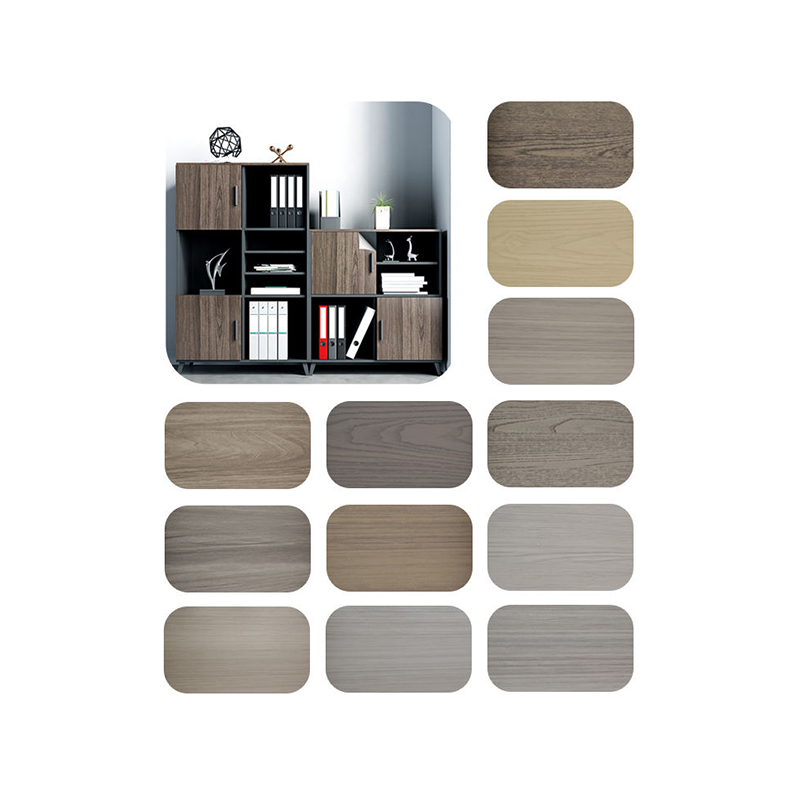 Grey-Tone Wood Grain PET Decorative Film for CabinetsPET decorative film in grey and grey-brown oak tones for office and home cabinets and bookcases, with clear grain definition and RoHS- and REACH-compliant formulations.View Product →
The Numbers Buyers Rarely See
Two films can look identical on a sample fan and behave completely differently on the line. The difference usually sits in five measurable windows, and only one of them is visible to the end customer.
92
88
72
64
55
Left to right: adhesive bond retention, surface hardness and scratch resistance, light fastness, heat resistance, and crack resistance at the minimum bend radius.
Indicative weighting for failure risk in membrane-pressed furniture, where 100 represents the highest observed impact. These are editorial weightings, not laboratory results, and they should be replaced with your own test data as soon as a shortlist exists.
The practical reading is straightforward. Bond retention and scratch resistance cause most of the complaints that reach a factory floor, yet they are the two attributes buyers question least, because both are invisible in a showroom under warm lighting.
Where Decorative Surfaces Actually End Up
Substrate choice is easier once the destination is clear, because each application has a dominant failure mode that filters the options quickly.
- Cabinetry and wardrobes — 40 percent. Heat, steam and repeated wiping drive the specification.
- Flooring — 18 percent. Abrasion, indentation and moisture are the deciding factors.
- Wall panels and partitions — 16 percent. Large flat areas expose gloss inconsistency and light fastness.
- Doors and frames — 15 percent. Edge and corner wrapping decide film stretch and primer quality.
- Exterior and transport — 11 percent. UV stability and temperature cycling dominate everything else.
Indicative split based on typical product-category coverage rather than audited market data, so treat it as a planning aid rather than a statistic.
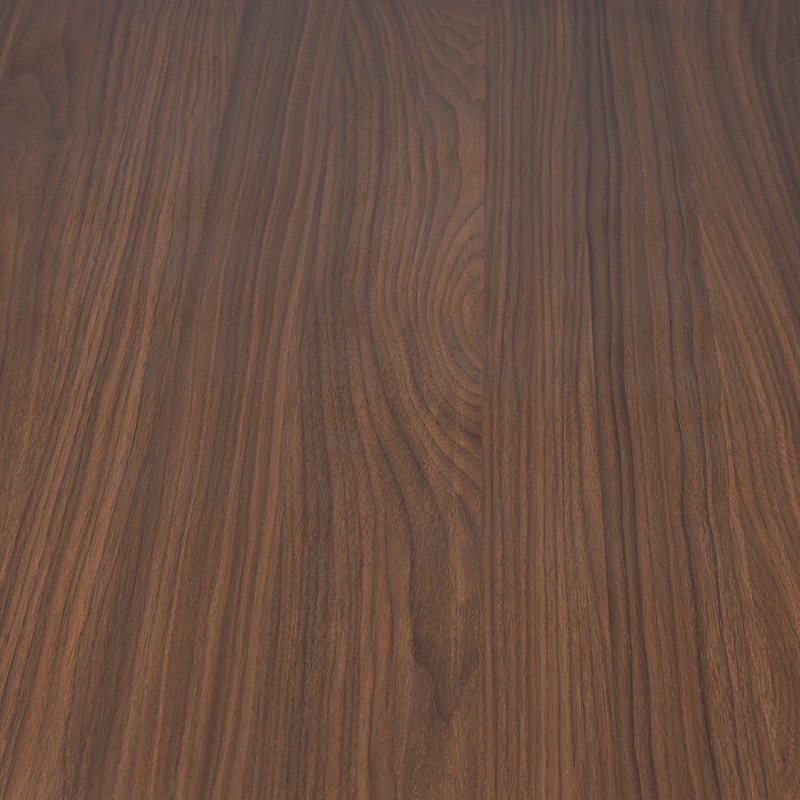 Honey Oak Wood Grain PP Flooring Decorative FilmLight honey-yellow oak wood-grain film in the PP Flooring Film range, designed for PP-based panels and flooring as a chlorine-free PVC alternative.View Product →
A Selection Workflow That Survives Production
Six steps, in this order. Skipping step four is the single most common reason a technically correct film fails in service.
1
Define the environment
Write down steam exposure, direct sunlight, cleaning chemicals and the highest surface temperature the panel will see. A kitchen near a hob and a wardrobe in a bedroom are not the same job.
2
Fix the lamination process
Confirm press type, membrane pressure, dwell time and adhesive system. The film must be chosen to fit the line, not the other way around.
3
Shortlist by substrate chemistry
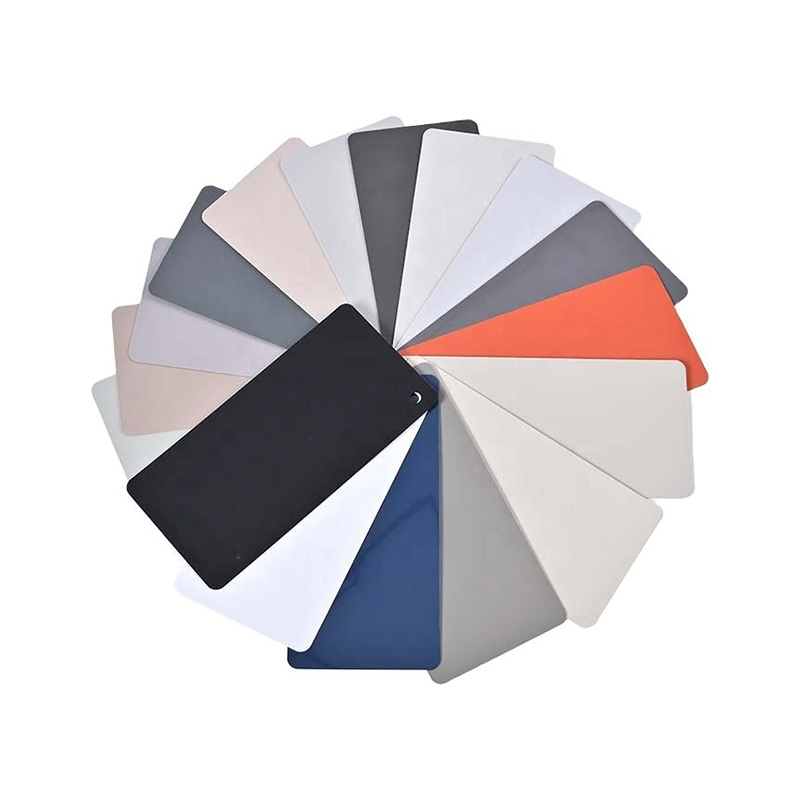
Narrow to PVC, PP or PET on heat, moisture and wrapping requirements. Only then open a colour fan.
4
Test on the real board
Run the actual substrate, the actual adhesive and the actual press settings. Sample fans lie; a 300 by 300 millimetre test panel does not.
5
Lock tolerances in writing
Record colour tolerance, roll width tolerance, thickness range and batch traceability. A verbal agreement on shade matching is worth nothing in a claim.
6
Qualify a second source early
Do it while the first specification is still fresh, not during a stockout. Matching two suppliers during a crisis almost always ends in a visible shade difference across a kitchen run.
Maintenance, Compliance, and the Paper Trail
Performance after installation is mostly about cleaning discipline and documentation. Both are inexpensive and both are usually neglected.
- Clean with a soft damp cloth and a neutral detergent. Abrasive pads and solvent-based sprays will dull a matte topcoat permanently within a few months.
- Wipe spills along the grain direction on embossed wood structures to avoid trapping residue in the texture.
- Keep a written cleaning instruction sheet with the delivered units. Most surface complaints in commercial interiors trace back to household chemicals rather than the film itself.
On compliance, ask for current declarations rather than historical certificates: SVHC and REACH statements, formaldehyde emission class for the board, and reaction-to-fire classification where the project requires it. Indoor air quality schemes and food-contact approval are relevant for PP films used in specific settings. Increasingly, buyers also ask how a film performs in recovery and recycling streams, which is where lower-VOC and mono-material options earn their place in a tender response.
Build a simple file per project: the data sheet, the press trial record, the approved shade panel, and the batch numbers actually delivered. In a dispute, that folder is worth more than any technical argument made afterwards.
What to Do on Monday Morning
Pick one live project and rewrite the specification in the order that actually matters: environment, process, chemistry, décor. Then run a single test panel before the next purchase order goes out. It costs one afternoon, one board and one roll of film, and it will tell you more about material selection than a full day of sample fans ever will.

Recommended Articles
-
1.1 What is PP Decorative Film? PP decorative film is a type of surface material made primarily from polypropylene, a versatile and widely used thermoplastic po...
View More -
Is your furniture looking tired, outdated, or damaged? Imagine transforming it effortlessly into something stunning, durable, and uniquely yours. Enter PVC deco...
View More -
1.Introduction Edge banding is a crucial finishing process used in woodworking and furniture manufacturing to cover and seal the exposed sides of materials such...
View More
Xuanyi

Feel free to contact us
Xuanyi, dedicated to the application and research and development of new materials. Furniture Decorative Film Maufacturers and Factory.
Product Fast Links
Contact Information
-
 Room G, 4th Floor, Bailingshi Building, Haizhou Street, Haining City, Jiaxing City, Zhejiang Province, 314400, China
-
 [email protected]
-
 +86-15059290610
-
 +86-15059290610
Copyright © 2024Jiaxing Xuanyi International Trade Co.,Ltd All Rights Reserved. PVC/PP/PET Lamination Film for MDF WPC Plywood

