
 English
 Español
 عربى
عربى
 Home / Blog / Industry News / PETG Decorative Film: UV Resistant, Scratch Proof & Eco-Friendly Guide
Industry News
PETG Decorative Film: UV Resistant, Scratch Proof & Eco-Friendly Guide
2026-06-04
Three years ago, a European kitchen cabinet manufacturer replaced its PVC surface film with PETG on a trial batch. The decision was driven by a customer complaint about yellowing panels — a known limitation of PVC under prolonged UV exposure. Eighteen months later, the PETG-laminated cabinets showed no discoloration, no surface degradation, and no customer returns. The trial became a standard. That pattern — a single performance failure with PVC triggering a permanent switch to PETG — is now repeating across furniture factories, fit-out contractors, and interior panel producers worldwide.
This guide explains what makes PETG decorative film technically superior, where each performance advantage matters most in practice, and what procurement managers and designers should know before specifying it.
Content
- 1 Why PETG Is Replacing PVC as the Standard for Decorative Film
- 2 High Transparency and Gloss: The Visual Foundation of PETG Decorative Film
- 3 UV Resistance and Weather Stability Across Extreme Conditions
- 4 Scratch and Wear Resistance That Survives Daily Use
- 5 Eco-Friendly, Non-Toxic, and Easy to Clean
- 6 Custom Colors, Design Flexibility, and Lightweight Installation
Why PETG Is Replacing PVC as the Standard for Decorative Film
PVC dominated the decorative film market for decades because it was cheap, processable, and available everywhere. But it comes with structural limitations that compound over time: plasticizers migrate to the surface, causing brittleness and surface tackiness. Chlorine content becomes a liability under heat and UV exposure, producing discoloration. And environmental regulations across the EU, UK, and North American markets have progressively restricted phthalate-based formulations that PVC depends on for flexibility.
PETG — Polyethylene Terephthalate Glycol — is a glycol-modified thermoplastic that eliminates these problems at the material level. It contains no chlorine, requires no plasticizers, and does not undergo the same degradation chain that causes PVC films to yellow or harden with age. The glycol modification also gives PETG a more amorphous molecular structure than standard PET, which improves thermoformability and adhesion to substrates like MDF, WPC, and plywood — the core applications in furniture and interior panel production.
The result is a decorative film that performs better at the surface, lasts longer in service, and meets stricter regulatory requirements without requiring reformulation every time a market tightens its standards.
High Transparency and Gloss: The Visual Foundation of PETG Decorative Film
The first thing that distinguishes PETG decorative film from PVC alternatives is optical quality. PETG has inherently higher clarity and a more stable gloss finish — not because of surface coatings applied after production, but because the base polymer transmits light more uniformly and resists the micro-surface degradation that dulls PVC gloss over time.
In high-gloss applications — kitchen cabinet fronts, wardrobe door panels, reception desks — this difference is visible within the first year of service. PVC high-gloss films develop micro-scratches that scatter light, creating a matte haze in the most-handled zones. PETG films, particularly those produced with hard-coat top layers, maintain specular reflectivity significantly longer.
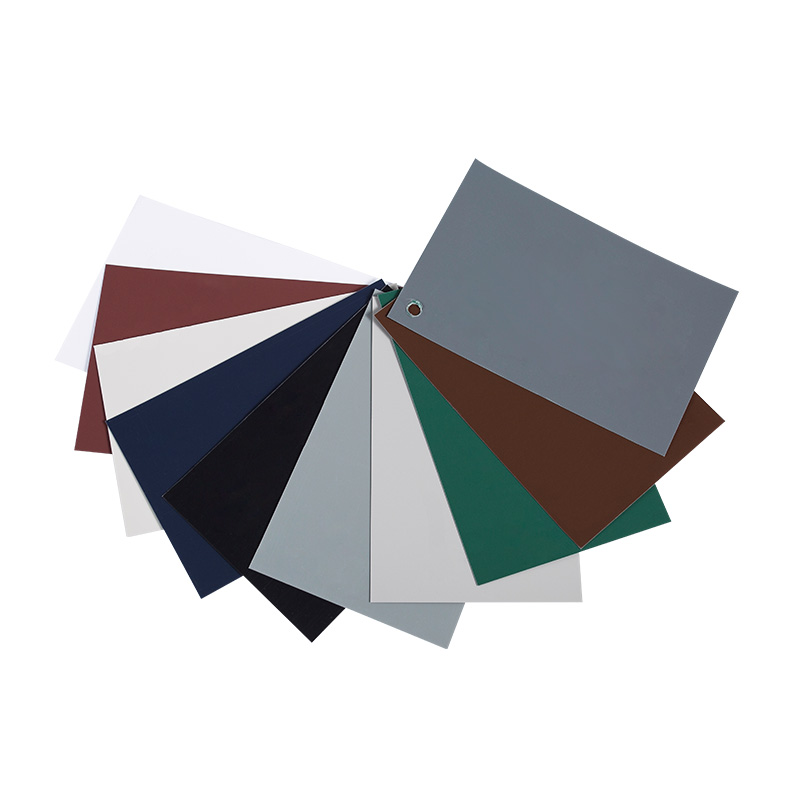
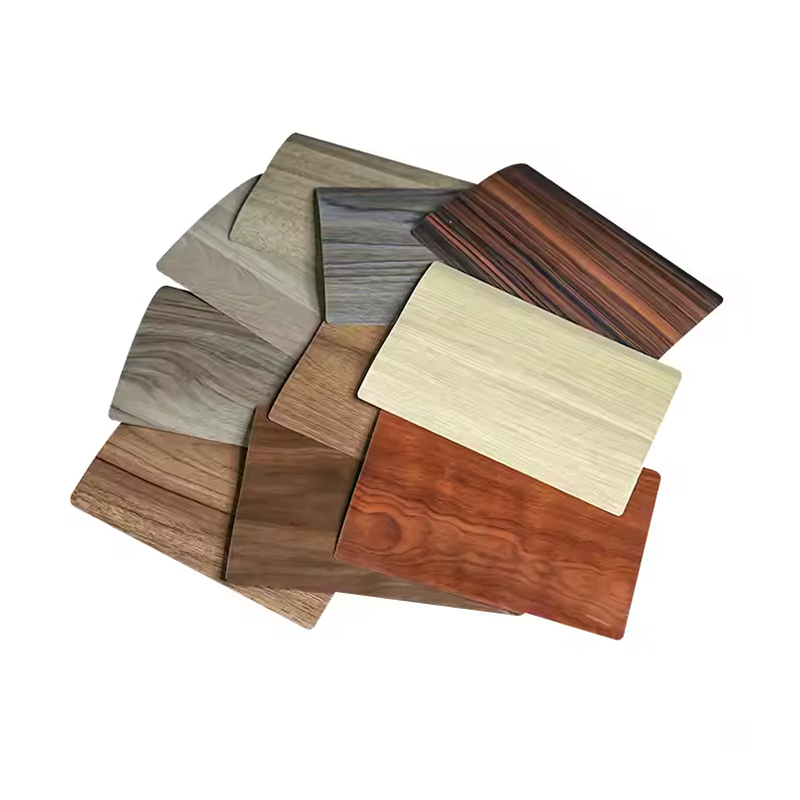
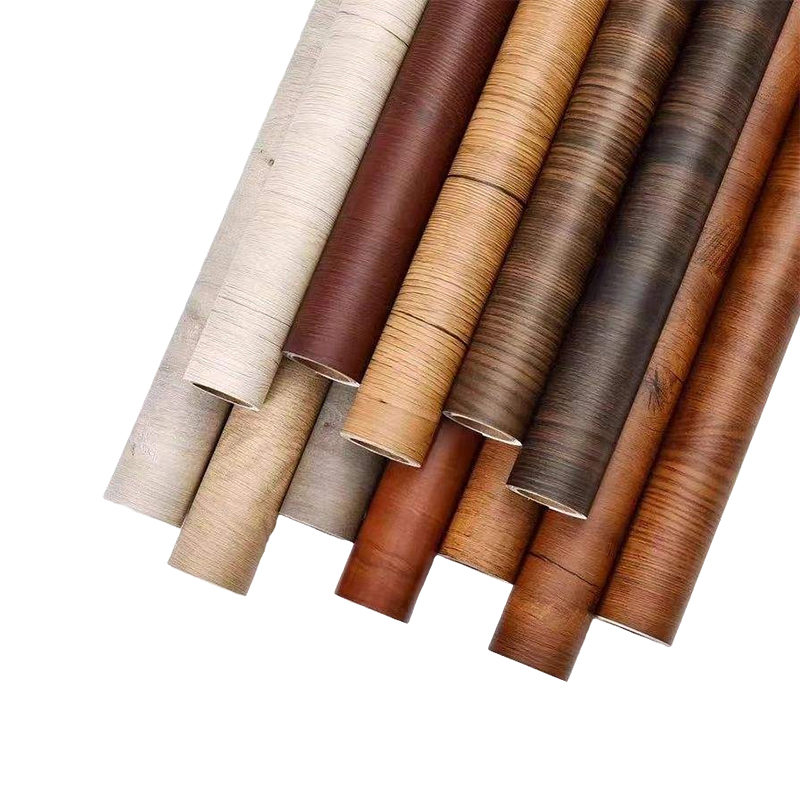
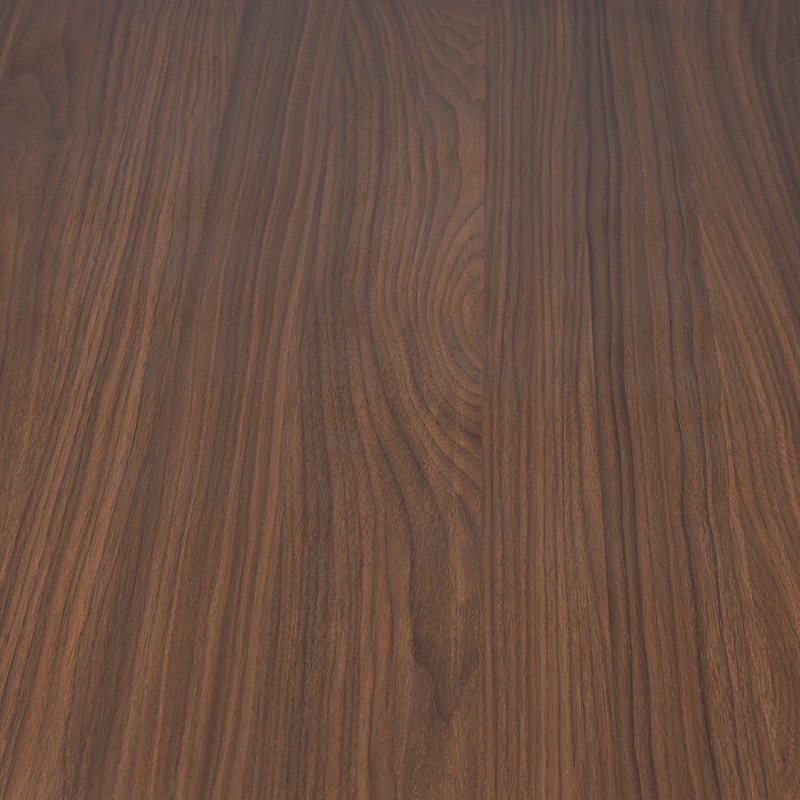
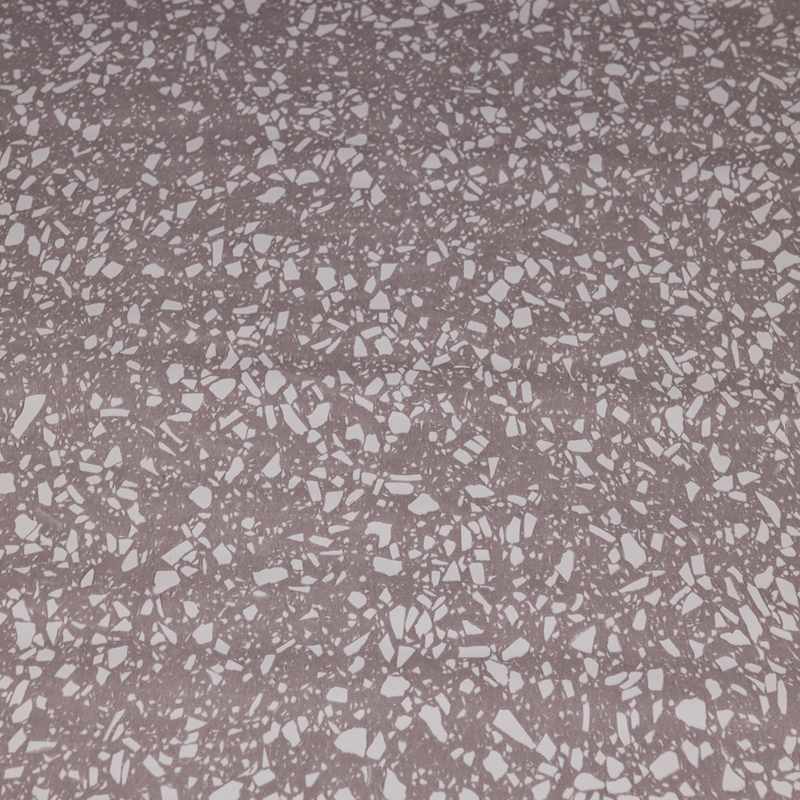
For solid-color applications, PETG's optical depth makes colors appear richer and more saturated without requiring thicker ink or coating layers. For printed patterns — wood grain, stone texture, geometric — higher optical clarity means finer detail resolution with less diffusion at the surface. Explore the full range of solid color and wood grain PET decorative film collections to see how this clarity translates across different design directions.
UV Resistance and Weather Stability Across Extreme Conditions
UV resistance in decorative films is not a binary property — it exists on a spectrum that depends on the base polymer, the coating system, and the pigment stability. PVC without UV stabilizer additives begins showing color shift within 12–18 months of moderate sun exposure. Even stabilized PVC formulations typically reach their performance limit at 3–5 years in south-facing installations.
PETG's molecular structure is more resistant to UV-induced chain scission — the degradation mechanism that causes both discoloration and brittleness. PETG decorative film maintains color fidelity and surface integrity under UV exposure conditions that compromise PVC, making it suitable for applications near large windows, glazed partitions, and south-facing facades where PVC would be specified only with heavy UV-blocking interlayers.
Temperature stability follows a similar pattern. PETG retains dimensional integrity across a wider temperature range than PVC, which softens at relatively low temperatures and can telegraph surface distortion to the laminated substrate in environments that experience seasonal temperature swings. In kitchens — where surface temperatures near cooking zones can reach 60°C+ — PETG maintains flatness and adhesion where PVC films begin to lift at edges.
| Performance Property | Standard PVC Film | PETG Decorative Film |
|---|---|---|
| UV color stability | Yellowing within 1–3 years | Stable; no chlorine-driven discoloration |
| Temperature resistance | Softens from ~60°C | Stable across wider thermal range |
| Surface gloss retention | Dulls with micro-scratching | Maintained with hard-coat treatment |
| Chlorine / plasticizer content | Contains both | Chlorine-free, plasticizer-free |
| Environmental compliance | Requires formulation management | REACH / RoHS compliant by design |
Scratch and Wear Resistance That Survives Daily Use
A kitchen cabinet door is opened and closed roughly 15,000 times per year. A school desk surface contacts metal fasteners, bags, and abrasive tools daily. A hotel wardrobe panel is wiped with commercial disinfectants dozens of times weekly. These are the environments where scratch and abrasion resistance stops being a specification point and becomes a real cost — in replacement panels, warranty claims, and reputation damage.
PETG decorative film addresses this through two mechanisms. First, the base polymer has higher impact resistance than PVC, meaning it absorbs surface contact forces more elastically rather than deforming plastically and retaining scratch marks. Second, hard-coat surface treatments applied to PETG can achieve pencil hardness ratings of 2H to 3H — a meaningful step above untreated PVC, which typically falls below H.
In practical terms, PETG films with appropriate hard-coat systems resist the everyday surface contact that causes visible wear in high-traffic residential and commercial furniture within 2–3 years. For manufacturers specifying materials for hotel projects, office fit-outs, or kitchen furniture with extended warranty commitments, this durability difference directly affects the total cost of the finished product over its service life. You can compare scratch-resistance approaches across material types in the anti-scratch PVC and PP decorative film options for applications where PETG's full specification may exceed requirements.
Eco-Friendly, Non-Toxic, and Easy to Clean
PETG's environmental profile is its clearest advantage over PVC in markets where procurement decisions involve environmental certification. Because PETG contains no chlorine, it does not produce dioxins during incineration — one of the primary environmental concerns that has driven regulatory action against PVC in building and furniture applications across the EU. PETG is also fully recyclable within established thermoplastic recycling streams, unlike PVC, which requires segregated processing due to chlorine content.
From a compliance perspective, PETG decorative film is inherently compatible with REACH and RoHS requirements because it does not rely on restricted substances — phthalates, heavy metal stabilizers, or chlorinated flame retardants — that require active formulation management in PVC. As PET decorative film sourcing guides for 2026 note, this regulatory positioning is increasingly important as EU Green Deal requirements filter down to furniture and interior materials procurement specifications.
On the cleaning and maintenance side, PETG's non-porous surface resists staining more effectively than PVC, which develops micro-porosity as plasticizers migrate out over time. PETG surfaces can be cleaned with a wider range of commercial cleaning agents — including mild disinfectants — without surface attack or finish degradation. This makes PETG particularly well-suited to healthcare interiors, commercial catering environments, and residential kitchens and bathrooms where cleaning frequency is high. Explore how these sustainability properties are reflected in sustainable decorative film manufacturing practices at the production level.
Custom Colors, Design Flexibility, and Lightweight Installation
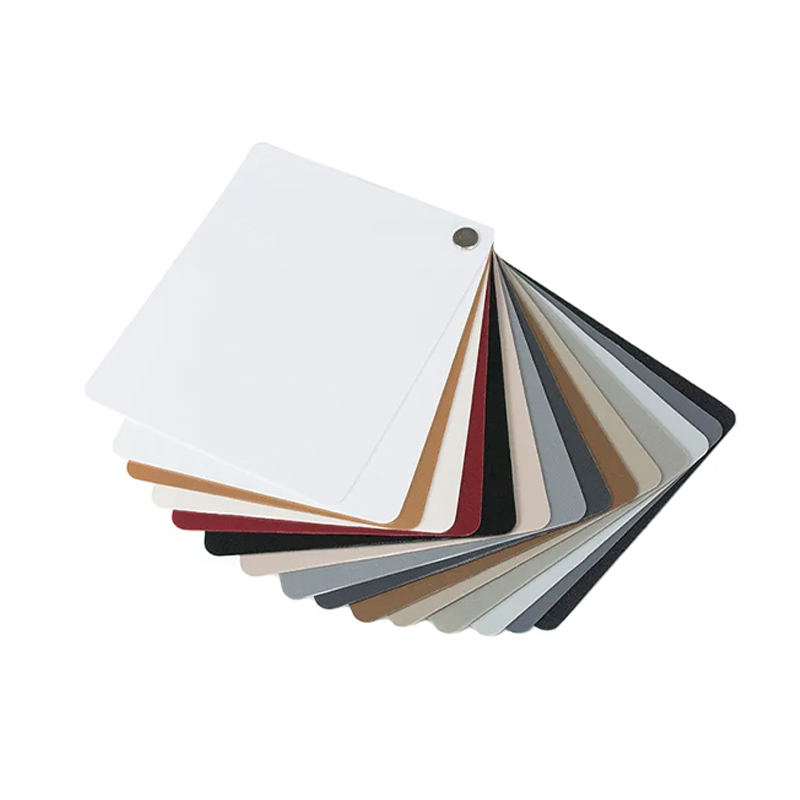
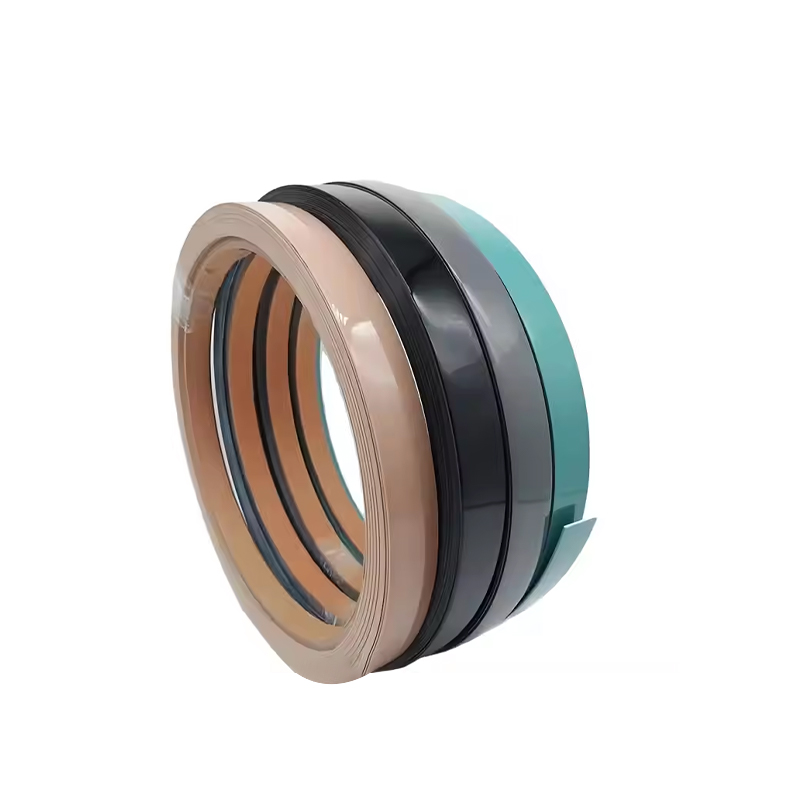
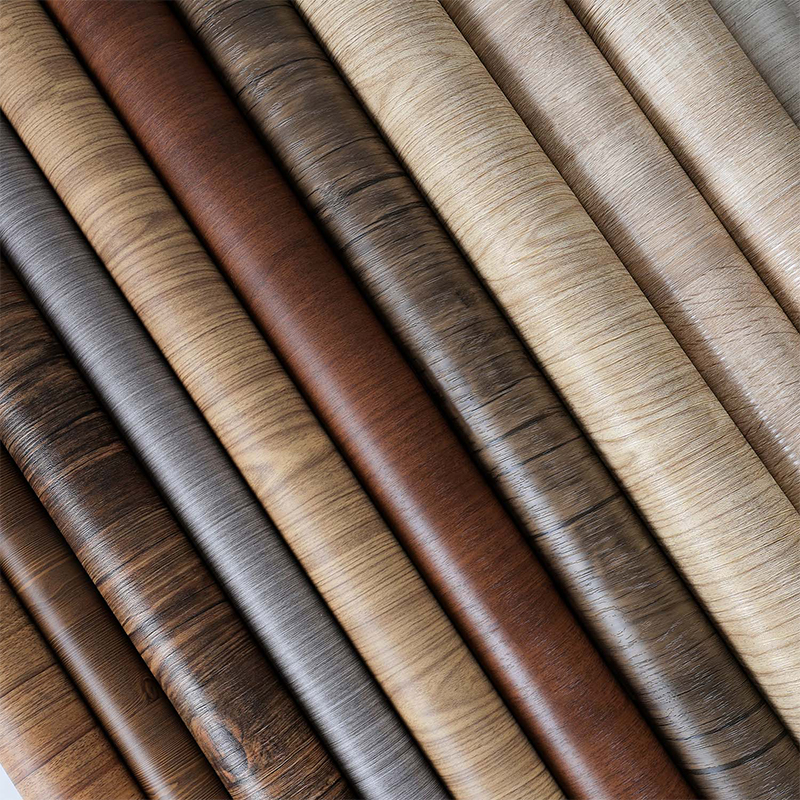
Design versatility is where PETG decorative film matches its technical performance with commercial practicality. The material accepts printing, embossing, and coating processes with high fidelity — producing wood grain patterns with realistic grain depth, solid colors with consistent hue across production runs, and metallic or stone effects with surface texture that rivals more expensive alternatives like high-pressure laminate or painted MDF.
Color matching across large orders is more consistent with PETG than PVC because the base polymer's optical properties don't vary as significantly with minor formulation changes. For specifiers managing multi-room or multi-building projects where panel replacement over time is a possibility, this batch consistency reduces the visual mismatch risk that creates problems in phased renovation projects.
From a fabrication and installation standpoint, PETG film's combination of high strength and low areal density means laminated panels are lighter than equivalent PVC-laminated boards at the same substrate thickness. In large-format panels for wall cladding or commercial partitioning — where panel size increases handling loads significantly — this weight reduction matters to installation teams working at height or in restricted access areas. PETG's dimensional stability during lamination also reduces waste from panel distortion during the pressing process, lowering per-unit material cost in high-volume production runs.
For manufacturers and specifiers building product lines around durable, sustainable, and visually consistent interior surfaces, PETG decorative film represents a straightforward material upgrade — one that delivers performance advantages that compound across the product's entire service life rather than showing up only in initial specification comparisons.

Recommended Articles
-
1.1 What is PP Decorative Film? PP decorative film is a type of surface material made primarily from polypropylene, a versatile and widely used thermoplastic po...
View More -
Is your furniture looking tired, outdated, or damaged? Imagine transforming it effortlessly into something stunning, durable, and uniquely yours. Enter PVC deco...
View More -
1.Introduction Edge banding is a crucial finishing process used in woodworking and furniture manufacturing to cover and seal the exposed sides of materials such...
View More
Xuanyi

Feel free to contact us
Xuanyi, dedicated to the application and research and development of new materials. Furniture Decorative Film Maufacturers and Factory.
Product Fast Links
Contact Information
-
 Room G, 4th Floor, Bailingshi Building, Haizhou Street, Haining City, Jiaxing City, Zhejiang Province, 314400, China
-
 [email protected]
-
 +86-15059290610
-
 +86-15059290610
Copyright © 2024Jiaxing Xuanyi International Trade Co.,Ltd All Rights Reserved. PVC/PP/PET Lamination Film for MDF WPC Plywood

