
 English
 Español
 عربى
عربى
 Home / Blog / Industry News / UV Resistant Marble Decorative Film: Performance, Standards & Selection Guide
Industry News
UV Resistant Marble Decorative Film: Performance, Standards & Selection Guide
2026-06-23
Color fading is one of the most common failure modes in decorative surface materials — and in marble-pattern PVC film, it is almost always a UV problem. A film that looks sharp in a showroom can shift tone within months when installed near glazed facades, skylights, or south-facing windows. For manufacturers and procurement teams specifying surface films for furniture, cabinetry, and commercial interiors, UV resistance is not a premium feature. It is a baseline requirement.
Content
- 1 Why UV Resistance Matters in Marble Decorative Film
- 2 How UV Protection Is Built Into the Film
- 3 Performance Standards: What to Look for
- 4 Key Applications Where UV Resistance Is Non-Negotiable
- 5 UV Resistant Marble Film vs. Other Surface Options
- 6 Selecting the Right UV Resistant Marble Film for Your Project
Why UV Resistance Matters in Marble Decorative Film
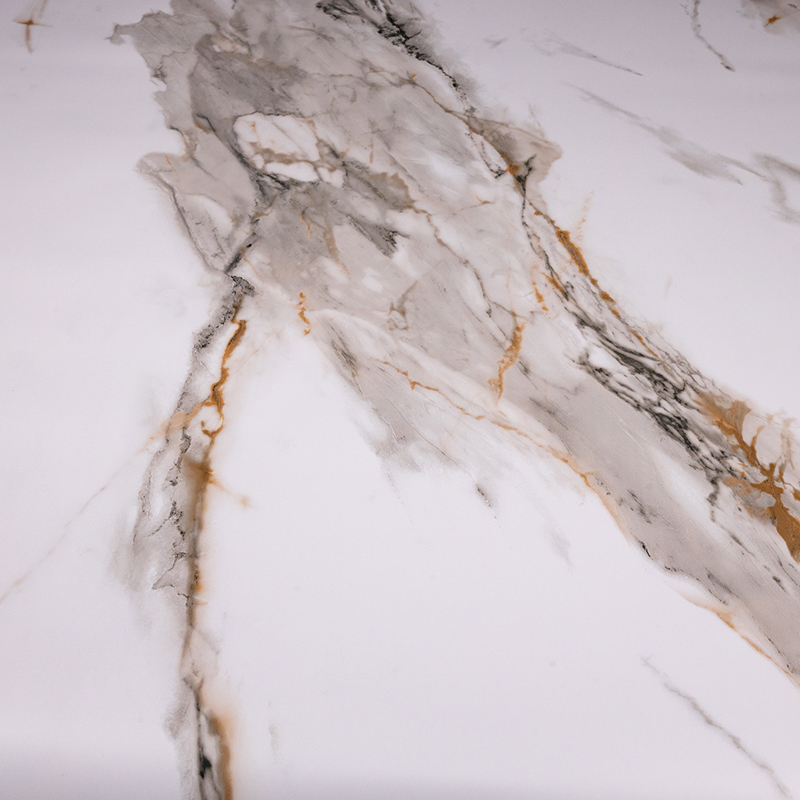
Ultraviolet radiation attacks decorative films through two distinct mechanisms. The first is photodegradation of pigments — UV energy breaks molecular bonds in the colorants used to print marble veining and background tones, causing gradual bleaching or color shift. White and grey Calacatta patterns are particularly vulnerable, as the subtle contrast between vein and ground that defines their appeal disappears when either element fades at a different rate.
The second mechanism is surface embrittlement. Prolonged UV exposure degrades the polymer chains in PVC, reducing surface flexibility and eventually causing micro-cracking. On an embossed film, this manifests as loss of texture definition — the three-dimensional stone effect flattens as the surface layer loses its structural integrity.
Natural marble is immune to these effects because it has no colorant layer and no polymer structure to degrade. But natural stone carries its own costs: weight, installation complexity, sensitivity to moisture, and a price point that rules it out for most volume furniture and cladding applications. UV-stabilized marble PVC film addresses the durability gap directly, delivering a surface that maintains color fidelity and texture across years of interior use.
How UV Protection Is Built Into the Film
UV resistance in a high-performance marble decorative film is not a single coating — it is an engineered stack of protective measures built into the film's construction from the base layer upward.
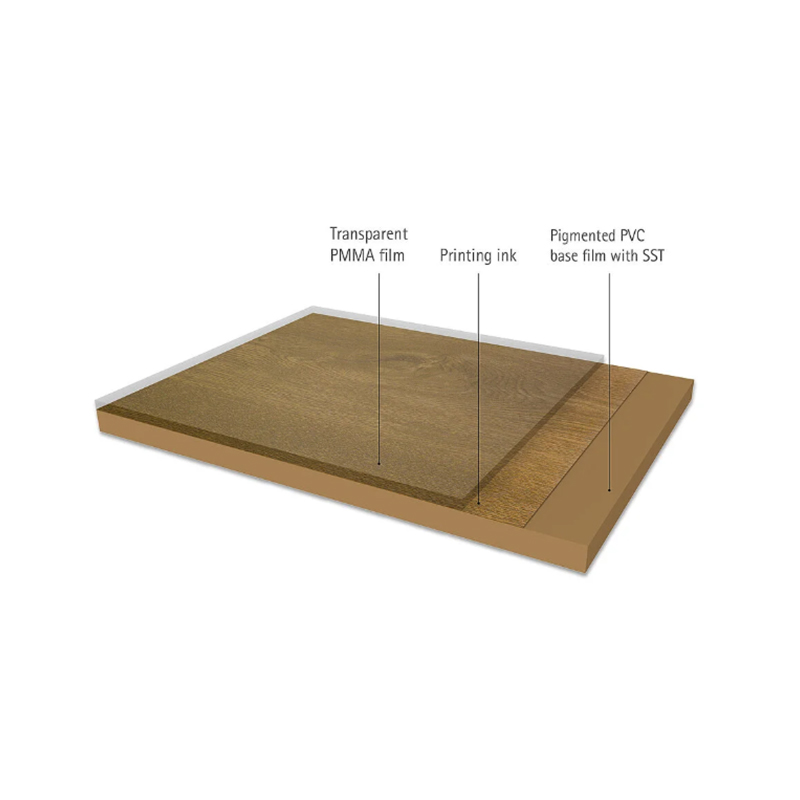
The foundation is the PVC substrate itself, compounded with UV stabilizer additives during calendering. These additives — typically hindered amine light stabilizers (HALS) or benzotriazole-class UV absorbers — intercept UV photons before they reach the pigment layer, converting light energy into heat that dissipates harmlessly. This bulk-phase protection handles the long-term, cumulative UV load that surface coatings alone cannot manage.
Above the print layer, a UV-cured topcoat adds a hard, transparent barrier. Applied via UV radiation curing during production, this coating crosslinks into a dense polymer network with hardness typically reaching 3H pencil hardness or above. It resists surface abrasion while blocking residual UV transmission to the decorative layer beneath. On textured marble films, the topcoat conforms to the embossed surface profile, preserving the 3D stone effect without filling or flattening the relief.
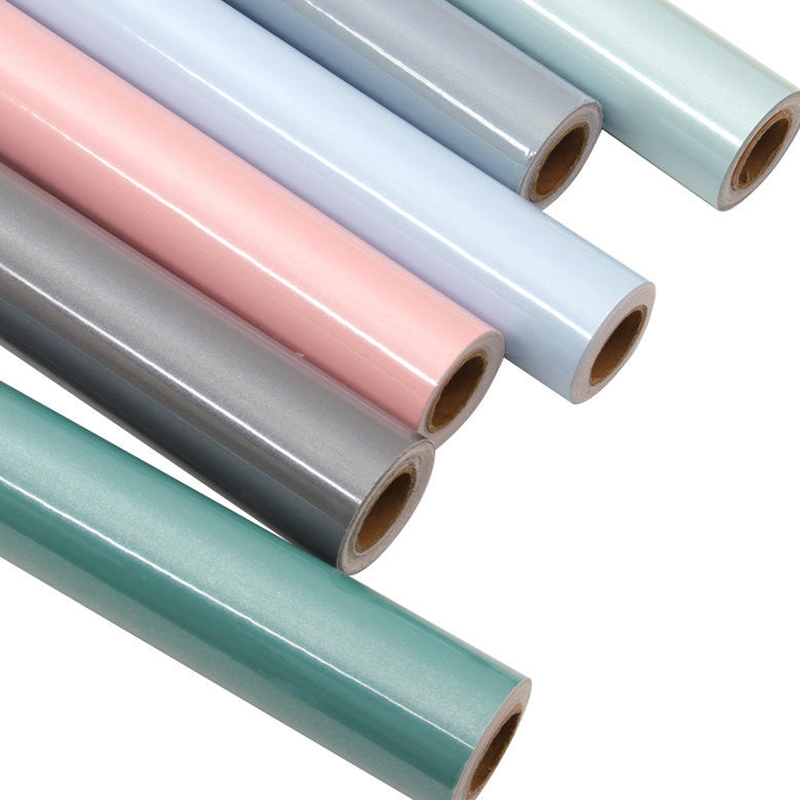
For applications requiring enhanced color stability, water-based UV-resistant ink formulations used in gravure or digital printing further extend the film's resistance to color shift. These inks are selected specifically for their light-fast pigment systems rather than standard decorative-grade colorants. Combined with the high gloss UV resistance PVC decorative film for solid color applications, this multi-layer approach ensures consistent surface performance across the full product range.
Performance Standards: What to Look for
Specifying UV resistant marble film on the basis of supplier claims alone introduces risk. The relevant performance parameters each have established test methods, and procurement decisions should be anchored to documented test results rather than product descriptions.
| Parameter | Test Method / Standard | Minimum Specification |
|---|---|---|
| UV color fastness | ISO 105-B02 / QUV accelerated weathering | ≥ Grade 4 (ISO 105-B02); ≥ 500 hrs QUV |
| Surface hardness | Pencil hardness test | ≥ 3H |
| Chemical resistance | Spot test (household cleaners, mild acids) | No staining or surface change after 24hr contact |
| Thermal stability | Dimensional change test | Stable from -20°C to 80°C |
| Environmental compliance | RoHS / REACH (SVHC) | Full compliance; SGS or TÜV certification |
Film thickness is a practical specification that directly affects both UV durability and processing behavior. Films in the 0.3–0.6mm range carry a thicker UV-stabilized substrate and are better suited to vacuum press wrapping on routed MDF panels, where the film must conform to curved profiles under heat and pressure. Thinner films (0.1–0.2mm) are used for flat lamination on panel surfaces where conformability is less critical. Specifying the wrong thickness for a production process is a common source of adhesion failures and surface defects.
Width availability — typically 1000mm to 1420mm — determines how the film yields against standard panel formats. Confirming roll width against substrate sheet size before ordering avoids waste patterns that inflate effective material cost.
Key Applications Where UV Resistance Is Non-Negotiable
Not every interior application puts decorative film under meaningful UV stress. But several common use cases do — and in these contexts, specifying standard film without UV stabilization is a reliability risk that generates warranty claims and replacement costs.
Commercial feature walls and lobby cladding are the highest-exposure category. Curtain wall glazing and atrium skylights deliver sustained indirect UV loads throughout daylight hours. A marble-effect film on a hotel lobby column or retail accent wall is visible from a distance, meaning any color shift is immediately apparent and difficult to remediate without full panel replacement.
Kitchen cabinet fronts and furniture panels in open-plan spaces face UV exposure from windows that is often underestimated. South and west-facing kitchens accumulate several hours of direct or near-direct solar exposure daily during summer months. Cabinet doors finished in UV-stabilized marble film retain their veining contrast and gloss level; standard film in the same position develops a washed-out appearance within one to two years.
Showroom and exhibition fit-outs use high-output LED and halogen lighting at close range. Many commercial lighting systems emit near-UV wavelengths that, while not identical to solar UV, contribute meaningfully to cumulative colorant degradation. UV-resistant film performs consistently under these conditions. For projects specifying large-format marble surfaces across wall panels and furniture simultaneously, the marble pattern PVC decorative film for furniture and cabinet surfaces provides the design consistency needed across substrate types.
UV Resistant Marble Film vs. Other Surface Options
Positioning UV resistant marble PVC film correctly against competing materials helps procurement teams justify the specification and avoid substitution with lower-performing alternatives during value engineering reviews.
Natural marble does not fade, but it requires sealing, is sensitive to acid etching from cleaning products, weighs 25–30 kg/m² at typical slab thickness, and carries installed costs that are multiples of decorative film. For furniture and wall cladding applications at commercial scale, the weight, cost, and maintenance requirements disqualify it in most project budgets.
UV marble boards (2–10mm PVC or WPC panels with UV-cured surfaces) provide rigidity and a thick protective layer, but they are panel products — they cannot wrap profiles, conform to curved surfaces, or be used in vacuum press production. They require mechanical fixing or adhesive bonding to substrate panels, adding labor and thickness to the finished assembly.
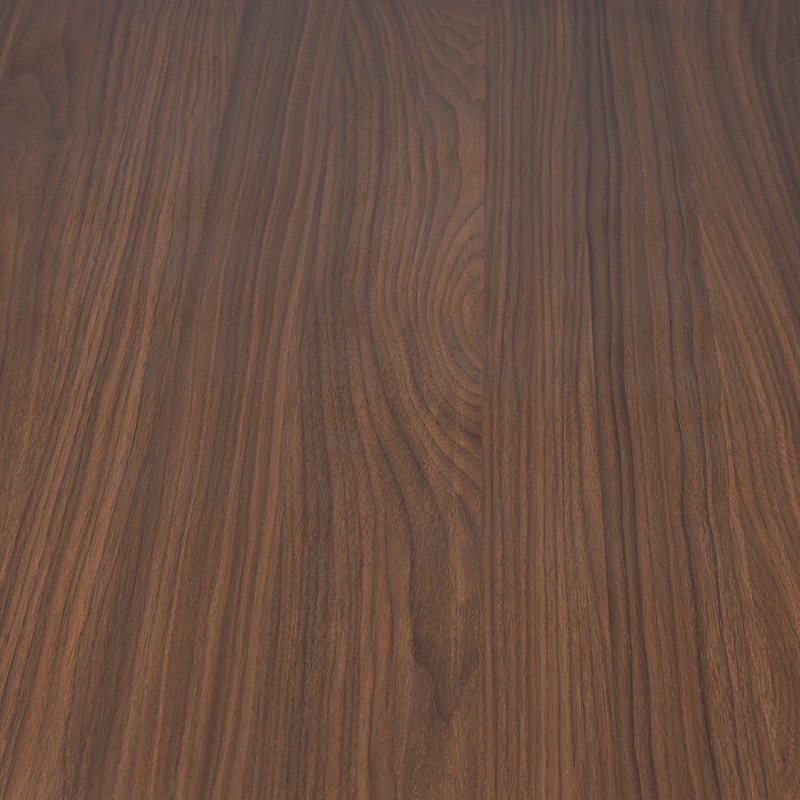
Standard PVC decorative film without UV stabilization costs less at point of purchase but carries a hidden lifecycle cost. Color shift within 12–24 months in UV-exposed applications generates customer complaints and replacement obligations that quickly exceed the initial material saving. For any project with an expected service life beyond two years in a lit interior, the UV-stabilized specification is the lower total-cost option. Comparing across film categories, the anti-scratch wood grain PVC film with UV protective coating illustrates how the same UV-resistance engineering applies across pattern categories, allowing consistent performance specification across a mixed-design project.
Selecting the Right UV Resistant Marble Film for Your Project
The selection process for B2B buyers involves more than choosing a pattern. Production compatibility, certification documentation, and supply reliability each affect the total cost of using the material across a production run.
Start with the lamination process your production line uses. Vacuum press wrapping requires films with appropriate elongation at temperature — typically films in the 0.3–0.5mm range with thermally activated adhesive backing. Flat lamination on panel presses uses thinner films and different adhesive systems. A film specified for one process will not perform reliably on the other, regardless of its UV resistance properties.
Verify that certification documentation covers the specific film SKU being purchased, not a representative product from the same range. RoHS and REACH certificates should identify the exact material composition. For projects supplying European markets, REACH SVHC (Substances of Very High Concern) compliance documentation is a non-negotiable import requirement.
Pattern consistency across production batches is a practical concern that is easy to overlook during initial sampling but becomes significant in large orders. Marble patterns in particular rely on subtle tonal relationships between veining and background — batch-to-batch color drift that falls within standard tolerances can still be visible when panels from different production runs are installed side by side. Confirming batch management practices and requesting color matching standards from the supplier before placing volume orders prevents installation-phase problems that are costly to resolve.
For custom pattern development, OEM capabilities — including digital printing of proprietary marble designs and custom emboss profiles — allow furniture and interior brands to specify exclusive surface finishes that are not available from standard catalog offerings. This is increasingly relevant for hospitality and retail fit-out projects where surface material differentiation is part of the brand specification.
Recommended Articles
-
1.1 What is PP Decorative Film? PP decorative film is a type of surface material made primarily from polypropylene, a versatile and widely used thermoplastic po...
View More -
Is your furniture looking tired, outdated, or damaged? Imagine transforming it effortlessly into something stunning, durable, and uniquely yours. Enter PVC deco...
View More -
1.Introduction Edge banding is a crucial finishing process used in woodworking and furniture manufacturing to cover and seal the exposed sides of materials such...
View More
Xuanyi

Feel free to contact us
Xuanyi, dedicated to the application and research and development of new materials. Furniture Decorative Film Maufacturers and Factory.
Product Fast Links
Contact Information
-
 Room G, 4th Floor, Bailingshi Building, Haizhou Street, Haining City, Jiaxing City, Zhejiang Province, 314400, China
-
 [email protected]
-
 +86-15059290610
-
 +86-15059290610
Copyright © 2024Jiaxing Xuanyi International Trade Co.,Ltd All Rights Reserved. PVC/PP/PET Lamination Film for MDF WPC Plywood

