
 English
 Español
 عربى
عربى
 Home / Blog / Industry News / Wood Grain PP Film: Anti-Scratch, Recyclable & Built for Demanding Use
Industry News
Wood Grain PP Film: Anti-Scratch, Recyclable & Built for Demanding Use
2026-06-15
Specifying a surface film for outdoor furniture or eco-grade building panels is a different decision than picking a wrap for a kitchen cabinet door. The substrate moves. The temperature swings. The surface gets touched, dragged across, and left in direct sun. Standard decorative films handle indoor use well — but when the application pushes harder, the base material stops being a background detail and becomes the determining factor. That's exactly where wood grain PP film earns its place.
Content
- 1 What Makes PP the Right Base Material for Wood Grain Film
- 2 How Wood Grain PP Film Is Made: Gravure Printing and Anti-Scratch Technology
- 3 Key Performance Advantages: Anti-Scratch, Anti-Yellowing, and Weather Resistance
- 4 Where Wood Grain PP Film Is Used: Outdoor Furniture, Eco Building Materials, and Durable Packaging
- 5 PP vs PVC Decorative Film: Which Should You Choose?
- 6 Choosing a Reliable Wood Grain PP Film Supplier
What Makes PP the Right Base Material for Wood Grain Film
Polypropylene (PP) is a thermoplastic polymer that sits in a different category from PVC from the ground up. It contains no chlorine and no plasticizers, which means it doesn't release harmful compounds during processing or at end of life. More practically, PP is 100% recyclable — a genuine recyclability that aligns with green building standards and eco-material certification requirements, not just a marketing claim.
The material is lightweight relative to its mechanical strength, which matters for large-format panels and furniture components where cumulative weight affects handling and shipping cost. PP also carries a naturally high chemical resistance, giving it stable performance in environments where cleaning agents, moisture, or mild solvents are part of regular maintenance routines.
For manufacturers sourcing surface films for eco building materials or sustainable product lines, PP's chlorine-free composition directly supports compliance with low-VOC and restricted-substance requirements increasingly demanded by green building specifications worldwide. You can explore how these material choices connect to broader production standards on our sustainability practices and material certifications page.
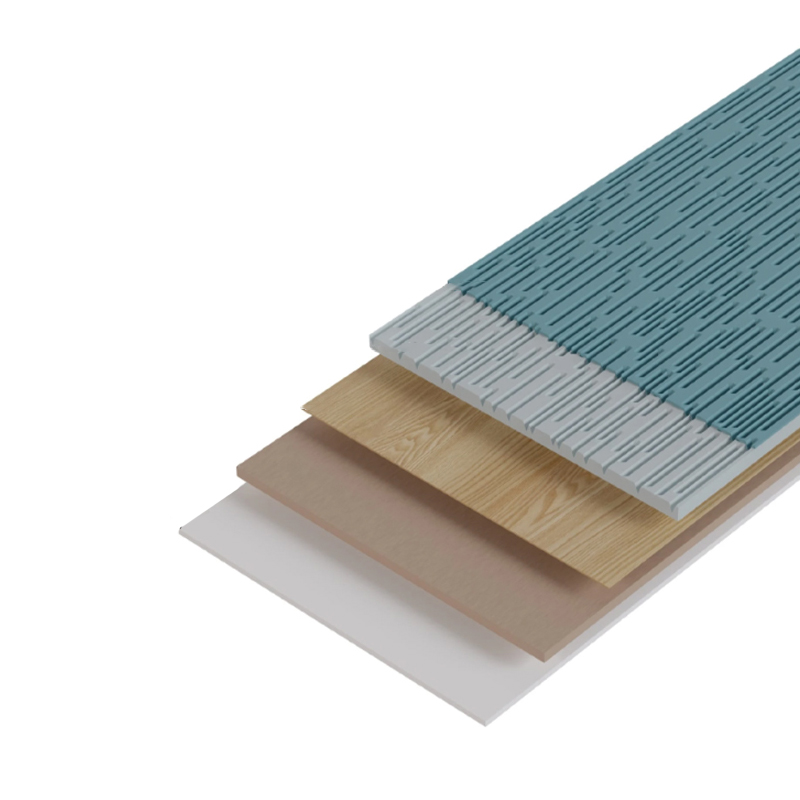
How Wood Grain PP Film Is Made: Gravure Printing and Anti-Scratch Technology
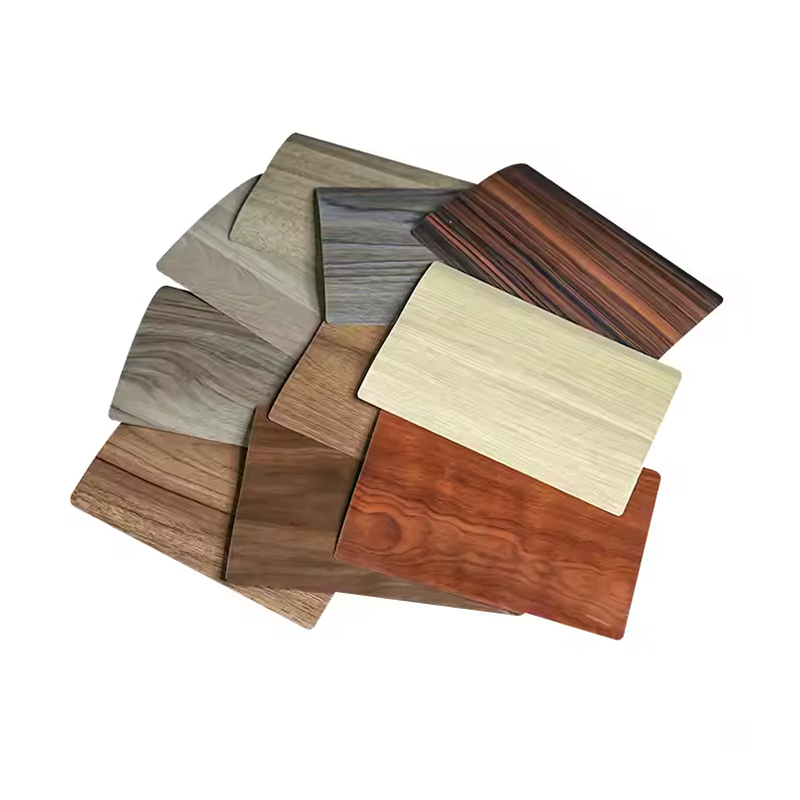
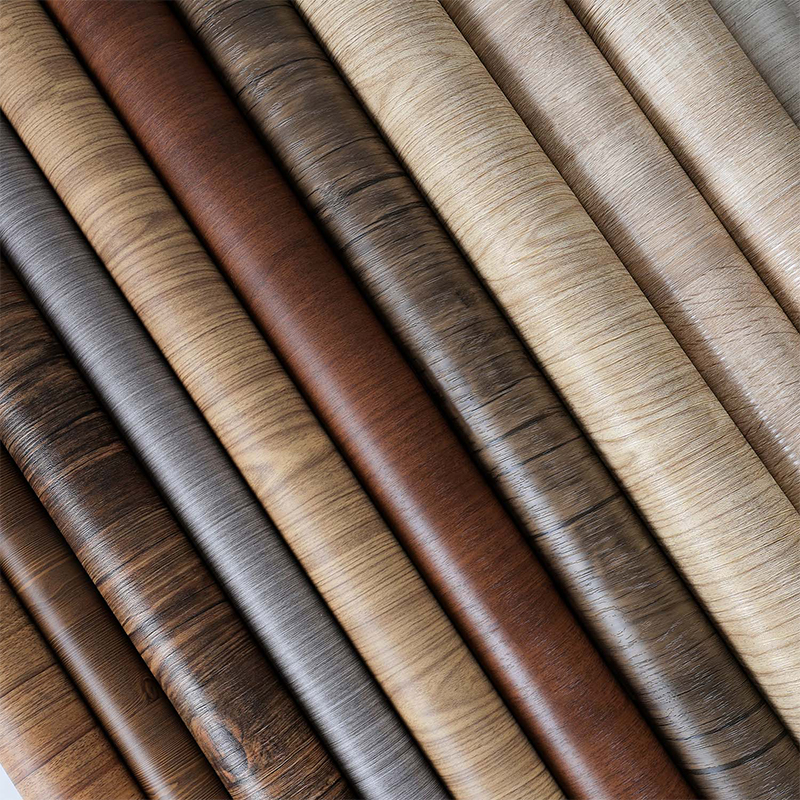
The visual quality of a wood grain film depends almost entirely on the printing process. Gravure printing — the method used for wood grain PP film — transfers ink from engraved cylinders under high pressure, producing exceptionally fine detail in grain texture, color depth, and pattern consistency across the full roll width. The result is a film surface that replicates the visual characteristics of natural wood species with high accuracy and consistent batch-to-batch repeatability.
Anti-scratch performance is applied as a functional coating on the film surface, not embedded in the base material. This coating raises the surface hardness, reducing the marking and scuffing that occurs during furniture assembly, product transit, and everyday use. The difference is measurable: an uncoated decorative film surface will show fine scratches from fingernail contact and assembly hardware; an anti-scratch coated surface resists these under normal handling conditions.
Thickness range runs from 0.12mm to 0.3mm, covering both lightweight surface wraps and heavier lamination applications. Available widths of 1000mm to 1420mm accommodate standard board dimensions for furniture panels, door faces, and building board substrates without requiring joins across the surface — a practical detail that matters significantly at production scale.
Key Performance Advantages: Anti-Scratch, Anti-Yellowing, and Weather Resistance
Three performance properties define where wood grain PP film reliably outperforms standard decorative options — and each one addresses a real failure mode rather than a specification point on paper.
- Anti-scratch surface. The hardened coating resists surface marking from abrasion contact — assembly tools, hardware edges, objects dragged across furniture surfaces. For outdoor furniture pieces that see rough use in gardens, terraces, and commercial outdoor seating environments, this is the difference between a surface that looks acceptable after a season and one that looks worn. The anti-scratch layer also simplifies cleaning: debris and grit can be wiped off without leaving trails across the finish.
- Anti-yellowing stability. UV exposure degrades many polymer films over time, causing the surface color to shift toward yellow or brown and the wood grain pattern to lose contrast. PP film with anti-yellowing treatment retains color fidelity significantly longer under outdoor or high-light exposure conditions. For products with a 3–5 year or longer expected service life, this matters to end-user satisfaction and warranty exposure.
- Weather and moisture resistance. PP is inherently resistant to moisture absorption, and the film construction adds a barrier that protects the substrate beneath — particularly relevant for MDF and plywood panels used in semi-outdoor or high-humidity environments. The material does not swell, delaminate, or support mold growth under normal weather exposure, making it a practical surface solution for eco building materials intended for covered outdoor structures, balcony paneling, and exterior cladding systems.
Where Wood Grain PP Film Is Used: Outdoor Furniture, Eco Building Materials, and Durable Packaging
The application range for anti-scratch wood grain PP film follows directly from its performance profile. Three sectors account for the majority of use:
- Outdoor furniture. Garden tables, chairs, storage benches, and lounge pieces that carry a wood grain aesthetic but need to survive seasonal weather exposure. PP film provides the visual warmth of wood without the maintenance burden of real timber and without the color degradation that affects standard PVC under prolonged UV exposure. Manufacturers producing outdoor furniture for retail or hospitality markets use it to balance aesthetic quality against durability cost.
- Eco building materials. WPC (wood-plastic composite) boards, eco MDF panels, and sustainable plywood products increasingly use PP film as the surface layer precisely because it matches the environmental positioning of the substrate. A panel marketed as chlorine-free or low-emission loses credibility if the surface film contains PVC or heavy-metal stabilizers. PP film closes that gap, allowing the complete panel product to carry consistent eco credentials. For PP flooring film for high-traffic surfaces, the same logic applies — the surface material needs to perform under foot traffic while supporting recyclability claims for the overall floor system.
- Durable packaging. High-value product packaging — particularly for furniture components, construction hardware, and outdoor equipment — uses wood grain PP film as a decorative surface wrap that must survive handling, stacking, and transit without losing its appearance. The combination of physical toughness and anti-scratch coating means the packaging arrives at retail or end-user locations looking as intended, without the surface damage that undermines perceived product quality before the box is even opened.
PP vs PVC Decorative Film: Which Should You Choose?
Both materials work well for decorative surface applications, and PVC remains the dominant choice for standard indoor furniture production for good reasons — it's flexible, easy to process on standard lamination equipment, and available in a very wide range of patterns and finishes. For most kitchen cabinet, wardrobe, and interior panel applications, a high-quality PVC decorative film delivers reliable results at competitive cost.
PP becomes the stronger choice when one or more of the following conditions apply:
- The application involves outdoor or semi-outdoor exposure where sustained UV and weather contact is expected
- The product line carries eco, green building, or recyclability positioning that requires chlorine-free surface materials
- The substrate or end product must meet restricted-substance certifications (REACH, RoHS, or equivalent) where PVC plasticizers present compliance risk
- Anti-scratch performance is a product requirement rather than a preference — particularly for furniture and surfaces that see rough handling during production, assembly, or daily use
- The manufacturer or brand is working toward full product recyclability at end of life
PP requires higher processing temperatures than PVC and benefits from lamination equipment configured for polypropylene. This is a setup consideration rather than a barrier — production lines already running PP film handle it routinely — but it's worth confirming equipment compatibility before transitioning from PVC-based surface films.
Choosing a Reliable Wood Grain PP Film Supplier
Consistency matters more than any single specification point when sourcing decorative film at production volume. A supplier that delivers accurate color on one order but varies by three delta-E units on the next creates rework, customer complaints, and margin loss that far outweighs any cost savings on the film itself. Evaluate suppliers on batch-to-batch color consistency, documented test data for scratch resistance and anti-yellowing performance, and the availability of OEM pattern and color development.
Lead time and minimum order flexibility also matter in practice. A supplier that can accommodate development samples, short-run trials, and full production volumes from a single relationship reduces the sourcing complexity that slows product development cycles.
Jiaxing Xuanyi International Trade Co., Ltd manufactures a full range of PP, PVC, and PET decorative films from its factory in Jiaxing, Zhejiang Province, supplying furniture manufacturers, building material producers, and packaging converters across global markets. Our anti-scratch PP decorative film for furniture and outdoor applications is produced via gravure printing with verified anti-scratch and anti-yellowing treatment, available across the full 0.12–0.3mm thickness range and standard widths to 1420mm. OEM pattern development and custom color matching are available for qualified volume orders.
Browse our complete PP decorative film range or contact us directly to discuss specifications, sample requests, and pricing.
Recommended Articles
-
1.1 What is PP Decorative Film? PP decorative film is a type of surface material made primarily from polypropylene, a versatile and widely used thermoplastic po...
View More -
Is your furniture looking tired, outdated, or damaged? Imagine transforming it effortlessly into something stunning, durable, and uniquely yours. Enter PVC deco...
View More -
1.Introduction Edge banding is a crucial finishing process used in woodworking and furniture manufacturing to cover and seal the exposed sides of materials such...
View More
Xuanyi

Feel free to contact us
Xuanyi, dedicated to the application and research and development of new materials. Furniture Decorative Film Maufacturers and Factory.
Product Fast Links
Contact Information
-
 Room G, 4th Floor, Bailingshi Building, Haizhou Street, Haining City, Jiaxing City, Zhejiang Province, 314400, China
-
 [email protected]
-
 +86-15059290610
-
 +86-15059290610
Copyright © 2024Jiaxing Xuanyi International Trade Co.,Ltd All Rights Reserved. PVC/PP/PET Lamination Film for MDF WPC Plywood

