
 English
 Español
 عربى
عربى
 Home / Blog / Industry News / Vinyl Wrapped Cabinet Doors: Material Guide, Durability, and Selection
Industry News
Vinyl Wrapped Cabinet Doors: Material Guide, Durability, and Selection
2026-08-17
By the end of the first summer, the kitchen cabinet doors looked tired: the film had lifted slightly at the lower corners, a thin white crease had formed where the vinyl stretched around the profile edge, and fine scratches had collected near the handles. Most buyers blame the wrapping shop. In practice, the film material and the way it is matched to the door structure decide how a vinyl wrapped cabinet door ages, long before the wrapping machine starts.
A vinyl wrapped cabinet door fails for three reasons: the film lacks the elasticity to cover deep profiles, the adhesive bond is not heat-stable, or the surface layer cannot resist daily abrasion. Choosing the correct film before production prevents all three.
Content
- 1 What a Vinyl Wrapped Cabinet Door Is Made Of
- 2 PVC, PP, or PET: Material Comparison for Cabinet Doors
- 3 Hidden Indicators: Why Wrapped Doors Fail in Service
- 4 Where Vinyl Wrapped Cabinet Doors Are Used Most
- 5 Selection Guide: Matching the Film to the Cabinet Door
- 6 Maintenance and Compliance: Making Wrapped Doors Last
What a Vinyl Wrapped Cabinet Door Is Made Of
The term "vinyl wrapped" covers two different products. In the furniture industry, it means a cabinet door produced by membrane pressing or flat lamination with a PVC, PP, or PET film. In DIY tutorials, it usually means applying a self-adhesive vinyl over an existing door surface. This article focuses on the industrial product, with a note on renovation where relevant.
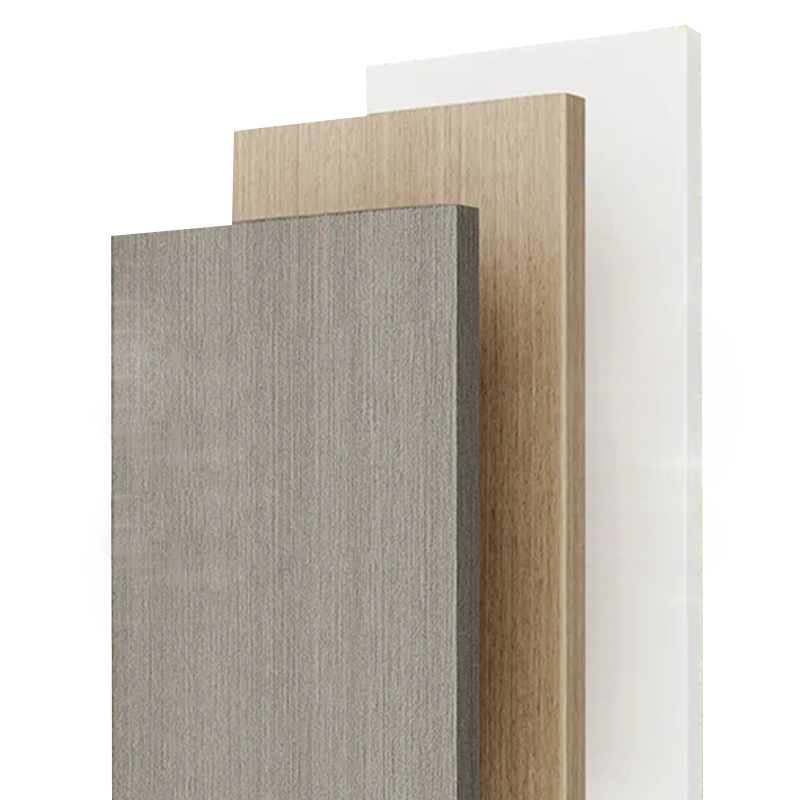
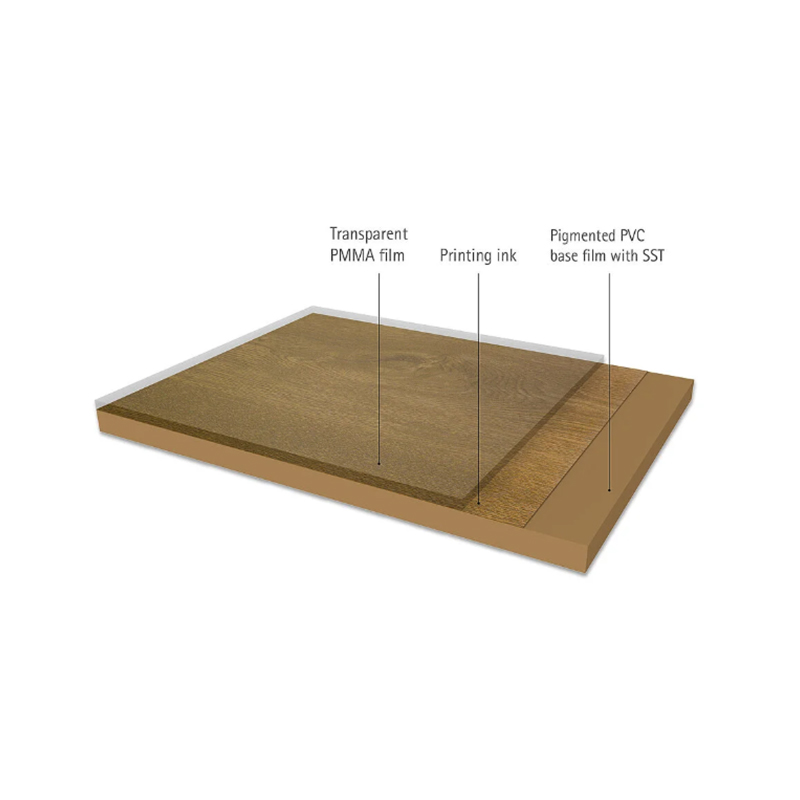
A wrapped cabinet door starts with a substrate, usually MDF, particleboard, or WPC, covered with a decorative film under heat and pressure. The film is a calibrated structure: a clear wear layer on top, a printed or solid-color layer in the middle, and a primer layer that bonds with the adhesive during pressing. Typical film thickness for membrane pressing is 0.12 to 0.30 mm, while self-adhesive renovation films are usually thinner.
Wear layer comes first
The top layer controls scratch resistance and gloss retention. In a thin 0.12 mm film, the wear layer is a small share of the total thickness, so low-cost films lose their surface quickly. A film designed for cabinet doors balances the wear layer with the forming layer, because a surface that is all hardness will crack on a tight radius.
Adhesion is a system
The film primer, the adhesive applied to the substrate, and the pressing temperature form one system. Membrane pressing typically runs at 120 to 180 degrees Celsius. If the film's forming window does not match the press curve, the bond fails months later rather than during production.
Formability has a price
Flexible PVC handles deep profiles and complex contours. PP film is lighter and chlorine-free, with good stability for flat and moderate profiles. PET film delivers a premium, glass-like finish and better heat resistance, but it is stiffer and is usually specified on slab doors or simple geometries.
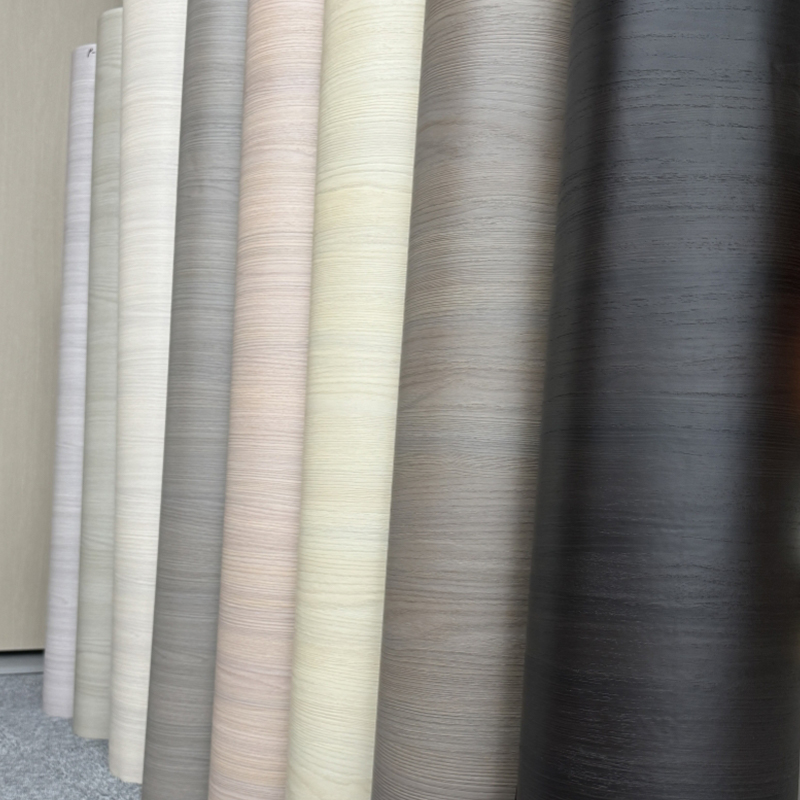
For most membrane-pressed kitchen doors, a proven starting point is a wood-grain PVC cabinet door film with balanced flexibility and abrasion performance.
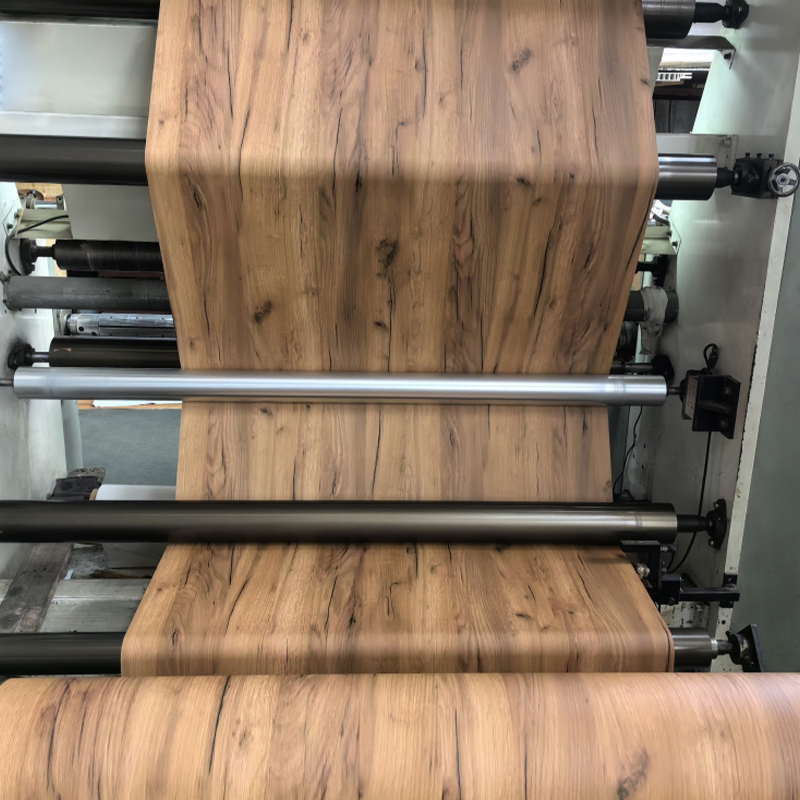 Wood Grain PVC Decorative Film Manufacturers, Factory - Jiaxing Xuanyi InternatiXuanyi is China Wood Grain PVC Decorative Foil Rolls Manufacturers and Wood Grain PVC Decorative Film Factory, OEM/ODM Custom Wood Grain ...View Product →
PVC, PP, or PET: Material Comparison for Cabinet Doors
Before comparing prices, compare the properties that affect a door in service. The table below summarizes the typical behavior of the three main film families in cabinet door applications.
Property
PVC film
PP film
PET film
Abrasion resistance
Good
Good to high
High
Forming flexibility
Excellent
Moderate
Limited
Heat resistance
Moderate
Good
Excellent
Chemical resistance in kitchens
Good
Better
Good
Environmental profile
Contains chlorine
Chlorine-free
Polyester, recyclable
Relative cost
Low
Mid
High
Comparison for typical 0.12 to 0.20 mm cabinet door films. Actual performance depends on the specific grade, wear layer thickness, and surface finish.
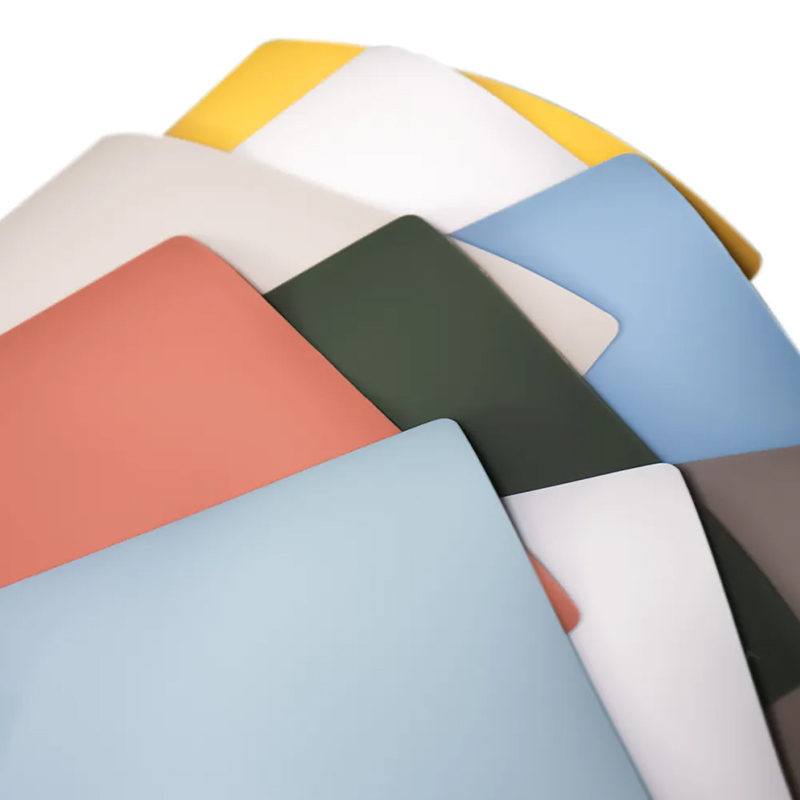
For handleless slab-door kitchens, a high-gloss white PET film for cabinet doors is a common substitute for painted lacquer, with better scratch behavior than a painted surface.
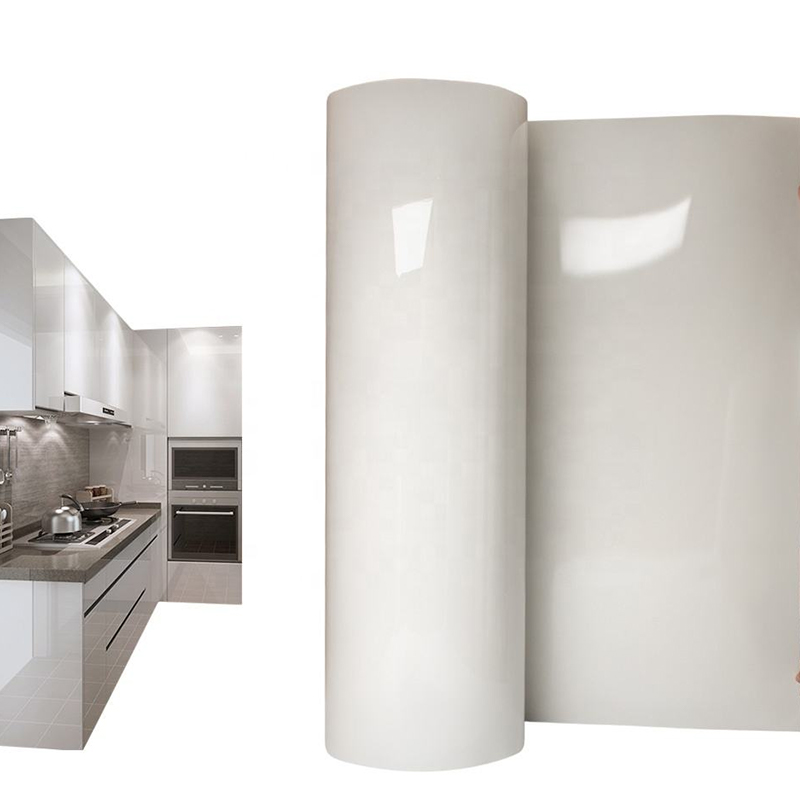 High-Gloss White PET Decorative Film for Cabinets & Wardrobes Manufacturers, FacXuanyi is China High-Gloss White PET Decorative Film for Cabinets & Wardrobes Manufacturers and Factory, OEM/ODM Custom High-Gloss White ...View Product →
Hidden Indicators: Why Wrapped Doors Fail in Service
Data sheets list thickness, gloss, and color, but they rarely show how a door fails. In cabinet production and after-sales feedback, the typical distribution of failure modes looks like this:
Edge lifting
35%
35%
Whitening at corners
25%
25%
Surface scratches
20%
20%
Color fading
12%
12%
Blistering
8%
8%
Edge lifting is almost always an adhesive or press-time problem. Whitening at corners indicates insufficient film elasticity or an overly aggressive vacuum. Scratches show that the wear layer was too thin for the application. Ask the film supplier for pressing parameters before production, and run a corner-wrap test on the actual profile: after cooling, bend the wrapped corner gently over a mandrel, and the film should not whiten or crack.
Where Vinyl Wrapped Cabinet Doors Are Used Most
Demand for film-wrapped doors is not evenly spread across furniture. The main application segments, based on typical industry usage of decorative film, are:
- Kitchen cabinets - 42%
- Wardrobes and closets - 26%
- Interior doors - 14%
- Commercial furniture - 11%
- Vanities and other joinery - 7%
Kitchens dominate because film wrapping combines a seamless look with resistance to moisture and kitchen cleaners. For renovation projects, existing door fronts can be refreshed with a light-oak wood-grain self-adhesive decorative film without a membrane press.
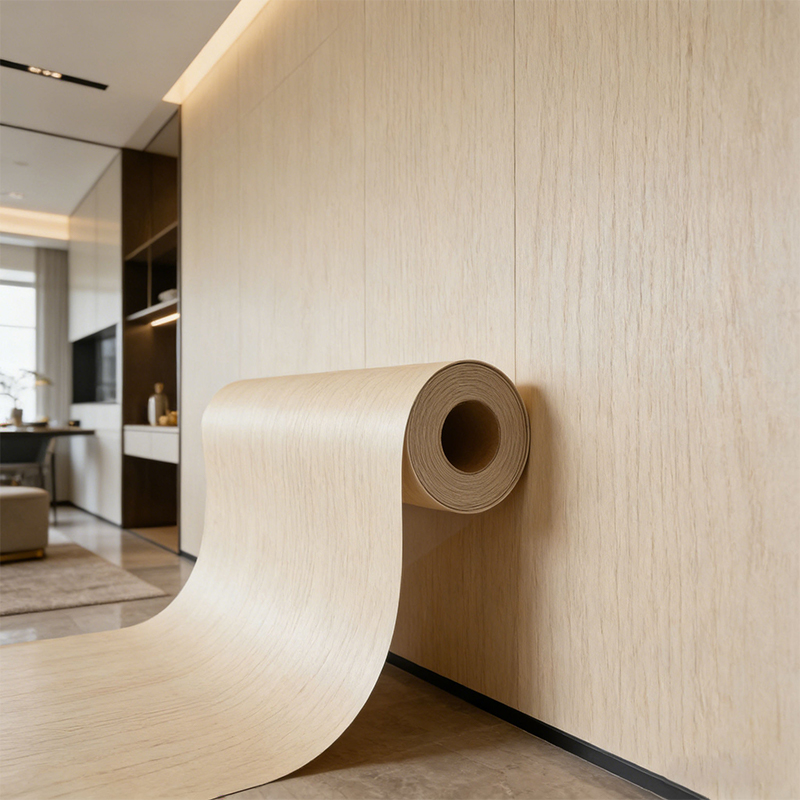 Light Oak Wood Grain Self Adhesive Decorative Film Manufacturers, Factory - JiaXuanyi is China Light Oak Wood Grain Self Adhesive Decorative Film Manufacturers and Factory, OEM/ODM Custom Light Oak Wood Grain Self ...View Product →
Selection Guide: Matching the Film to the Cabinet Door
Manufacturers and renovation buyers work differently, but the same five checks apply before committing to a film.
1. Inspect the profile
Measure the profile depth and corner radius before choosing a film. Deep contours require a more flexible film, so PVC is often preferred; flat slab doors can use PET or PP.
2. Match pressing parameters
Confirm the film's recommended forming temperature and vacuum level with the supplier, and compare them with your press curve. A mismatch shows up months later as edge lifting.
3. Verify the finish class
Set a gloss target on a 60 degree gloss meter: matte around 10 to 20, silk around 25 to 40, high gloss above 60. Judge texture from a physical sample, not from a photo.
4. Test on the real profile
Wrap a sample on your actual door profile and check the corners for whitening, micro-cracks, and adhesion after cooling. Repeat the test under both cold and warm shop conditions.
5. Plan batch consistency
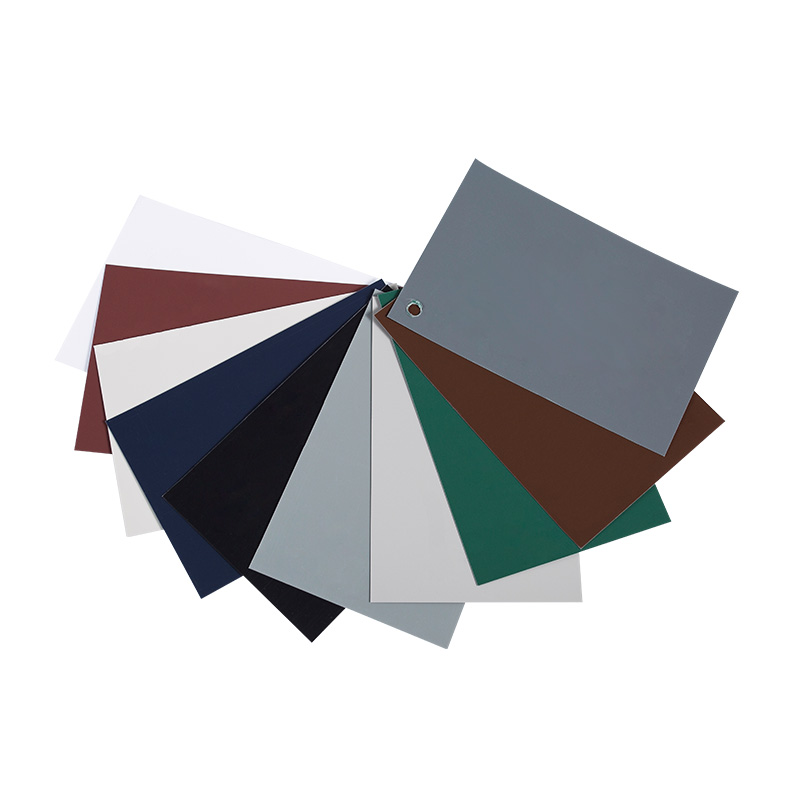
Request sample fans and color cards, and confirm the maximum acceptable color and gloss deviation between production batches. This matters more than the unit price.
Batch consistency is easier to control when the film comes from a single vertically integrated film production line, because raw material, calendering, and coating stay under one quality system.
Maintenance and Compliance: Making Wrapped Doors Last
Daily care
Clean wrapped doors with a soft cloth and mild dish soap. Avoid abrasive pads, solvent-based cleaners, and undiluted degreasers, which attack the surface and the edge seams. Wipe along the seams rather than into them, especially at the lower edges of cabinet doors where moisture collects.
Heat and light
Cabinets next to ovens or dishwashers face heat and steam. PVC film has a lower softening range than PP or PET, so manufacturers often choose PP or PET for doors closest to heat sources. On window-facing fronts, specify UV-resistant film to delay color fading.
Edges and moisture
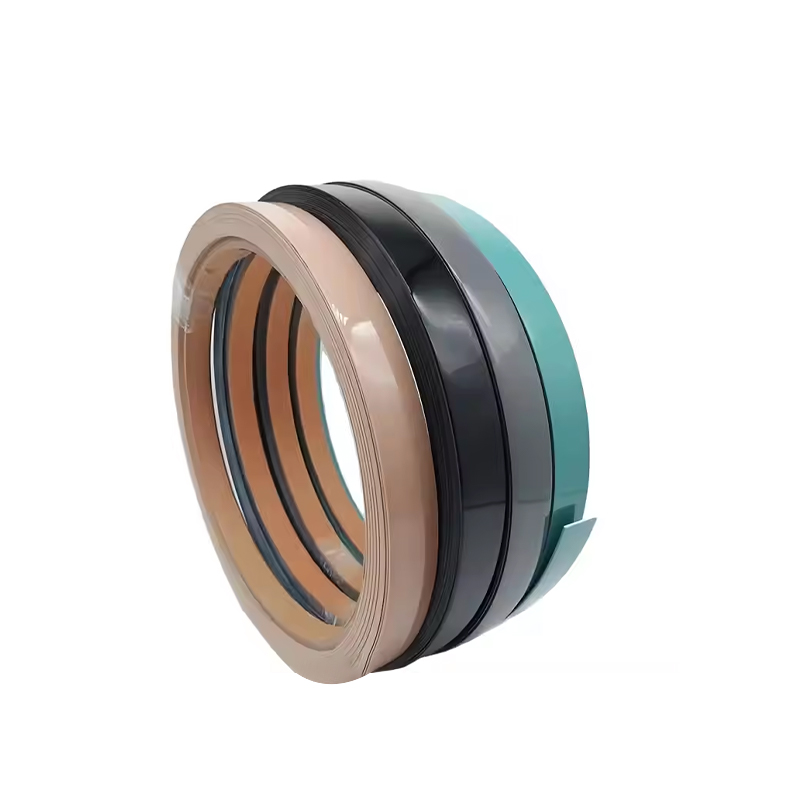
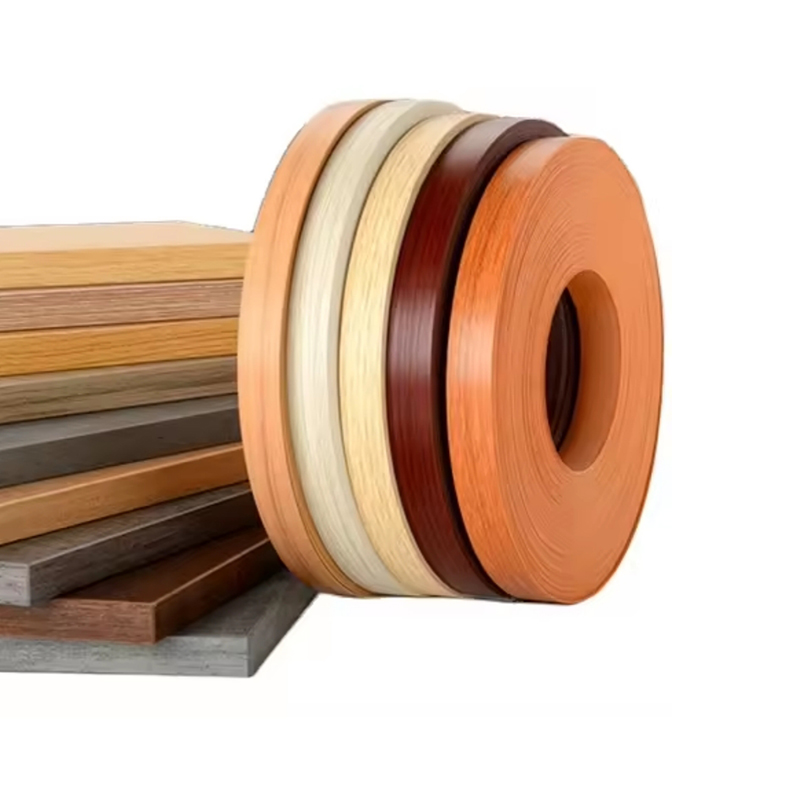
The film covers the face, but cut edges need matching ABS or PVC edge banding to keep moisture out. Choose edge banding from the same color system as the film so the seams stay invisible.
Compliance records
A growing number of EU and North American projects require documentation on formaldehyde emission (E1 or E0), REACH compliance, and recyclability. PP film is chlorine-free and PET film is recyclable, which simplifies environmental reporting. Our sustainability approach covers raw materials and production, so you can request supporting records before ordering.
Recommended Articles
-
1.1 What is PP Decorative Film? PP decorative film is a type of surface material made primarily from polypropylene, a versatile and widely used thermoplastic po...
View More -
Is your furniture looking tired, outdated, or damaged? Imagine transforming it effortlessly into something stunning, durable, and uniquely yours. Enter PVC deco...
View More -
1.Introduction Edge banding is a crucial finishing process used in woodworking and furniture manufacturing to cover and seal the exposed sides of materials such...
View More
Xuanyi

Feel free to contact us
Xuanyi, dedicated to the application and research and development of new materials. Furniture Decorative Film Maufacturers and Factory.
Product Fast Links
Contact Information
-
 Room G, 4th Floor, Bailingshi Building, Haizhou Street, Haining City, Jiaxing City, Zhejiang Province, 314400, China
-
 [email protected]
-
 +86-15059290610
-
 +86-15059290610
Copyright © 2024Jiaxing Xuanyi International Trade Co.,Ltd All Rights Reserved. PVC/PP/PET Lamination Film for MDF WPC Plywood

