
 English
 Español
 عربى
عربى
 Home / Blog / Industry News / Can You Paint Vinyl Cabinets? Prep Steps, Risks, and a Better Alternative
Industry News
Can You Paint Vinyl Cabinets? Prep Steps, Risks, and a Better Alternative
2026-08-12
Content
- 1 Can You Paint Vinyl Cabinets? Yes, but There Are Limits
- 2 Why Painting Vinyl Cabinets Seems So Attractive
- 3 What Actually Happens When You Paint Over Vinyl
- 4 If You Must Paint Vinyl Cabinets: Prep That Gives Paint a Chance
- 5 A More Predictable Route: Replace the Film Instead
- 6 Paint vs. Film: A Decision Checklist
- 7 How to Specify Replacement Film and Edge Banding
- 8 The Verdict: Paint Is a Short-Term Fix, Film Is a Long-Term One
Can You Paint Vinyl Cabinets? Yes, but There Are Limits
You have a set of kitchen cabinet doors wrapped in vinyl film. The wood grain looks dated, the white finish has yellowed, or the corners are starting to lift. The obvious fix is paint: a weekend, a roller, a can of primer, and the problem disappears. In practice, it rarely happens that way.
The short answer is that yes, you can paint vinyl cabinets, but the finish will not match the durability of the original wrap. For cabinet manufacturers, refinishers, and building managers who need a result that lasts, replacing the vinyl film with a fresh decorative film is usually the more predictable route. This article explains why paint struggles on vinyl-wrapped doors, how to give it the best possible chance if you still want to paint, and when a film replacement makes better sense.
Why Painting Vinyl Cabinets Seems So Attractive
Painting costs less than replacing doors, does not require emptying the kitchen, and can be done on site. That is why DIY forums are full of questions such as "Can I just paint over my existing vinyl wrapped MDF kitchen cabinets?" The appeal is clear: a quart of primer and a quart of enamel cost a fraction of a new door set, and the visual change is immediate.
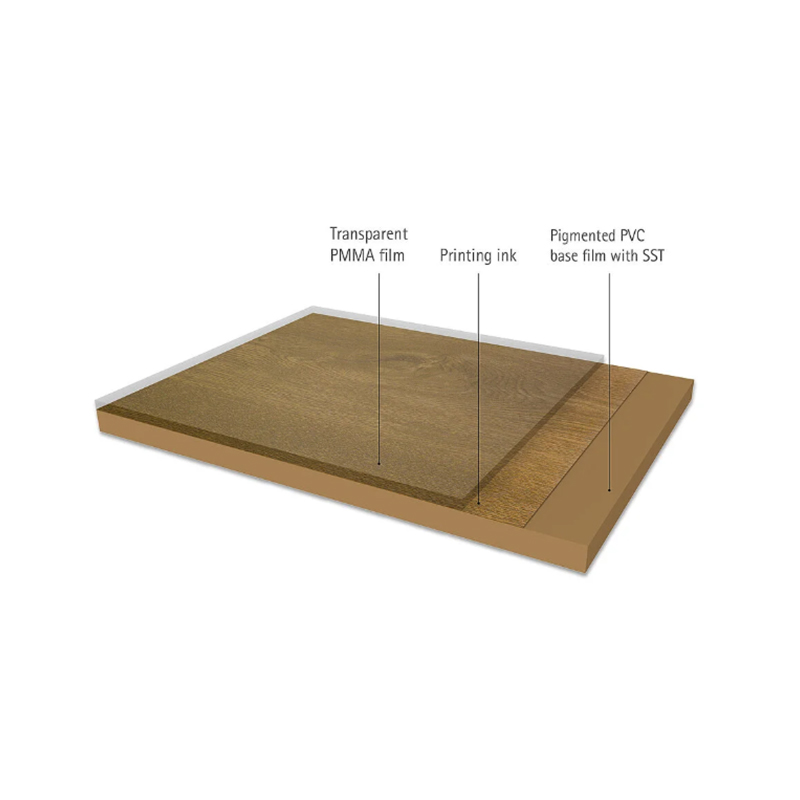
The catch is that vinyl-wrapped doors are not designed to accept paint. The film is a thermoplastic PVC or PET layer that is vacuum-formed or flat-laminated onto an MDF core. The surface is deliberately smooth, low-energy, and slightly flexible. These properties make the wrap moisture-resistant and easy to clean, but they also make it a poor substrate for paint adhesion.
What Actually Happens When You Paint Over Vinyl
Adhesion failures on painted vinyl cabinets usually show up within six to eighteen months, depending on heat, humidity, and cleaning habits. Three failure modes dominate:
- Edge peeling. Vinyl wraps are thermoformed around edges, so the film is under tension there. A rigid paint film cracks or lifts as the vinyl expands and contracts with temperature changes, especially near ovens and dishwashers.
- Poor mechanical key. A smooth PVC surface offers little tooth for paint. Without thorough deglossing, even a good primer sits on top of the film instead of bonding with it.
- Low surface energy. PVC and PET surfaces sit around 38-44 dynes/cm, far below the level that most water-based paints prefer. A shellac-based primer is one of the few coatings that can bridge this gap on a properly prepared surface.
The result is a finish that looks acceptable for a few months, then develops hairline cracks at the edges, chips around handles, and a soft film that peels when wiped with a damp cloth. Professional-grade enamels last longer, but the substrate remains the weak link.
If You Must Paint Vinyl Cabinets: Prep That Gives Paint a Chance
With disciplined preparation, painting vinyl-wrapped cabinets can produce reasonably good short-term results. It is not a shortcut; every step matters.
Step 1: Clean and Degrease
Kitchen doors carry a film of cooking oil, grease, and hand contact that repels paint. Wash with a degreasing detergent, rinse thoroughly, and dry. Skip this step and the primer will fish-eye within minutes.
Step 2: De-Gloss the Entire Surface
Do not just scuff the flat faces. Use a fine abrasive (220-320 grit) or a liquid deglosser and work every edge, radius, and recess until the surface is uniformly dull. Vinyl wraps on MDF are thin, so keep the pressure light; cutting through to the MDF will make the core swell when primer is applied.
Step 3: Apply a Shellac-Based Primer
A shellac-based primer is the most consistently recommended option from professional painters. It bonds to glossy vinyl, seals the surface, and gives the topcoat something to grip. Apply two thin coats rather than one thick coat, allow full cure, then sand lightly with 320-grit.
Step 4: Topcoat with a Water-Based Enamel
Use a water-based alkyd or acrylic enamel designed for cabinetry. These paints cure to a hard, block-resistant film, unlike standard wall paint, which stays soft and sticks to itself when doors are closed. Apply two or three thin coats, sanding lightly between them, and do not reinstall the doors for at least several days. The paint continues to harden for one to two weeks.
Even with this preparation, expect the finish to be more fragile than the original vinyl. Heat from a stove, steam from a kettle, and frequent cleaning with kitchen detergent all attack the paint film. For a rental property or a temporary update, this is an acceptable trade-off. For surfaces handled daily over five to ten years, it is a gamble.
A More Predictable Route: Replace the Film Instead
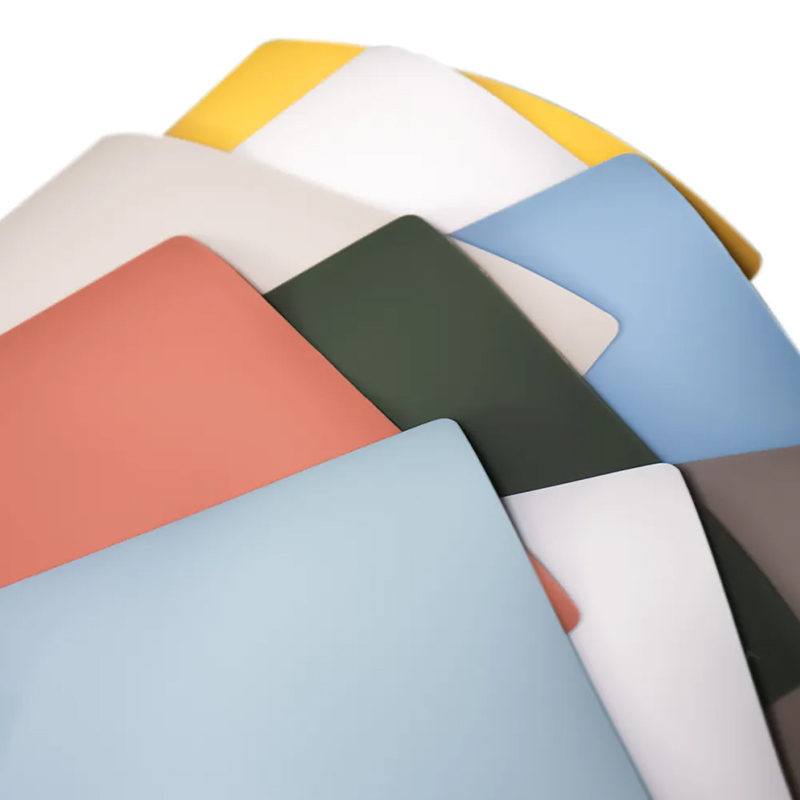
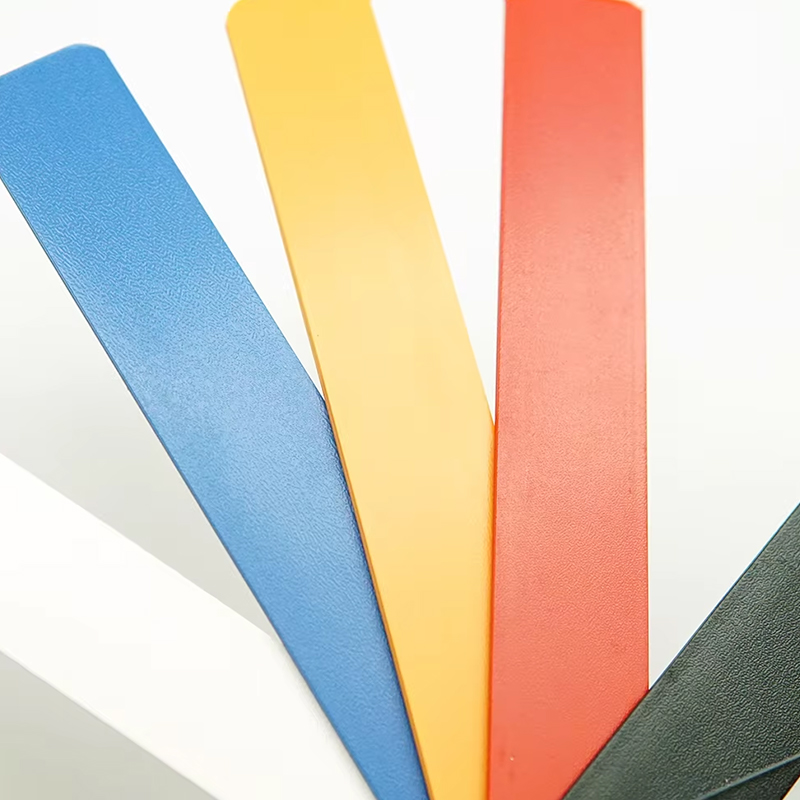
When the goal is a permanent change of colour or texture, replacing the worn vinyl with a fresh decorative film product range is the approach we see work best in cabinet manufacturing. You remove the old wrap or apply over a clean, well-adhered existing film, then heat-laminate a new layer of PVC, PP, or PET film onto the door. The result matches the original factory finish because it uses the same construction process, not a coating sitting on top of it.
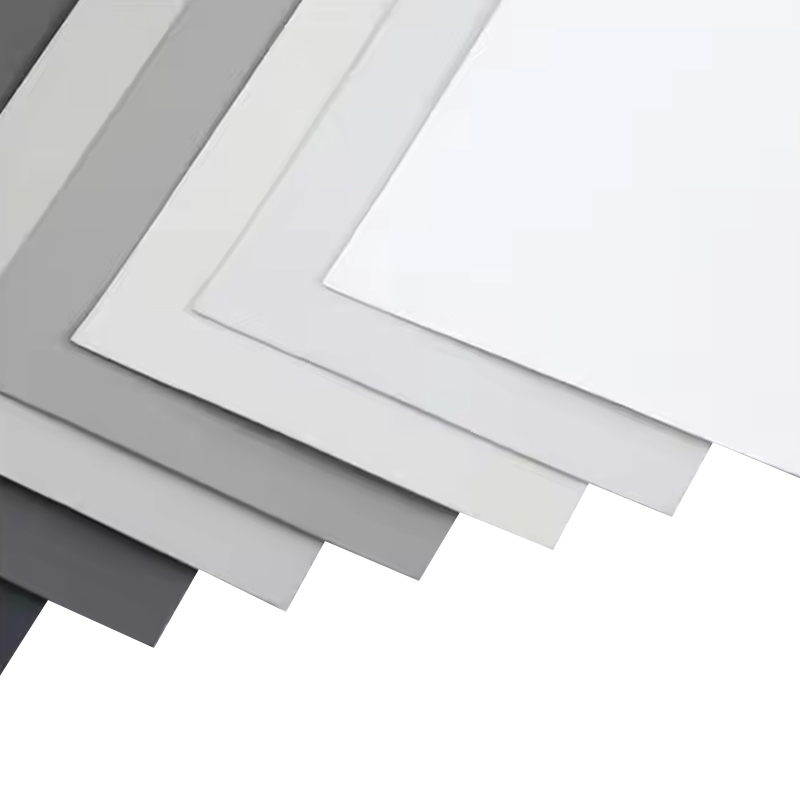
For existing MDF or particleboard doors, a grey-tone wood grain PET film for cabinets or a high-gloss PET film can be applied with a vacuum press or a flat lamination line. PET films offer a hard, scratch-resistant surface, while PVC films remain the most economical option with the widest range of textures. The difference between PET and PVC decorative film matters here: PET handles abrasion better, while PVC offers more flexibility for detailed profiles.
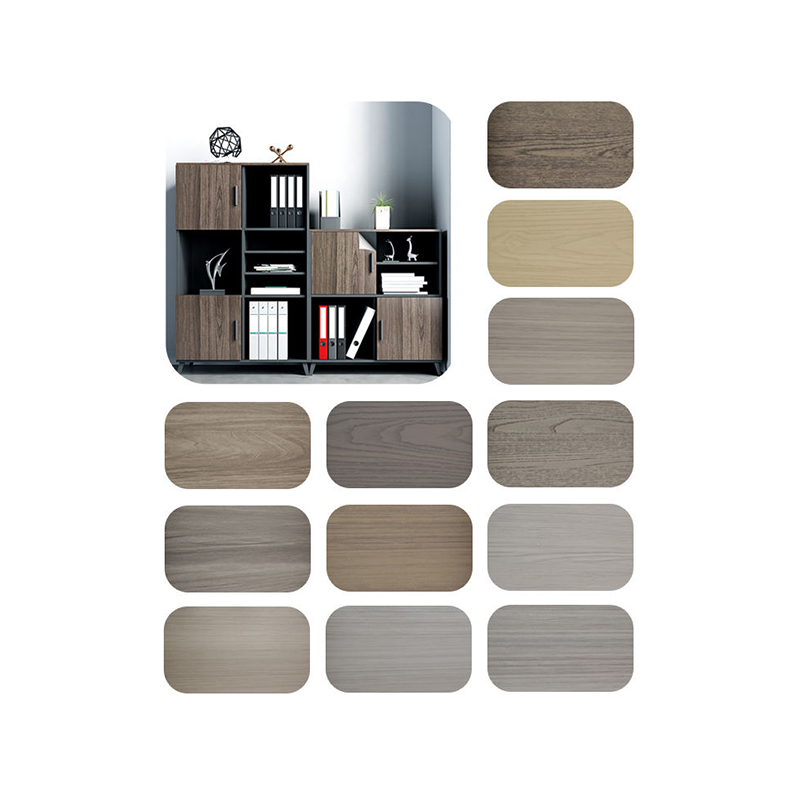 Grey-Tone Wood Grain PET Decorative Film for Cabinets Manufacturers, Factory - JXuanyi is China Grey-Tone Wood Grain PET Decorative Film for Cabinets Manufacturers and Factory, OEM/ODM Custom Grey-Tone Wood Grain PET ...View Product →
For customers who prefer a clean white look, a high-gloss white PET decorative film for cabinets and wardrobes delivers a stock finish that paint would struggle to reproduce on a vinyl substrate. The colour is consistent from panel to panel, and the film carries its own scratch and abrasion resistance instead of relying on a paint layer that can chip.
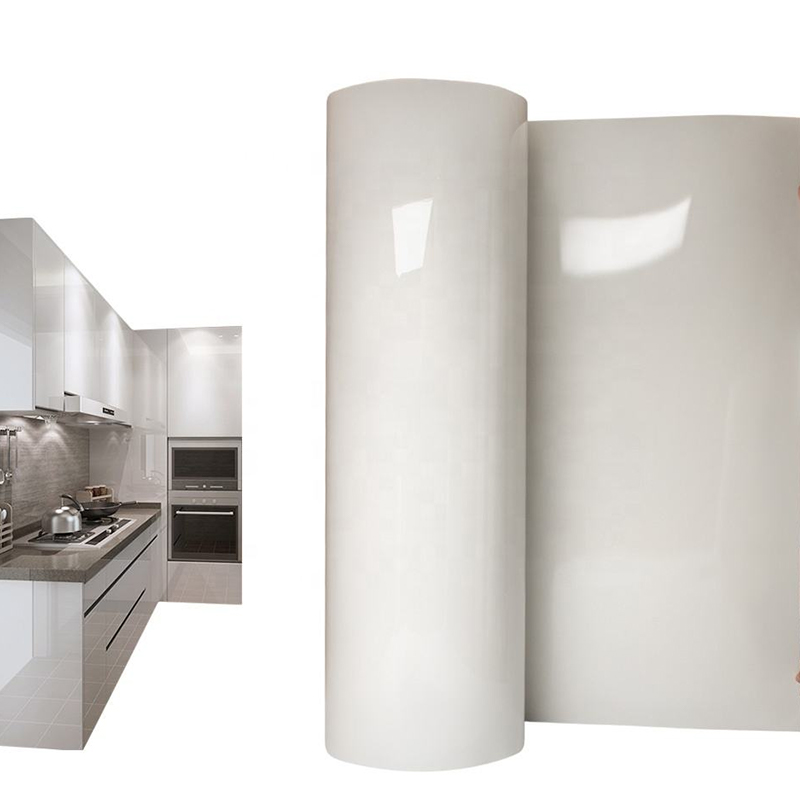 High-Gloss White PET Decorative Film for Cabinets & Wardrobes Manufacturers, FacXuanyi is China High-Gloss White PET Decorative Film for Cabinets & Wardrobes Manufacturers and Factory, OEM/ODM Custom High-Gloss White ...View Product →
Because our film manufacturing process covers calendering and coating in-house, cabinet makers rely on us for consistent thickness, uniform colour, and stable shrink behaviour across batches. Those parameters determine whether a film laminates cleanly without ripples or edge lifting, which is exactly where paint fails on vinyl doors.
Paint vs. Film: A Decision Checklist
The right choice depends on how long the finish needs to last and how the doors are used. The table below compares the two approaches from a cabinet refacing perspective.
| Criterion | Painting vinyl cabinets | Replacing with decorative film |
|---|---|---|
| Adhesion reliability | Moderate; heavily dependent on surface prep and primer | High; heat lamination bonds the new film to the substrate |
| Edge durability | Peeling at thermoformed edges is the most common failure | Film wraps around edges, matching the original door construction |
| Heat and steam resistance | Paint softens and cracks near stoves and dishwashers | PVC and PET films are engineered for kitchen cabinet surfaces |
| Upfront cost | Low material cost, but labour-intensive prep and recoat cycles | Higher material cost; requires access to lamination equipment |
| Appearance longevity | Colour shift or chipping often visible within 1-2 years | 6-10 years of normal kitchen use, depending on film type |
| Repairability | Chipped paint requires spot touch-up that is hard to blend | Damaged sections can be re-filmed with the same stock colour |
For a cabinet manufacturer, the difference matters beyond aesthetics. Painting adds a labour-heavy operation with cure times that slow throughput and a finish that varies with humidity and temperature. Laminating film is a single, repeatable step with controlled heat and pressure, which is why factory-built cabinets use film in the first place.
How to Specify Replacement Film and Edge Banding
If you decide to reface rather than paint, the film you choose determines both the appearance and the fabrication behaviour.
Match Film with Edge Banding
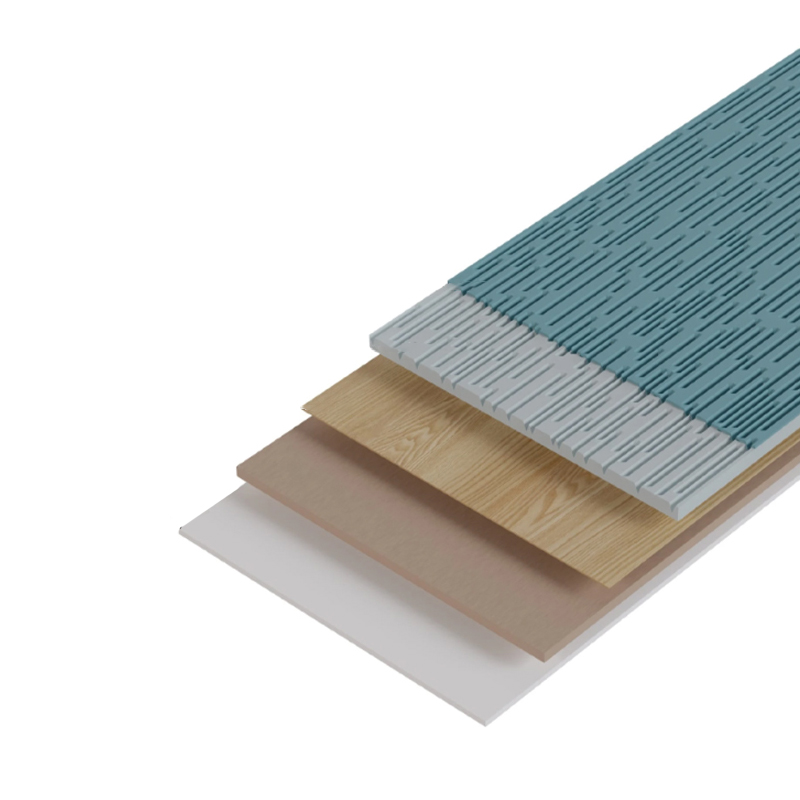
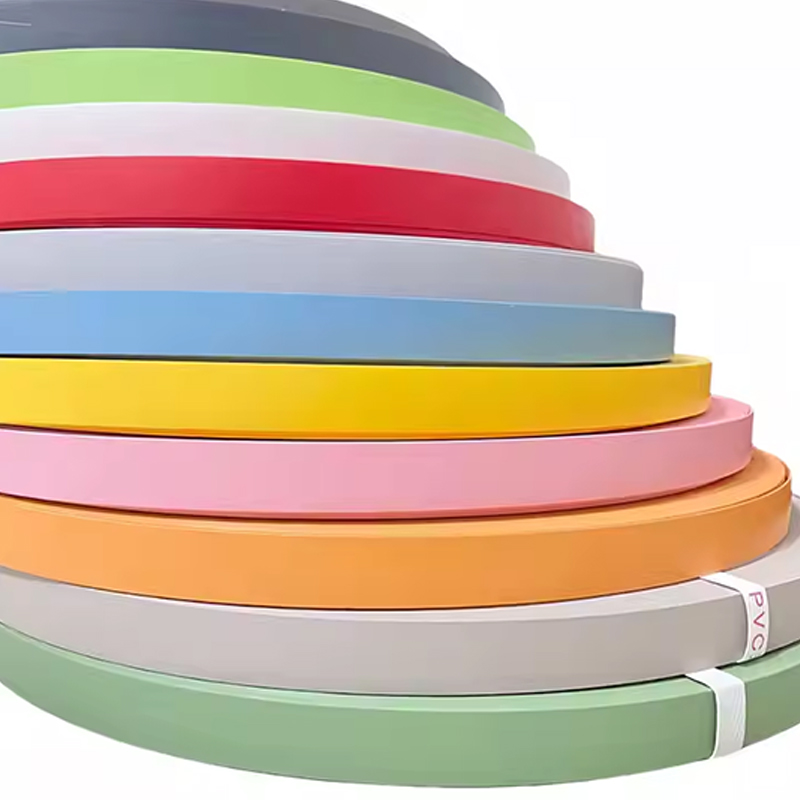
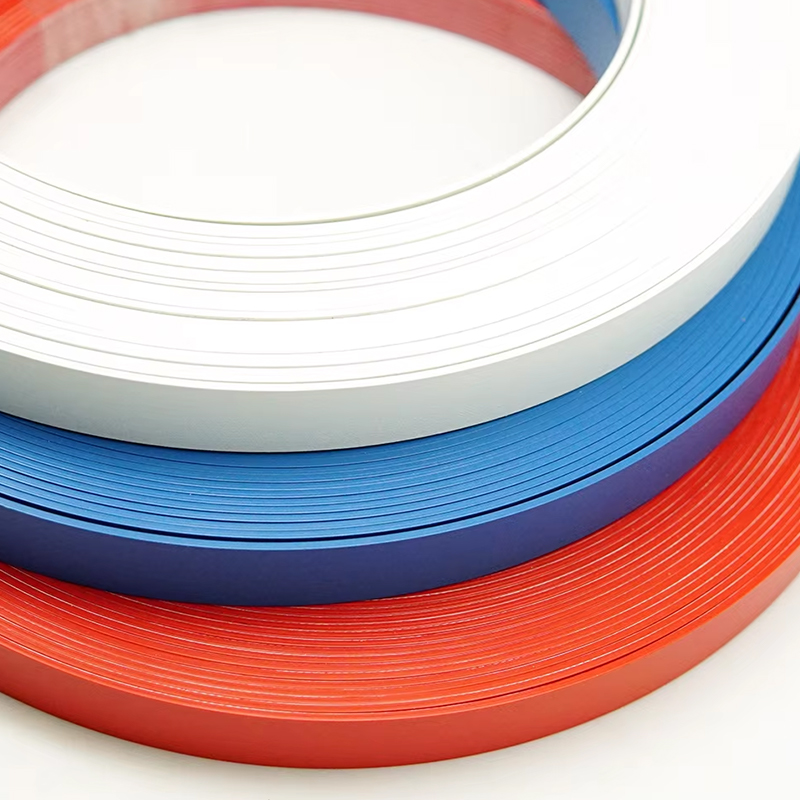
Door edges that are not wrapped by the film need edge banding in the same colour and gloss level. An exposed MDF edge absorbs moisture quickly, so a matching wood-grain PVC edge banding protects the door and keeps the visual line continuous. Ask your supplier for film and edge banding samples together, and check them under workshop lighting before committing to a batch.
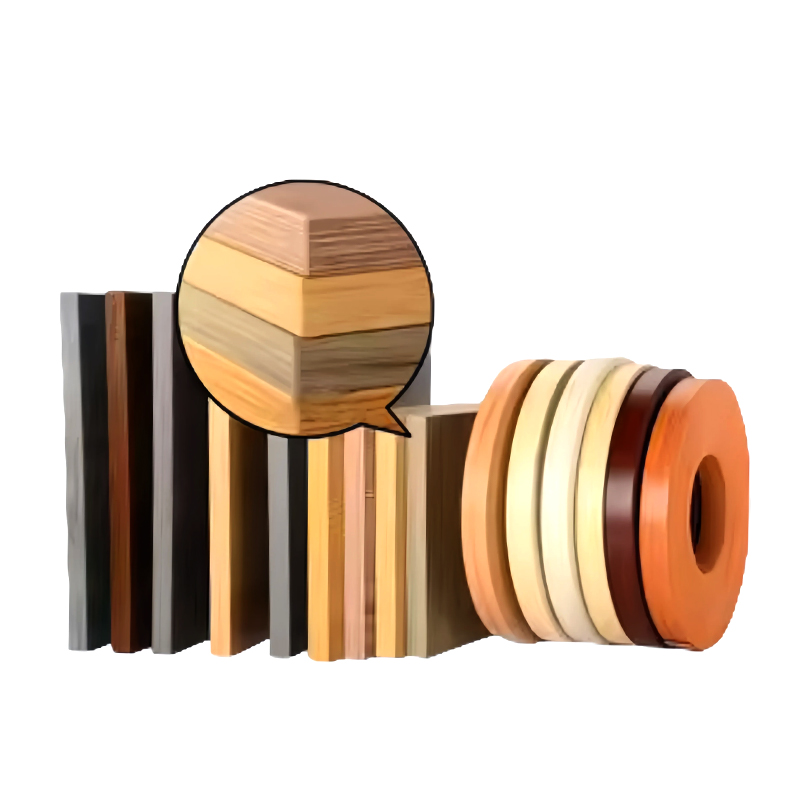 Solid Color PVC Edge Banding Tape Suppliers, CompanyAs Solid Color PVC Edge Banding Tape Suppliers and Company in China, Xuanyi supply Wholesale Solid Color PVC Edge Banding for furniture p...View Product →
Compare Surface Finish and Cleaning Behaviour
A scratch-resistant decorative film buying guide is a useful reference when comparing PET and PP options. PET films resist scratches well but can feel harder under sliding objects; PP films are softer and quieter but may need a protective topcoat in high-traffic areas. Matte, textured, and high-gloss versions of the same colour are not interchangeable, because the texture changes how fingerprints and smudges show.
Confirm Supplier Consistency
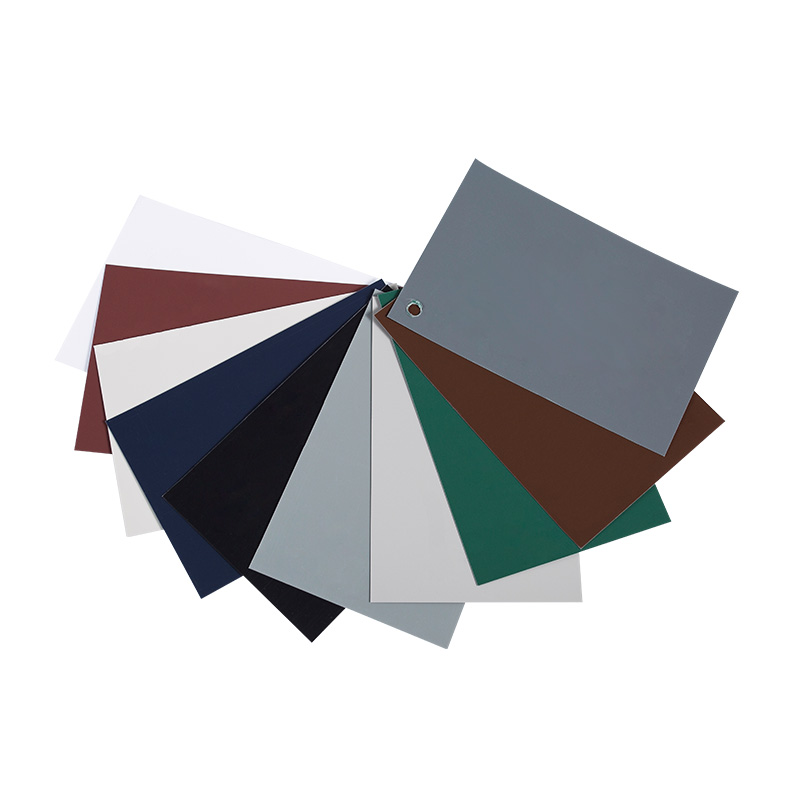
For anyone purchasing film rolls, batch-to-batch consistency is the greatest single risk. A thickness variation of more than 0.02 mm can cause visible ripple in the finished surface, and a colour shift between batches is obvious across a kitchen with many doors. Ask for a colour card, confirm the delivery lead time, and keep a control sample from the first production run. For large refacing projects, contact the manufacturer early to discuss stock availability and colour matching before painting crew schedules are set.
The Verdict: Paint Is a Short-Term Fix, Film Is a Long-Term One
Painting vinyl cabinets is possible, but it is a treatment applied to a substrate that was never engineered to accept paint. With careful cleaning, deglossing, a shellac-based primer, and a water-based enamel, you can get two or three years of decent service. Beyond that, the tension at the edges and the low surface energy of the vinyl almost always win.
For doors that need to last in a home, a rental, or a production run, replacing the vinyl wrap with fresh decorative film is the process that matches the original construction. It costs more per door but restores durability, consistent colour, and factory-quality edges that paint cannot replicate. If you are evaluating the change, test both approaches on a sample door side by side, and let the wear test decide.

Recommended Articles
-
1.1 What is PP Decorative Film? PP decorative film is a type of surface material made primarily from polypropylene, a versatile and widely used thermoplastic po...
View More -
Is your furniture looking tired, outdated, or damaged? Imagine transforming it effortlessly into something stunning, durable, and uniquely yours. Enter PVC deco...
View More -
1.Introduction Edge banding is a crucial finishing process used in woodworking and furniture manufacturing to cover and seal the exposed sides of materials such...
View More
Xuanyi

Feel free to contact us
Xuanyi, dedicated to the application and research and development of new materials. Furniture Decorative Film Maufacturers and Factory.
Product Fast Links
Contact Information
-
 Room G, 4th Floor, Bailingshi Building, Haizhou Street, Haining City, Jiaxing City, Zhejiang Province, 314400, China
-
 [email protected]
-
 +86-15059290610
-
 +86-15059290610
Copyright © 2024Jiaxing Xuanyi International Trade Co.,Ltd All Rights Reserved. PVC/PP/PET Lamination Film for MDF WPC Plywood

