
 English
 Español
 عربى

 Home / Blog / Industry News / Worktop Upstands: Film-Wrapped Upstand Specs, Matching Rules, Cost and Sealing

Industry News
Worktop Upstands: Film-Wrapped Upstand Specs, Matching Rules, Cost and Sealing
2026-10-26
A joinery shop quoting 140 worktop upstands for a hotel refurbishment usually asks the same question at tender stage: can the upstand finish match the doors, the worktop and the splash zone without adding a second supply chain? That single answer decides the unit price, the installation sequence and how many return visits the project absorbs after handover.
The practical truth is that an upstand is a small component with an outsized influence on how a kitchen or washroom looks after two years of steam, oil and daily wiping. Get the build-up and the wrap right and it disappears into the design. Get it wrong and it becomes the first thing a client points at during a snag walk.
The short answer: specify the upstand at the same time as the worktop and the cabinet doors, in the same decorative film family, at the same gloss level. A 100 mm film-wrapped upstand with a sealed top edge and a 2 mm expansion gap at each wall costs a fraction of a stone upstand, installs faster, and matches the cabinetry far more closely than a mixed-material compromise.
Content
What an Upstand Actually Has to Do
An upstand is the short vertical strip running along the back edge of a worktop, normally 60 to 120 mm high, with 100 mm the most common residential specification. It is not decorative trim. It closes the joint between worktop and wall, keeps splashes off the plaster, and gives the eye a clean horizontal line where the horizontal surface turns vertical.
Wall protection
The primary job is a moisture and grease barrier at the most splashed 100 mm of any kitchen.
Joint cover
It hides the worktop-to-wall gap that cannot be cut perfectly straight on site, especially on older masonry walls.
Visual continuity
A matched upstand lets the worktop, doors and plinth read as one surface rather than three separate purchases.
Upstand and splashback are routinely confused. An upstand is a continuous strip in the same material as the worktop; a splashback is a taller panel behind the hob, typically 300 to 600 mm of glass, tile or stone. Both can coexist: the upstand runs the length of the run, the splashback covers the cooking zone.
Two numbers drive most site disputes. Below 60 mm the strip will not reliably cover a tile cut or the adhesive line behind it. Above 150 mm it starts to compete with wall units, sockets and window reveals. The other number is the gap: 2 mm expansion allowance at each end, closed with a neutral-cure silicone rather than rigid grout, keeps the strip from bowing when the worktop takes up moisture or heat.
Matching the Upstand to Worktop and Doors
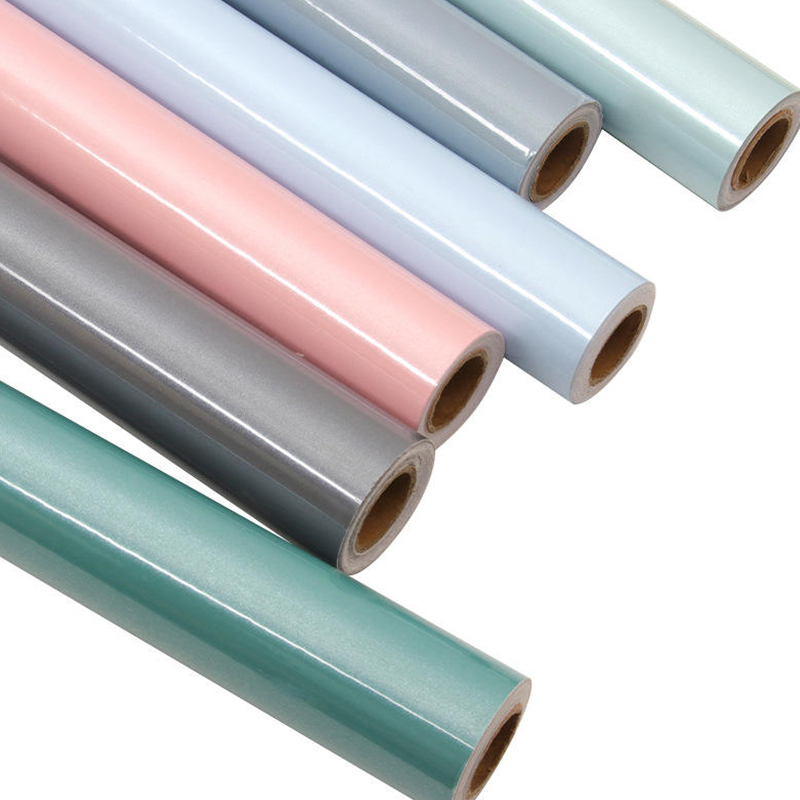
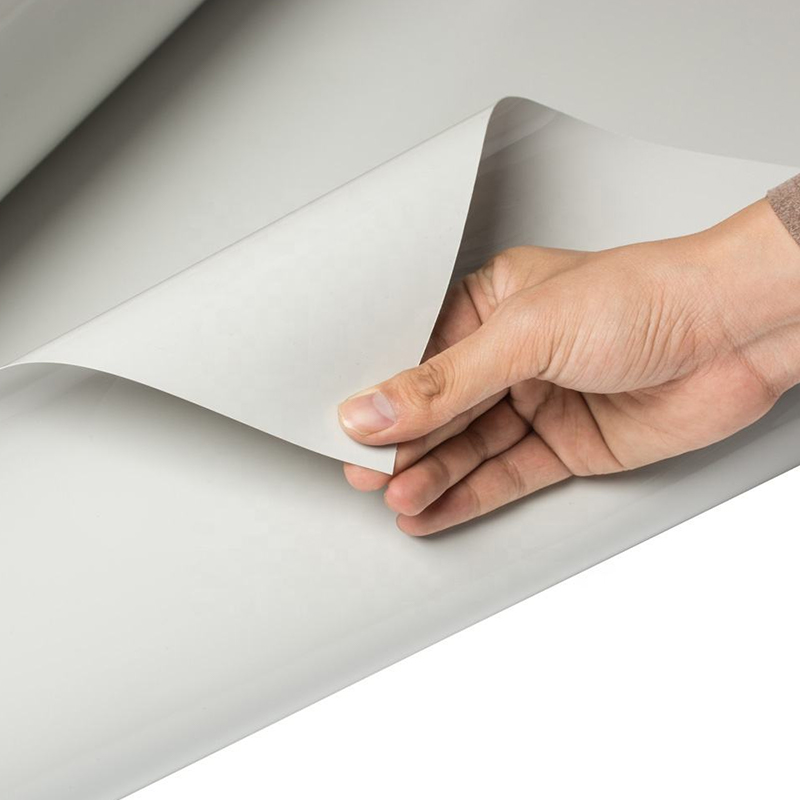
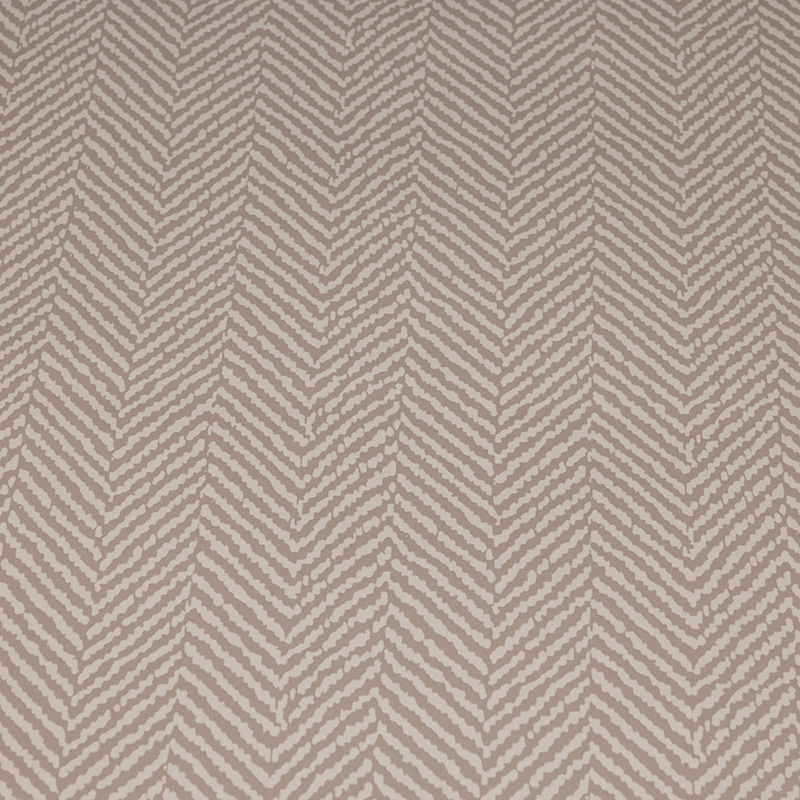
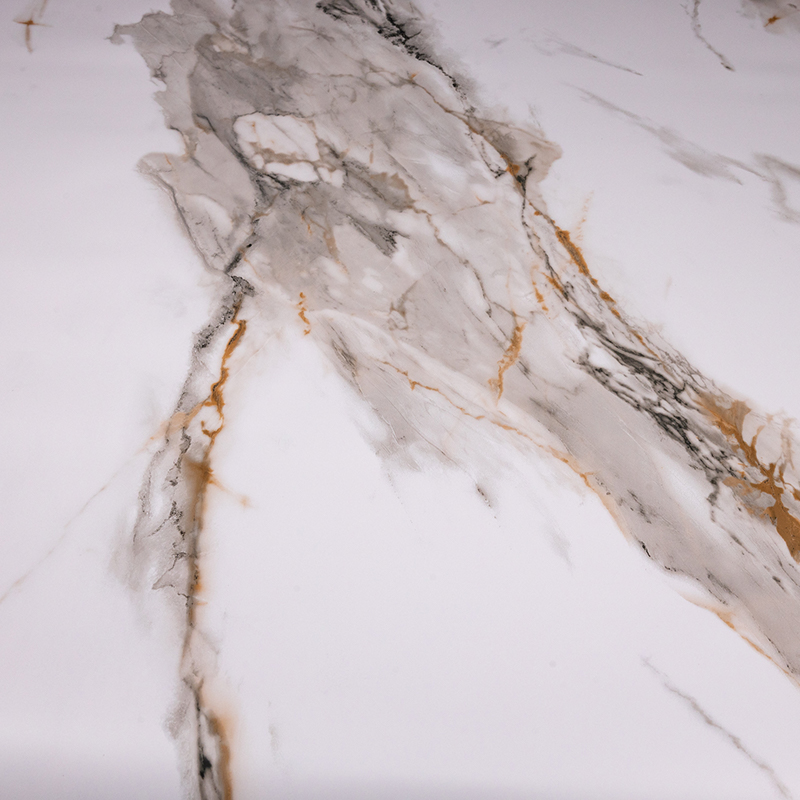
Decorative film has changed the economics of this detail. Instead of buying a stone strip to match a stone top, fabricators wrap an 18 mm MDF or plywood blank in PVC, PP or PET film, usually 0.12 to 0.20 mm thick, on the same press that runs the cabinet doors. The upstand then matches the doors exactly, because it is literally the same roll.
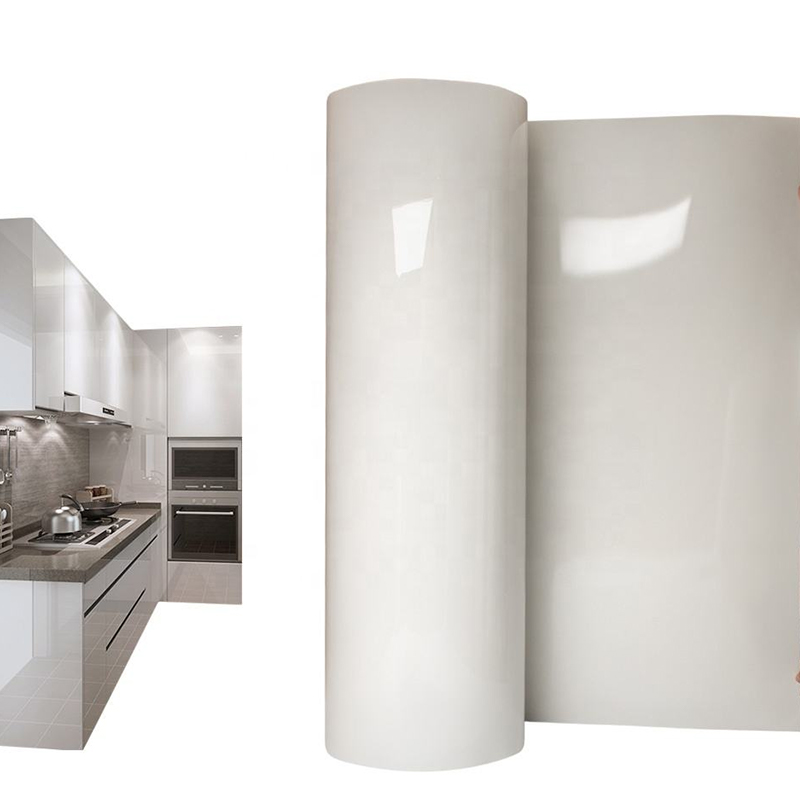 High-Gloss White PET Decorative FilmPET film for cabinet and wardrobe doors, offering bright white reflection and consistent batch colour for matching wrapped upstands to door fronts.View Product →
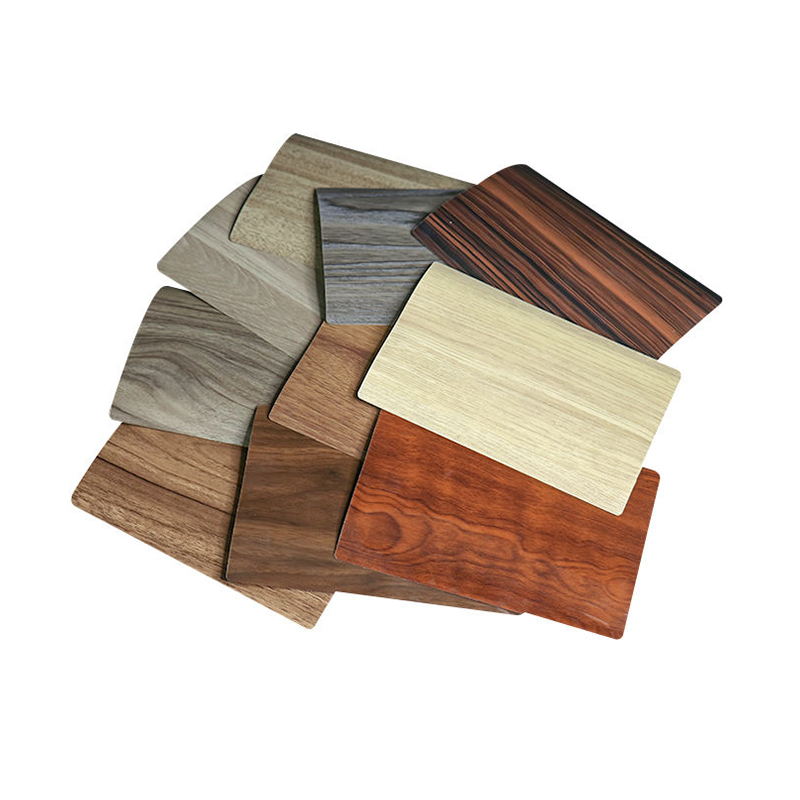
Three rules separate a good match from a visible one. First, stay inside one film family and one gloss level: a five-unit gloss difference between door and upstand is obvious under a window even when the colour is identical. Second, keep one calibration lot per project, because wood-grain prints drift between runs. Third, test the wrap on the actual substrate, not on a sample board of different density.
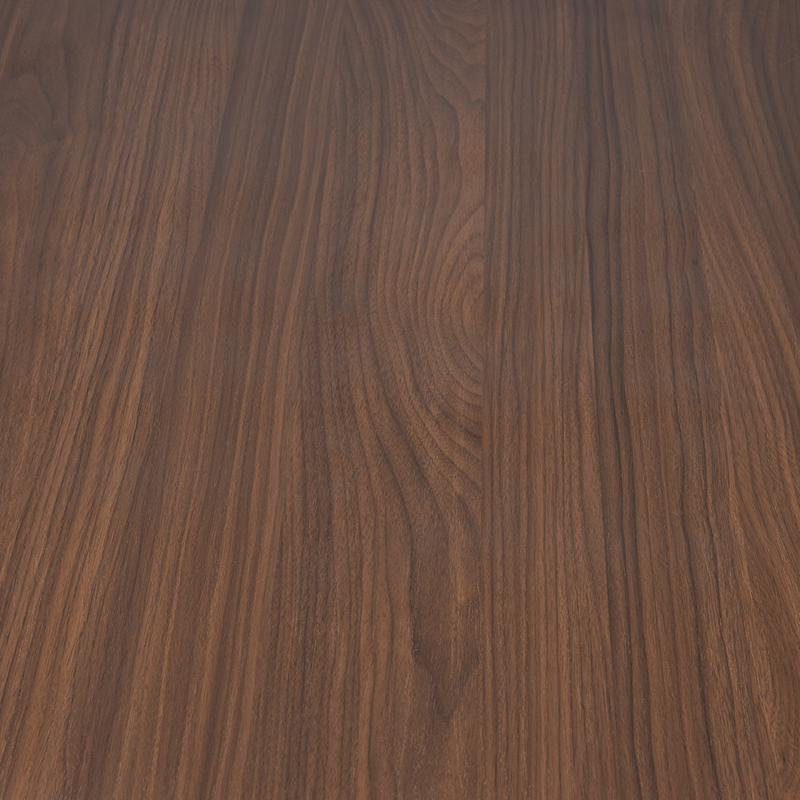
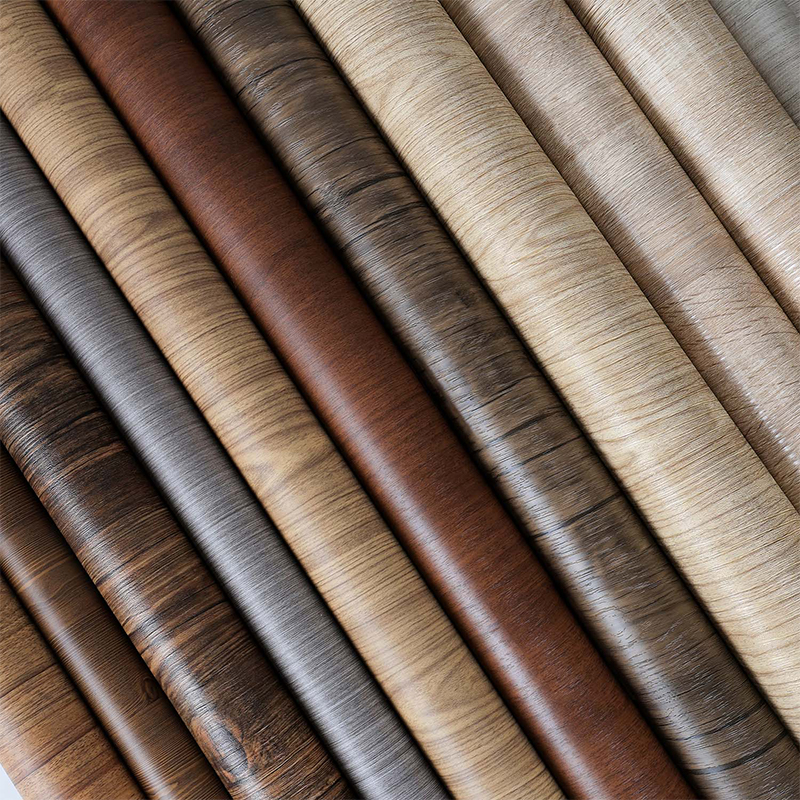
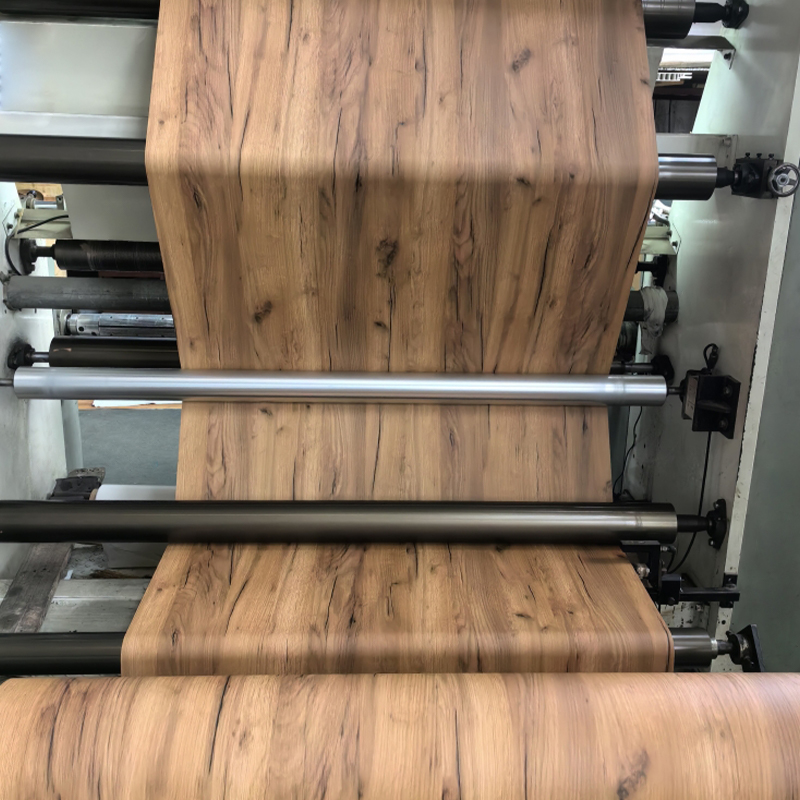 Wood Grain PVC Decorative FilmWood-grain PVC film for furniture laminates and panels, with embossed surfaces and press/wrap compatibility for matching door and upstand finishes.View Product →
Where the film choice matters
- Behind a hob, a PP or PET film holds colour better than a standard PVC under repeated heat cycling.
- Near a sink, the wrap quality and the sealant bead decide performance, not the film alone.
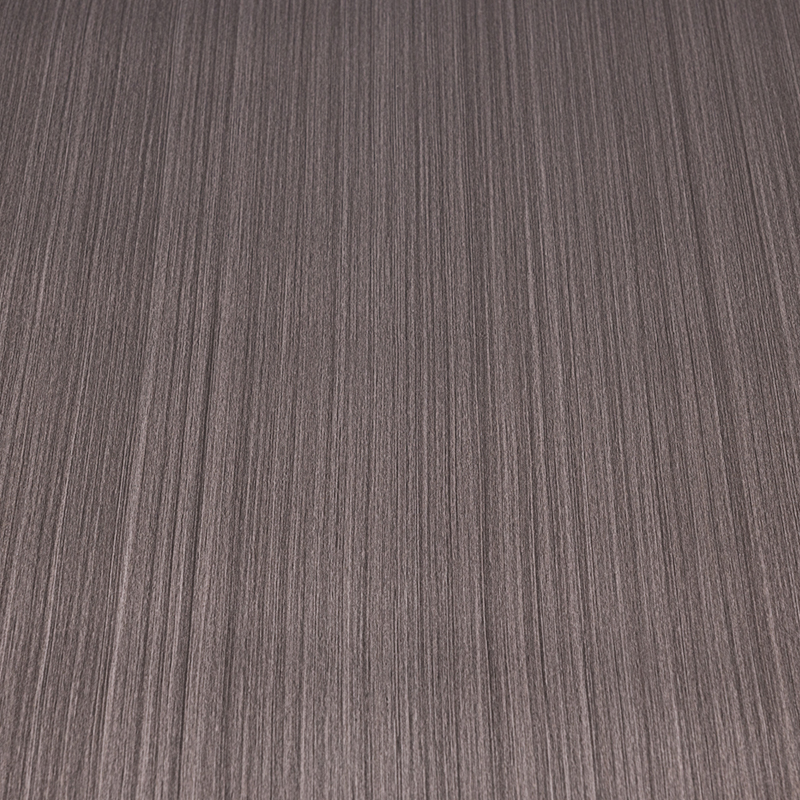
- For dark super-matte finishes, fingerprints show on an upstand far more than on a vertical door, so surface texture does real work.
Fabricators already laminating MDF, WPC and plywood for door skins can run upstand blanks in the same cycle; the process notes in this guide on PVC decorative foil rolls for MDF, WPC and plywood lamination cover press temperature and dwell settings that also apply to narrow strips.
Build-Up Comparison: What Each Upstand Really Costs
Build-up
Typical section
Cost index
Match to doors
On-site adjustment
Film-wrapped MDF
18 mm blank, 0.12–0.20 mm film
100
Exact, same roll as doors
Cut and re-band on site
Compact laminate
10–13 mm
180–240
Laminate range only
Cut, edge needs trim
Engineered stone
20–30 mm
380–520
Worktop only
Templated, no site cutting
Solid surface
12 mm
300–420
Solid colours only
Sandable, glued joints
Ceramic tile strip
8–10 mm
60–90
None
Cutting, grout lines
Indicative comparison for a 100 mm upstand on a 3.6 m run; the cost index normalises film-wrapped MDF to 100 and moves with volume, film type and edge treatment.
The finished edge is half the job
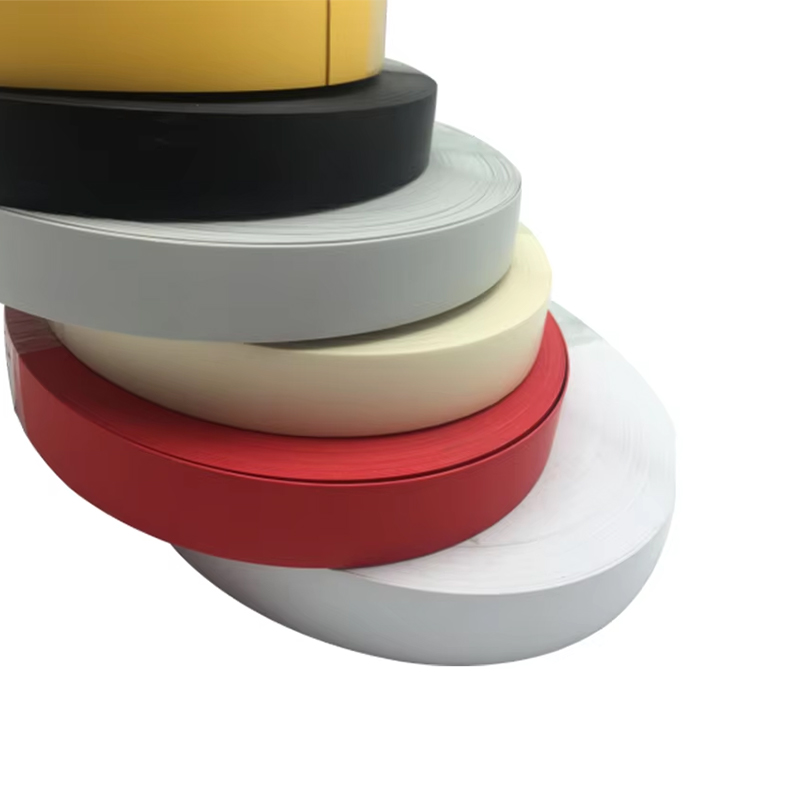
A wrapped upstand has four exposed edges and one of them always meets a wall, a return or an appliance gap. Edge banding that whitens when bent across a 90-degree return will undo a perfect face match, which is why flexible, anti-whitening banding in the same decor is specified for upstands far more often than for flat panels.
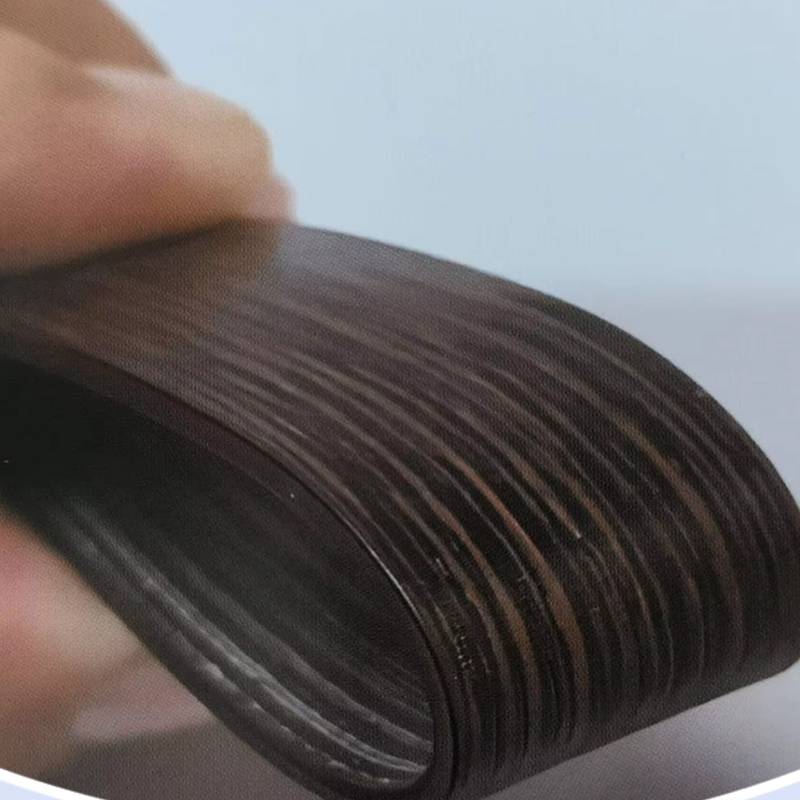 Anti-Whitening Flexible PVC Edge BandingFlexible PVC edge banding formulated to resist stress whitening on cut and trimmed edges, with tight-radius bend performance and batch colour consistency for cabinet and wardrobe panels.View Product →
Film consistency across lots is a supply question as much as a chemistry one. Suppliers running their own calendering and coating lines, such as those described on the manufacturing page, can hold a decor across repeat orders; traders reselling from several mills usually cannot.
Where Upstands Fail First
Fitters and installers rarely argue about colour. They argue about the joint. The distribution below reflects the order in which defects typically appear on a completed run, and it explains why the sealant detail deserves more attention than the film sample.
Sealant joint
34%
34%
Cut-end swelling
24%
24%
Gloss mismatch
18%
18%
Heat marking
14%
14%
Edge chipping
10%
10%
The hidden metric in that chart is the cost of the fix, not the frequency. A sealant failure is cheap to correct; a swollen cut end on an 18 mm MDF blank means a new upstand, a second site visit and a paint touch-up on the wall behind it. That is why the two least frequent items, heat marking and edge chipping, still justify a specification upgrade on contract work.
Where Film-Wrapped Upstands Get Specified
- Residential kitchens — 40%
- Hotels and serviced apartments — 22%
- Retail and office fit-out — 16%
- Bathroom and utility — 13%
- Showroom and other — 9%
The contract share matters because it changes the buying logic. A hotel refurbishment orders upstands by the hundred, in one decor, with a fixed handover date; a residential job buys two strips and wants them tomorrow. Both are served by the same roll stock, but only the contract order rewards a supplier who can hold a decor across batches.
A Five-Step Selection and Installation Sequence
1Fix the geometry
Lock the height at 100 mm, confirm the 2 mm end gaps and decide whether the strip returns down the side of the run.
2Choose the film
PP or PET close to a hob, PVC elsewhere; one family, one gloss, one lot reference for the whole project.
3Wrap and band
Wrap the blank on the door press, then band the exposed edges with a flexible matching banding before packing.
4Fit after the top
Upstands go on after the worktop is fixed and levelled, never before, or the strip will follow a bowed deck.
5Seal and hand over
Neutral-cure silicone to wall and worktop, tooled thin, with a maintenance note handed to the client.
On ROI, the comparison is rarely film against stone on material price alone. The saving comes from schedule compression: film-wrapped upstands are cut and banded in the same shop, in the same week, as the doors, so the fitter makes one trip with one finish. Stone strips add templating, a separate delivery and a second trade on site. For a 140-strip hotel order, removing that second mobilisation usually outweighs any per-metre difference.
Maintenance and Compliance Notes
Keep the cleaning regime simple: a damp cloth with mild detergent, no scouring pads, no solvent splashes, and no steam jet directed at the joint. Around a hob, a wrapped upstand should never be treated as a trivet; the film will tolerate intermittent warmth but not a pan straight off the ring.
Compliance is where film-wrapped upstands need a file note rather than an assumption. Reaction-to-fire classification, indoor emission declarations and food-contact statements are always specific to the combination of film and substrate, and they are not transferable between thicknesses or between a wrapped MDF blank and a wrapped mineral board. Ask for the report matching the exact build-up you are supplying, check that its validity date covers the project handover, and keep the batch reference with the delivery paperwork. That single habit resolves most of the questions that arrive eighteen months after the kitchen opens.
Recommended Articles
-
1.1 What is PP Decorative Film? PP decorative film is a type of surface material made primarily from polypropylene, a versatile and widely used thermoplastic po...
View More -
Is your furniture looking tired, outdated, or damaged? Imagine transforming it effortlessly into something stunning, durable, and uniquely yours. Enter PVC deco...
View More -
1.Introduction Edge banding is a crucial finishing process used in woodworking and furniture manufacturing to cover and seal the exposed sides of materials such...
View More
Xuanyi

Feel free to contact us
Xuanyi, dedicated to the application and research and development of new materials. Furniture Decorative Film Maufacturers and Factory.
Product Fast Links
Contact Information
-
 Room G, 4th Floor, Bailingshi Building, Haizhou Street, Haining City, Jiaxing City, Zhejiang Province, 314400, China
-
 [email protected]
-
 +86-15059290610
-
 +86-15059290610
Copyright © 2024Jiaxing Xuanyi International Trade Co.,Ltd All Rights Reserved. PVC/PP/PET Lamination Film for MDF WPC Plywood

