
 English
 Español
 عربى

 Home / Blog / Industry News / Wrapping Countertops: Film Selection, Installation, and B2B Buying Guide

Industry News
Wrapping Countertops: Film Selection, Installation, and B2B Buying Guide
2026-11-23
A countertop wrap is usually considered when replacement is disruptive: a rental turn, a kitchen refit with sound cabinets, or a hotel pantry that cannot close for a week. The decision is not just about a marble or wood look. It is about whether a decorative film can bond to the existing substrate, survive the sink zone, and be maintained without lifting at the edges.
Bottom line: wrapping countertops can be a sound refresh when the substrate is stable, the sink and edges are sealed, and heat exposure is managed. If the existing top is swollen, delaminating, or close to commercial cooking equipment, replace it instead of wrapping it.
For a B2B buyer, the practical question is not only whether the sample looks like stone. It is whether the same roll, adhesive, primer, and application method will survive 200 kitchens, pass an adhesion test on your board, and avoid callbacks after handover.
Content
- 1 What a Countertop Wrap Can and Cannot Do
- 2 Material Choice: PVC, PP, and PET in Real Projects
- 3 Data Comparison: What Buyers Should Compare
- 4 Hidden Metrics: Where Wraps Actually Fail
- 5 Industry Demand: Where Wrapped Countertops Fit
- 6 ROI and Selection Guide: Price the Installed Square Meter, Not the Roll
- 7 Installation Flow That Protects the Margin
- 8 Maintenance and Compliance: Keep the Wrap Inside Its Limits
What a Countertop Wrap Can and Cannot Do
A countertop wrap is a decorative surfacing layer. It changes color, gloss, and texture, and it can protect a sound substrate from daily wear. It does not add structural strength, repair water damage, or make a heat-sensitive board suitable for hot pans.
Structural role
The film is a skin, not a repair panel. Chips, soft spots, and swelling must be fixed before application.
Heat limits
Most decorative films tolerate warm rooms and normal cleaning, not direct contact with hot cookware. Use trivets and define the limit in the handover note.
Moisture at the sink
The cut-out edge is the weak point. Sealant, primer choice, and a dry substrate matter more than the film color.
Repair logic
Small scars can sometimes be replaced locally. Large lifts usually mean the bond failed, so the cause must be corrected before re-wrapping.
Material Choice: PVC, PP, and PET in Real Projects
The film family should follow the application, not the other way around. A hand-wrapped countertop with curves and sink cut-outs has different needs from a flat laminated panel or a wall panel in a humid room.
PVC decorative film
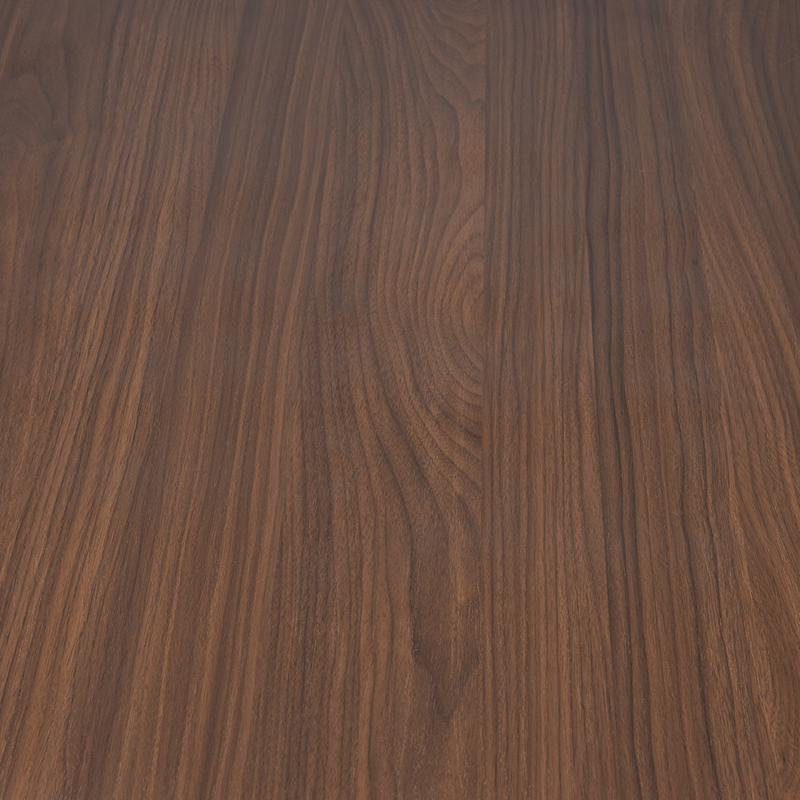
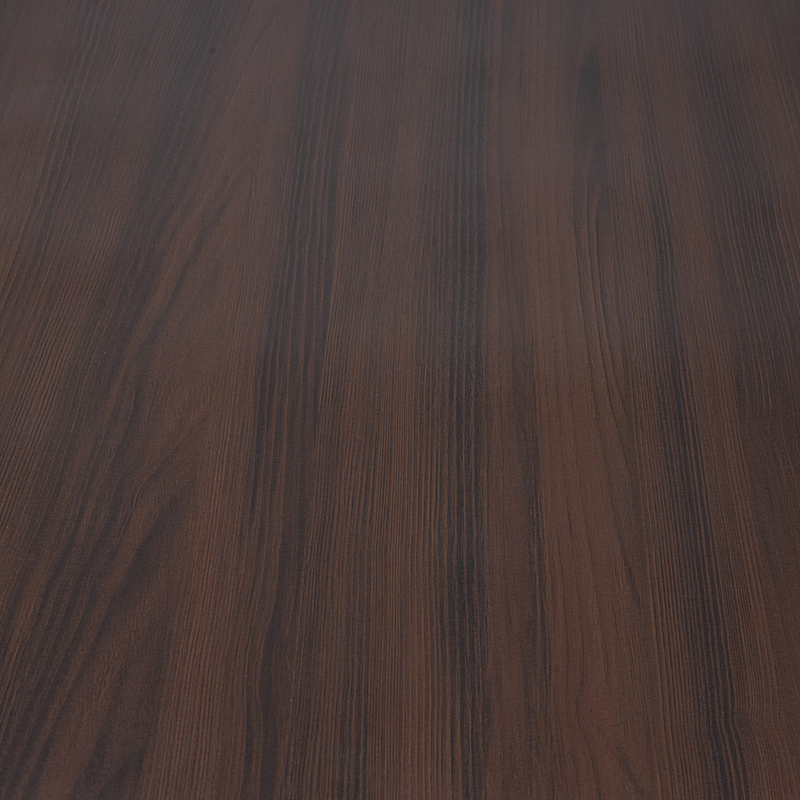
PVC films are common for countertop refreshes because they conform well around edges and offer broad wood, stone, and solid-color options. For wood-grain countertop faces and matching cabinet doors, confirm the adhesive grade, film thickness, and recommended primer before approving the sample.
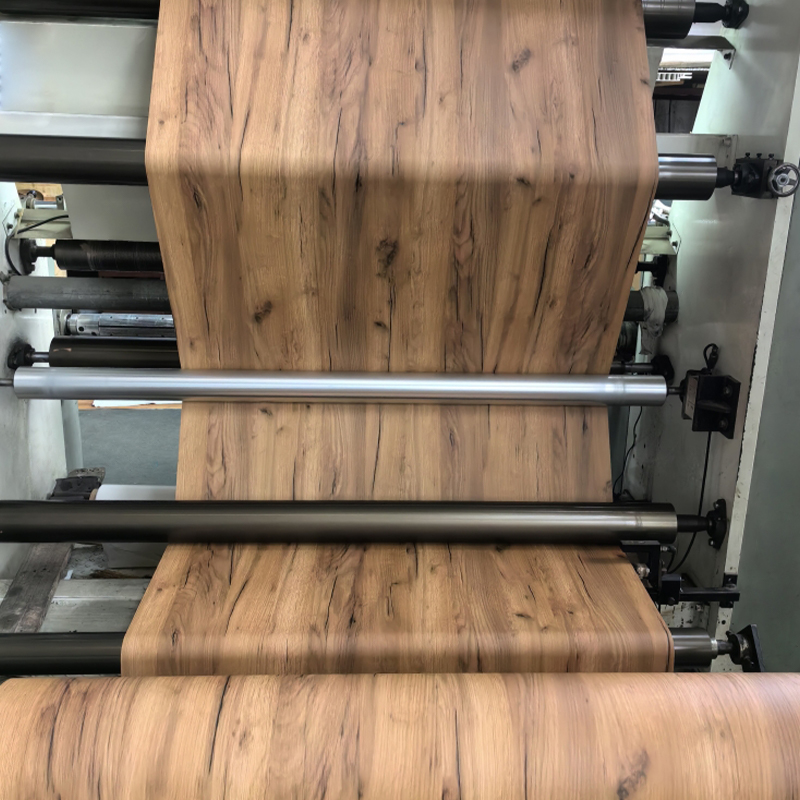 Wood Grain PVC Decorative Film for Countertops and CabinetsA wood-grain PVC film suited to countertop faces and matching cabinet doors; check adhesive grade, film thickness, and primer before approving samples.View Product →
PP decorative film
PP films are often chosen where moisture and chemical resistance matter, and they can support recyclable material goals. They may be stiffer than PVC, so the application route and edge radius should be tested rather than assumed.
PET decorative film
PET films suit flat surfaces that need good gloss control, scratch resistance, and low moisture uptake. They are a strong fit for cabinet doors and flat countertop faces, but tight hand-wrapped corners need a mock-up before production.
Selection rule: match conformability to the edge detail, match heat and moisture data to the sink zone, and match gloss level to the cleaning method. A low-cost roll that fails at the sink is expensive after the callback.
Data Comparison: What Buyers Should Compare
Use a side-by-side comparison to shortlist films, then verify the final choice with an adhesion and cleaning test on the actual substrate.
Caption: This comparison is a selection guide. Final approval should rely on the film supplier's current technical data sheet and a sample test on your substrate.
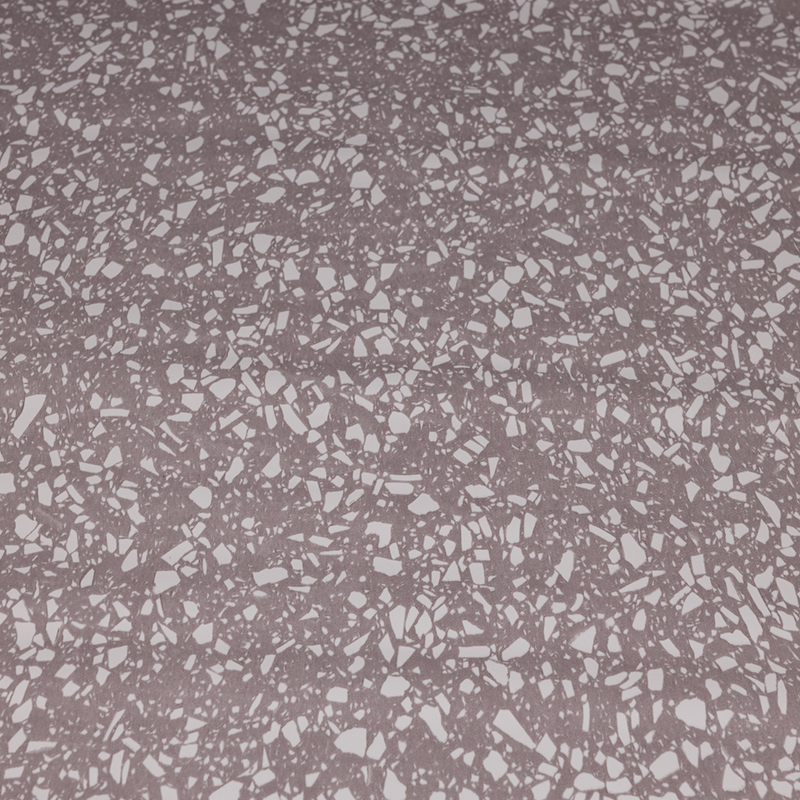
For stone-effect countertop faces, a marble-design decorative film can match the visual brief, but the adhesive and heat limits still need to match the sink and edge detail.
 Marble PVC Decorative Film for Stone-Effect SurfacesA marble-design PVC film for stone-look countertop faces and interior panels; verify adhesive and heat limits for sink and edge details.View Product →
Hidden Metrics: Where Wraps Actually Fail
Failure is rarely a single film defect. In project reviews, risk usually sits at the interface between film, adhesive, substrate, and environment. The chart below is a planning weight for inspection time, not a lab benchmark.
Substrate prep 34%
Edge and sink 26%
Heat 18%
Film match 14%
Cure 8%
The practical takeaway: spend inspection time on substrate flatness, contamination, sink cut-outs, and heat zones before arguing about color. A beautiful sample cannot compensate for a weak bond.
Industry Demand: Where Wrapped Countertops Fit
Decorative-film countertop work is not one market. It serves different buyers with different downtime costs, appearance expectations, and maintenance teams.
Kitchen refacing and cabinet refresh: 42%
Rental and property turnover: 24%
Office pantry and breakroom: 19%
Hospitality and retail counters: 15%
Caption: Typical demand mix for decorative-film countertop projects as a planning estimate. It is not a census of the whole surfacing market.
ROI and Selection Guide: Price the Installed Square Meter, Not the Roll
The cheapest roll is rarely the lowest-cost project. Build the comparison around installed cost per square meter: film, adhesive, primer, surface prep, labor, downtime, rework allowance, and expected maintenance.
Step 1: Audit
Record substrate type, moisture, flatness, edge radius, sink details, heat sources, and current coating condition.
Step 2: Match
Choose PVC, PP, or PET based on conformability, moisture, heat, and finish. Do not start with the color card.
Step 3: Trial
Wrap a 300 mm sample with the same primer, application temperature, and edge detail. Test adhesion and cleaning.
Step 4: Approve
Sign off film code, adhesive, primer, surface prep, heat limit, warranty terms, and maintenance instructions.
If the specification calls for a matte, low-glare finish for handleless doors or wall panels, trial a skin-feel PVC film before approving the final color.
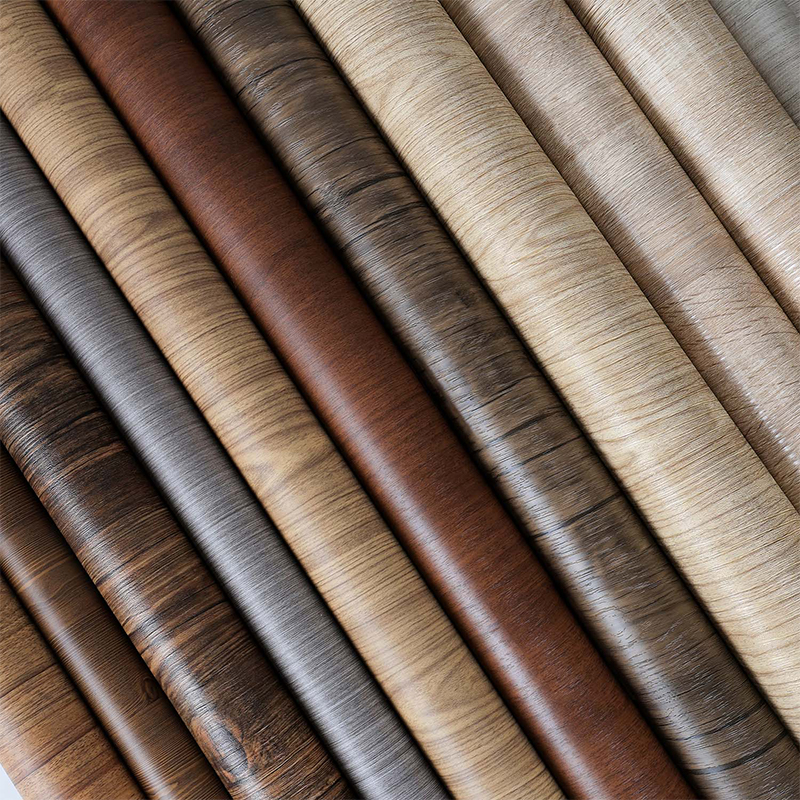
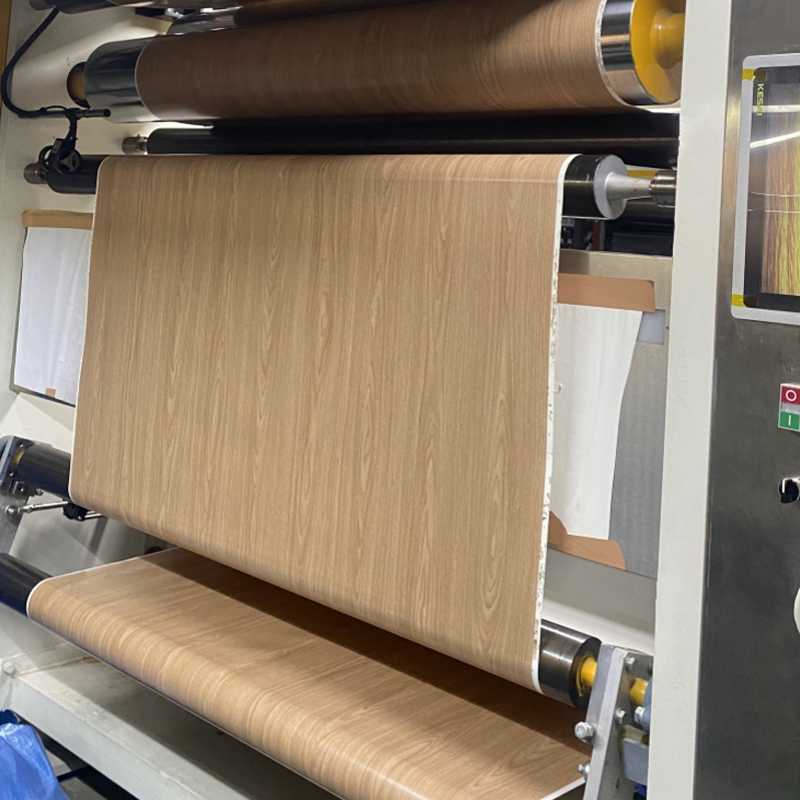 Super Matte Soft Touch PVC Decorative FilmA low-glare, skin-feel PVC film for matte doors and wall panels; trial before final color approval, especially where edges and cut-outs must be wrapped.View Product →
Installation Flow That Protects the Margin
A repeatable installation sequence matters more on countertops than on flat doors because the film must turn edges, pass a sink cut-out, and sit in a cleaning zone.
- Remove loose material and repair chips, swelling, and delamination. The surface must be sound and dry.
- Degrease, rinse, and dry. Sand glossy areas only as the film system allows, then remove dust completely.
- Apply the specified primer to edges and sink cut-outs. Do not substitute a general-purpose primer without approval.
- Position the film, work air out from the center, and use heat only within the supplier's range for curves and edges.
- Seal the sink perimeter and exposed edges with a compatible sealant. Allow the recommended cure time before water exposure.
- Inspect under raking light for lifts, air pockets, scratches, and contamination. Record batch and installation conditions.
Batch consistency matters on multi-unit projects. Review the manufacturing process and ask for lot traceability, adhesive batch, storage conditions, and shelf life before releasing a large order.
Maintenance and Compliance: Keep the Wrap Inside Its Limits
A countertop wrap performs best when the user knows what not to do. Maintenance instructions should be short, visible, and written for the cleaning staff who will actually touch the surface.
- Clean with a soft cloth and pH-neutral detergent. Avoid abrasive pads, strong solvents, and standing water at seams.
- Use trivets and heat pads. Do not place hot pans, air fryers, or open flames close to the film.
- Inspect sink sealant and edge returns every few months. Reseal small gaps before water reaches the substrate.
- For commercial projects, request safety data sheets, VOC or REACH statements where applicable, and fire performance data for the finished assembly, not just the film.
Compliance depends on the whole build-up: substrate, adhesive, film, sealant, and location. Keep the approved datasheets with the project file so maintenance and future refurbishment do not remove the wrong layer.
Before you approve wrapping countertops, run one sample on the real board with the real primer, edge detail, and cleaning routine. If the sample passes adhesion, heat, and moisture checks, scale it. If it fails, change the system before it reaches the kitchen.
Send your substrate type, heat exposure, target finish, and order volume to contact the technical team so the film, adhesive, and sample plan can be matched to the application.

Recommended Articles
-
1.1 What is PP Decorative Film? PP decorative film is a type of surface material made primarily from polypropylene, a versatile and widely used thermoplastic po...
View More -
Is your furniture looking tired, outdated, or damaged? Imagine transforming it effortlessly into something stunning, durable, and uniquely yours. Enter PVC deco...
View More -
1.Introduction Edge banding is a crucial finishing process used in woodworking and furniture manufacturing to cover and seal the exposed sides of materials such...
View More
Xuanyi

Feel free to contact us
Xuanyi, dedicated to the application and research and development of new materials. Furniture Decorative Film Maufacturers and Factory.
Product Fast Links
Contact Information
-
 Room G, 4th Floor, Bailingshi Building, Haizhou Street, Haining City, Jiaxing City, Zhejiang Province, 314400, China
-
 [email protected]
-
 +86-15059290610
-
 +86-15059290610
Copyright © 2024Jiaxing Xuanyi International Trade Co.,Ltd All Rights Reserved. PVC/PP/PET Lamination Film for MDF WPC Plywood

