
 English
 Español
 عربى
عربى


Industry News
Grey-Tone Wood Grain PET Decorative Film for Cabinets: Full Guide
2026-07-14
Content
- 1 Why Grey Wood Tones Are Taking Over Cabinet Design
- 2 What PET Decorative Film Actually Is
- 3 How the Grey Wood Grain Pattern Is Produced
- 4 Technical Specifications That Matter for Fabrication
- 5 Compliance: RoHS and REACH in Practice
- 6 Lamination Methods: Vacuum Press, Flat Lamination, Profile Wrapping
- 7 What to Verify Before Placing a Bulk Order
Why Grey Wood Tones Are Taking Over Cabinet Design
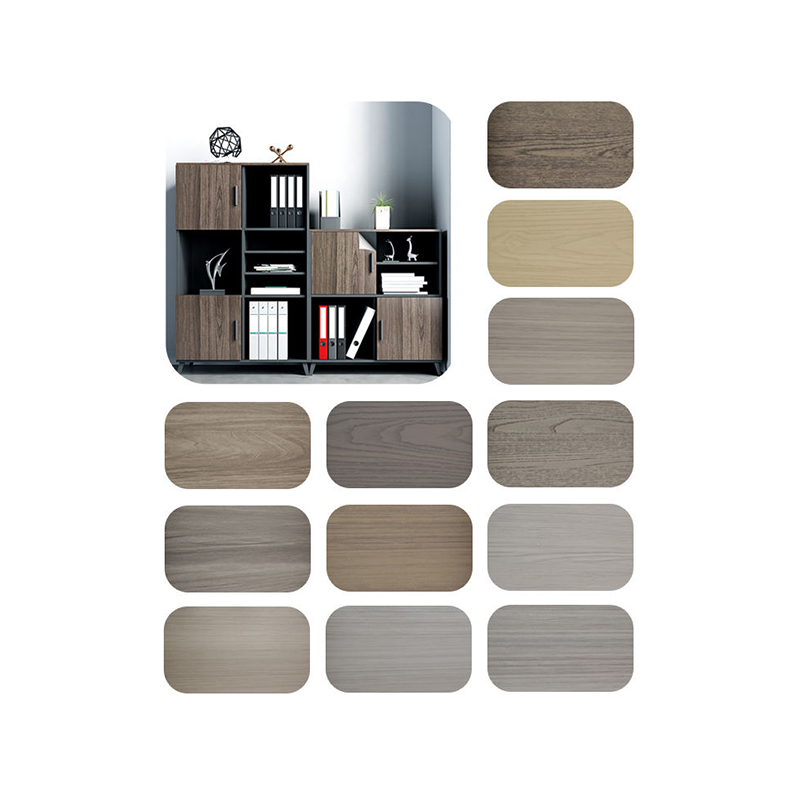
Walk through a furniture showroom today and grey has quietly replaced the warm honey-brown tones that dominated kitchen and office cabinets a decade ago. The shift isn't accidental. Grey wood grain reads as calm and contemporary rather than rustic, and it pairs more easily with the matte black hardware, white countertops, and neutral wall colors that define current interior trends. For manufacturers, that means grey-toned finishes have moved from a niche request to a standard line item on most product catalogs.
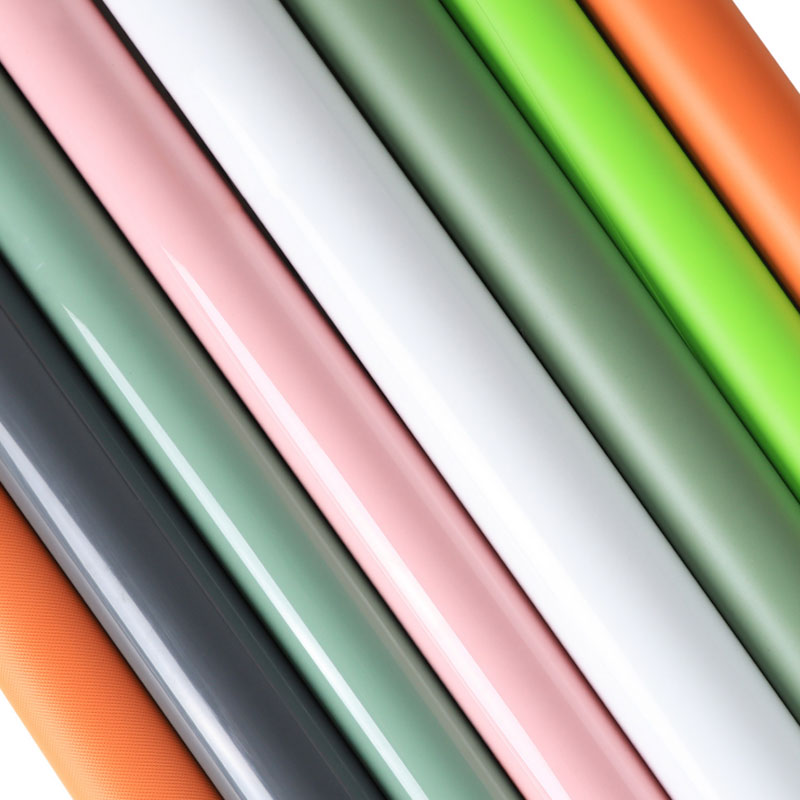
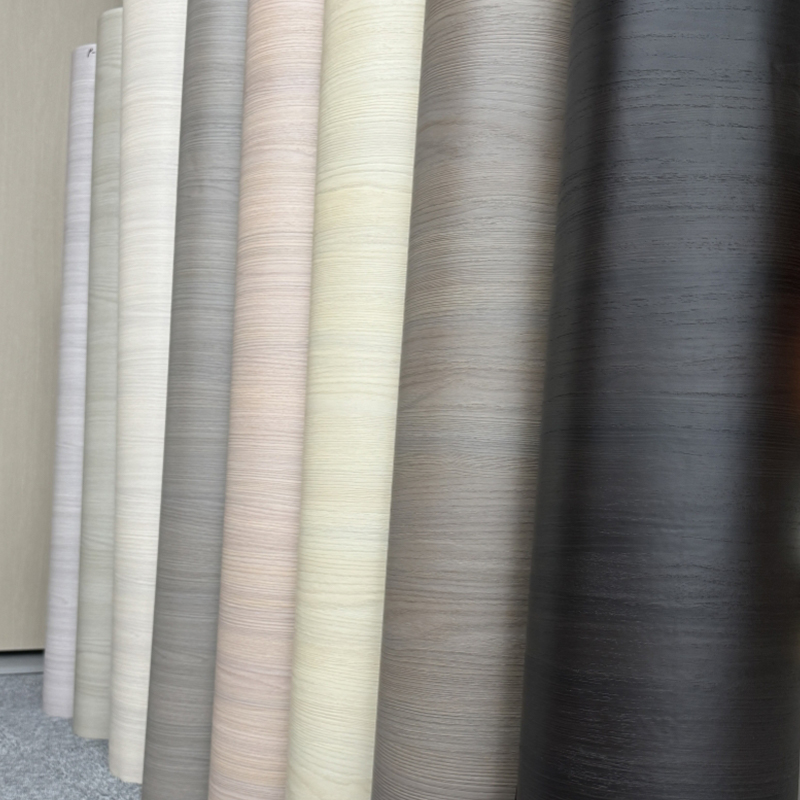
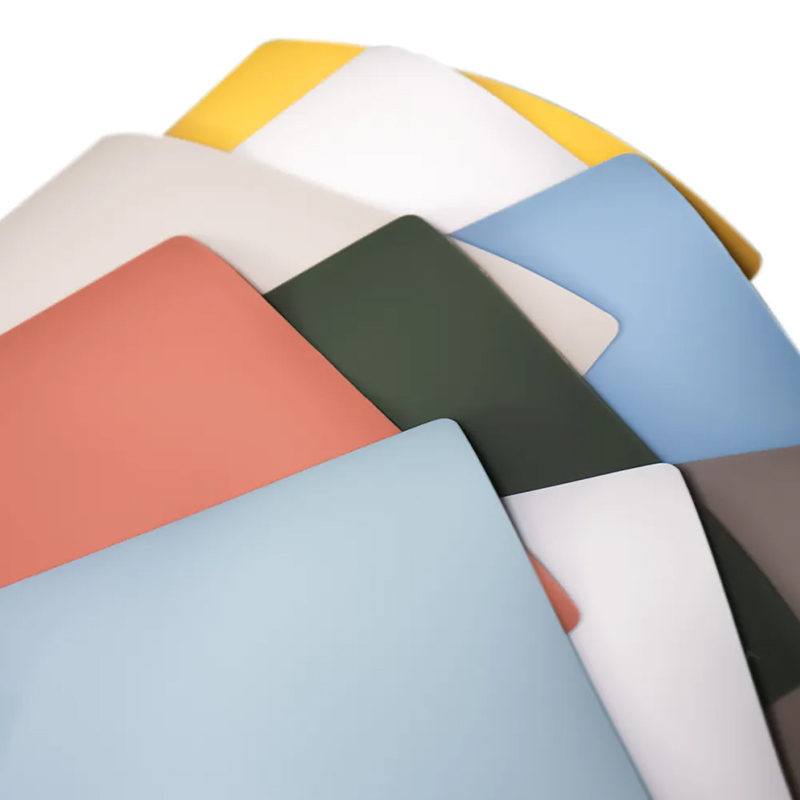
A grey-tone wood grain PET decorative film for cabinets is built specifically around this shift, offering grey, grey-brown, and misty grey oak variations rather than a single flat grey that can look artificial under warm kitchen lighting. For brands that want to keep a purely monochrome option on hand alongside the wood-effect range, a solid color PET decorative film line covers that need without switching material families.
What PET Decorative Film Actually Is
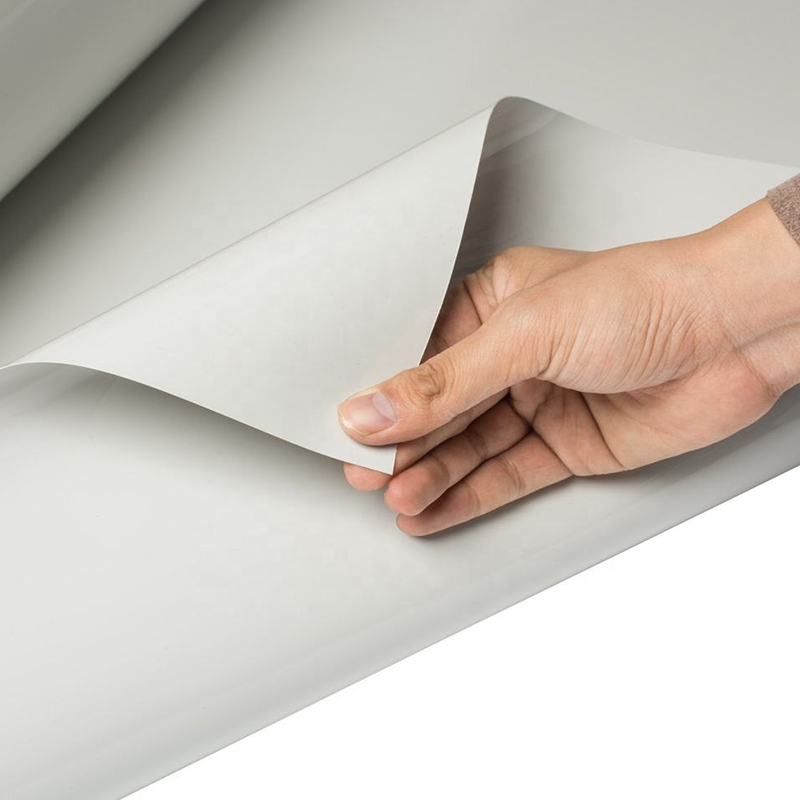
PET, or polyethylene terephthalate, is the same polymer family used in food-grade packaging, which is part of why it has become a preferred substrate for surface films in furniture manufacturing. Compared with PVC, PET does not rely on plasticizers to stay flexible, so it tends to age with less brittleness and fewer long-term odor concerns. Compared with PP, PET holds printed detail more precisely, which matters when the goal is a convincing wood grain rather than a generic textured surface.
None of this means PET is automatically superior in every case. PVC films still offer lower cost for high-volume commodity furniture, and PP films perform well where chemical resistance is the priority. PET earns its place specifically in mid-to-premium cabinet lines where grain realism, dimensional stability, and a cleaner environmental profile carry more weight than shaving a few cents off material cost.
How the Grey Wood Grain Pattern Is Produced
The visual quality of a grey wood grain film comes down to how the pattern is applied to the PET base. Manufacturers typically use gravure printing, digital printing, or a combination of both to lay down the grain structure, then apply a scratch-resistant top coating to protect the printed layer during handling and installation.
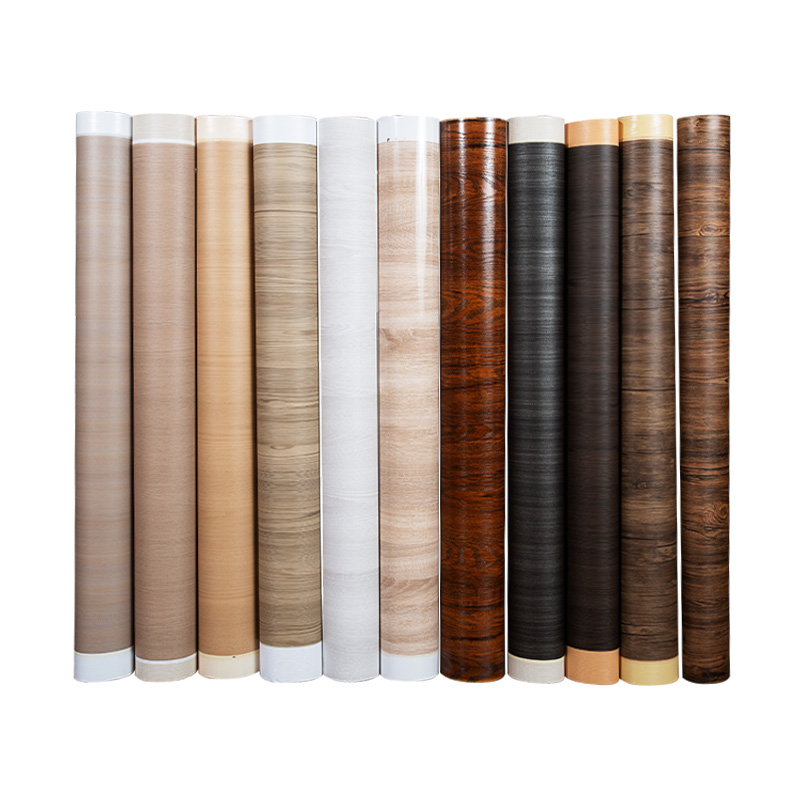
Grey tones are technically harder to print convincingly than traditional browns. A flat or muddy grey wipes out the fine grain lines that make wood look like wood, leaving a surface that reads as plastic rather than a natural material. Better production lines keep grain definition sharp against the grey base and add a slightly bright surface effect that catches light the way real oak does. The full wood grain PET decorative film range gives a sense of how grain patterns and finishes vary once you move beyond a single grey option into browns, walnuts, and mixed tones.
Technical Specifications That Matter for Fabrication
Before a cabinet manufacturer commits to a film, a few numbers determine whether it will actually work on the production line. Thickness affects how the film behaves during vacuum forming around edges and profiles. Width determines cutting efficiency for standard cabinet door sizes. Thermal range matters if the film will be laminated using heat-activated adhesive or exposed to kitchen environments near ovens and dishwashers.
| Parameter | Typical Range |
|---|---|
| Thickness | 0.2 mm – 0.8 mm |
| Width | 1000 mm – 1420 mm |
| Thermal Stability | -40°C to 150°C |
| Surface Properties | High tensile strength, UV resistant |
The full technical breakdown, including tensile strength and coating details, is documented on the base wood grain PET decorative film specification page, which is a useful reference point when comparing quotes across suppliers.
Compliance: RoHS and REACH in Practice
For any furniture film headed to European or North American markets, RoHS and REACH compliance are not optional extras. RoHS restricts the use of specific hazardous substances such as lead and certain flame retardants, while REACH governs the registration and safety documentation of chemical substances used in manufacturing. A film that meets both means fewer customs complications and fewer awkward conversations with a client's compliance team after the order has already shipped.
Formulating a grey wood grain PET film to these standards from the start, rather than retrofitting an existing product, tends to produce more consistent results. It also signals that the coating and printing process have been engineered with export markets in mind rather than adapted after the fact.
Lamination Methods: Vacuum Press, Flat Lamination, Profile Wrapping
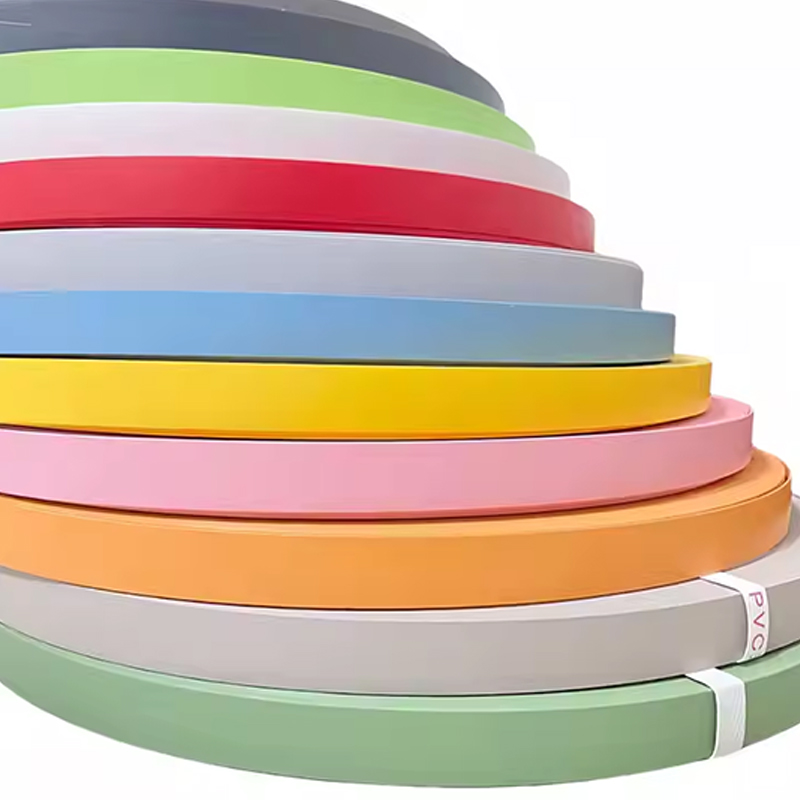
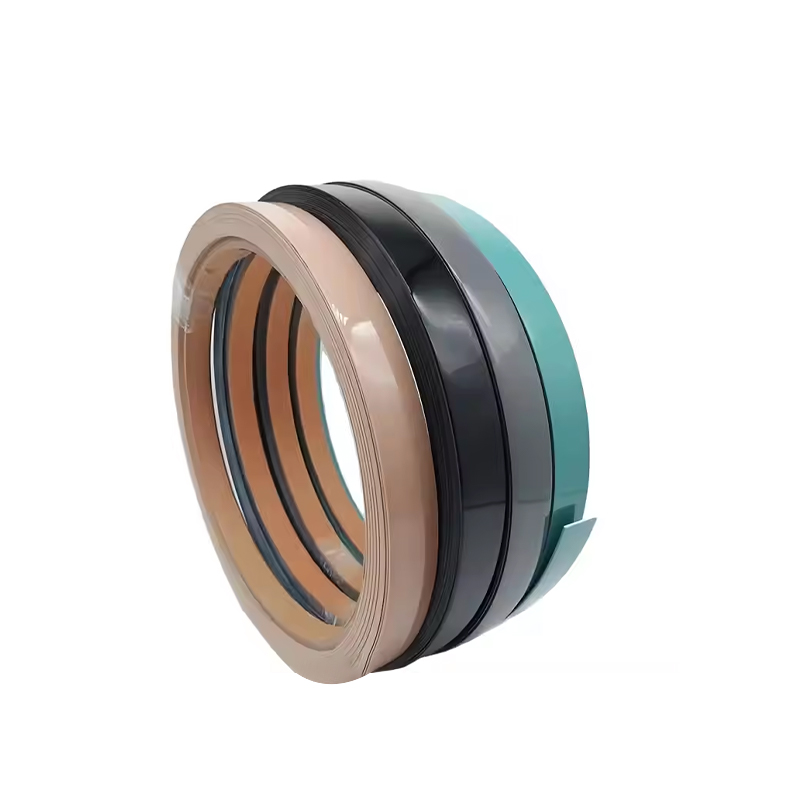
Grey wood grain PET film is generally applied using one of three methods, and the right choice depends on the shape of the cabinet component. Vacuum press lamination pulls the heated film tightly over three-dimensional or recessed panel profiles, which is common for cabinet doors with routed detail. Flat lamination bonds the film to flat panel stock such as MDF or particleboard, suited to simple slab-style doors and cabinet sides. Profile wrapping runs the film continuously around linear components like door frames, drawer fronts, and edge banding.
Each method places different demands on the film's flexibility and adhesion. A film with a good balance of tensile strength and elongation handles tight vacuum-formed corners without visible whitening or cracking at the fold, which is one of the more common quality complaints when a cheaper film is substituted into a production line built for a higher-grade material.
What to Verify Before Placing a Bulk Order
Sourcing decorative film for a production run is a different exercise than picking a swatch for a single piece of furniture. Ask for a physical sample rather than relying on photos, since grey tones and grain sheen rarely render accurately on screen. Confirm thickness and width tolerances in writing, and request test reports covering scratch resistance, color fastness, and chemical compliance rather than taking certification claims at face value.
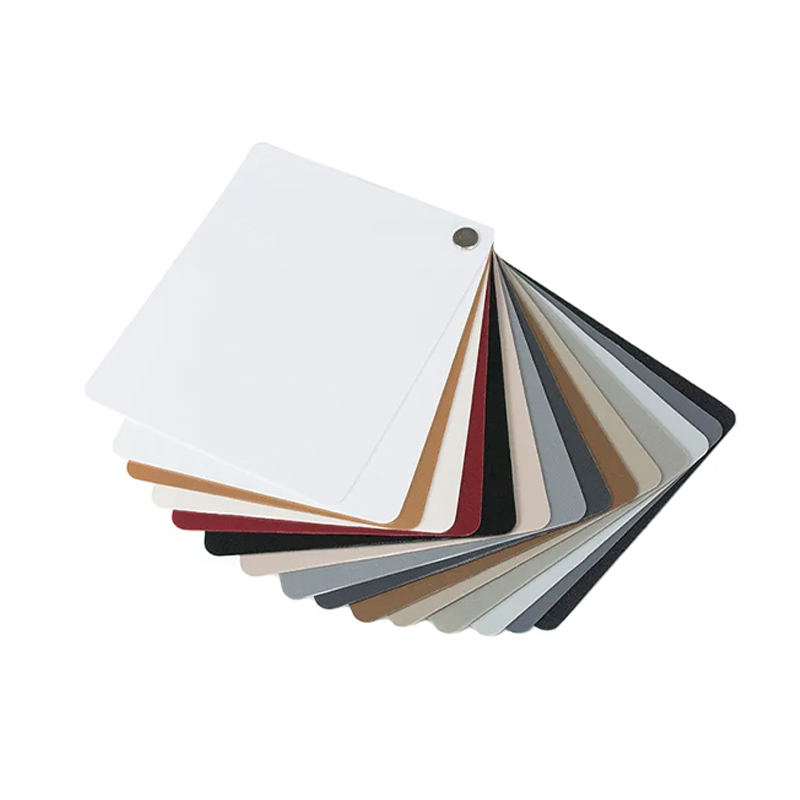
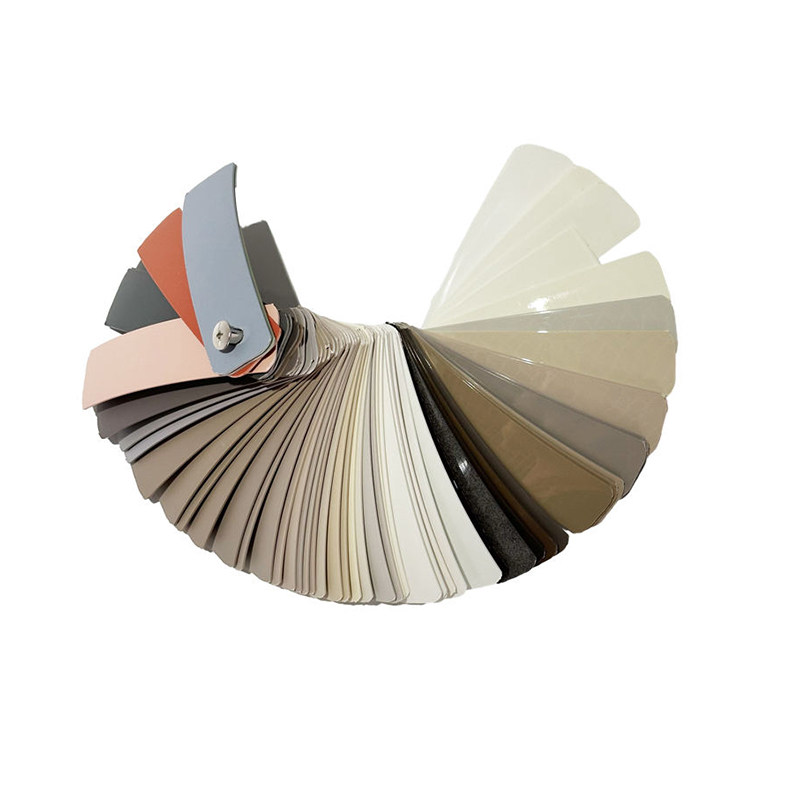
It is also worth understanding how much of the supply chain a manufacturer actually controls. A supplier that runs its own raw material sourcing, calendering, and coating lines, such as Xuanyi's integrated setup, generally offers more consistency between production batches than a trading company reselling film from multiple third-party mills. Reviewing an overview of how the film is manufactured end to end before requesting a quote can save a round of back-and-forth once samples are already in hand. For side-by-side comparison of grain patterns and grey tones before committing to a bulk order, a physical wood grain sample fan remains the most reliable way to check how a film will actually look once it is laminated onto a real cabinet surface.
Recommended Articles
-
1.1 What is PP Decorative Film? PP decorative film is a type of surface material made primarily from polypropylene, a versatile and widely used thermoplastic po...
View More -
Is your furniture looking tired, outdated, or damaged? Imagine transforming it effortlessly into something stunning, durable, and uniquely yours. Enter PVC deco...
View More -
1.Introduction Edge banding is a crucial finishing process used in woodworking and furniture manufacturing to cover and seal the exposed sides of materials such...
View More
Xuanyi

Feel free to contact us
Xuanyi, dedicated to the application and research and development of new materials. Furniture Decorative Film Maufacturers and Factory.
Product Fast Links
Contact Information
-
 Room G, 4th Floor, Bailingshi Building, Haizhou Street, Haining City, Jiaxing City, Zhejiang Province, 314400, China
-
 [email protected]
-
 +86-15059290610
-
 +86-15059290610
Copyright © 2024Jiaxing Xuanyi International Trade Co.,Ltd All Rights Reserved. PVC/PP/PET Lamination Film for MDF WPC Plywood

