
 English
 Español
 عربى
عربى


Industry News
Solid Color PVC Edge Banding: Full Guide
2026-05-12
Content
- 1 What Solid Color PVC Edge Banding Is and Why It Matters in Furniture Production
- 2 How Extrusion Molding Determines the Quality of PVC Edge Banding
- 3 Thickness and Width Specifications: Matching the Right Dimension to the Application
- 4
- 5 Performance Properties: Flexibility, Wear Resistance, and Chemical Resistance
- 6 Environmental Compliance: RoHS and REACH Standards Explained
- 7 Application Scenarios and Sourcing Recommendations
What Solid Color PVC Edge Banding Is and Why It Matters in Furniture Production
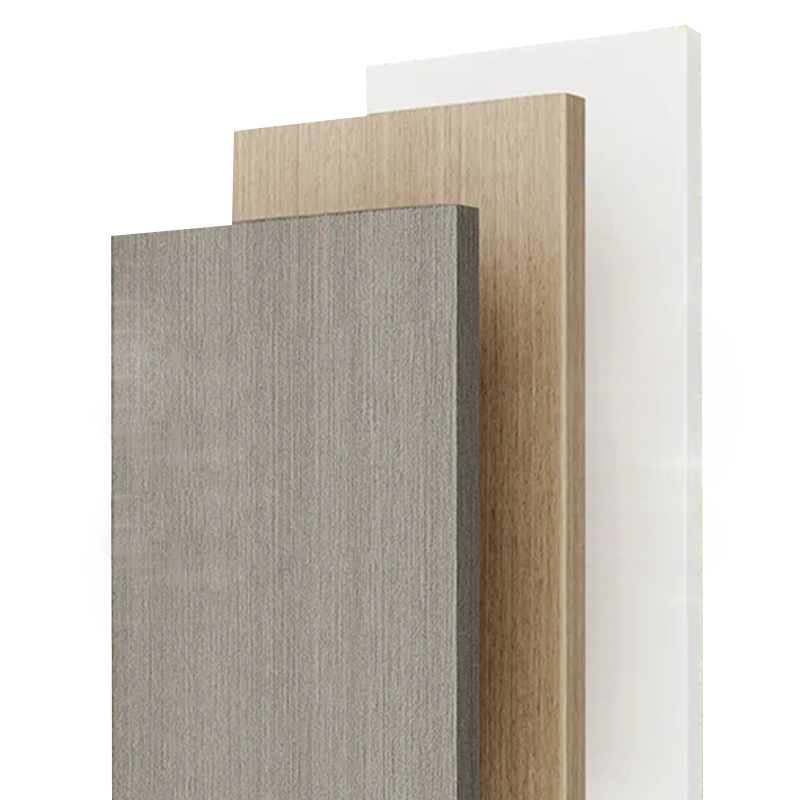
Edge banding is one of the most functionally important finishing components in furniture manufacturing. Its primary purpose is to protect and seal the exposed cross-sections of furniture boards—MDF, particleboard, plywood, and similar panel substrates—against moisture infiltration, mechanical impact, and surface degradation. Beyond protection, edge banding defines the visual quality of a finished piece: a cleanly applied, color-consistent edge is the difference between furniture that looks professionally manufactured and furniture that looks unfinished.
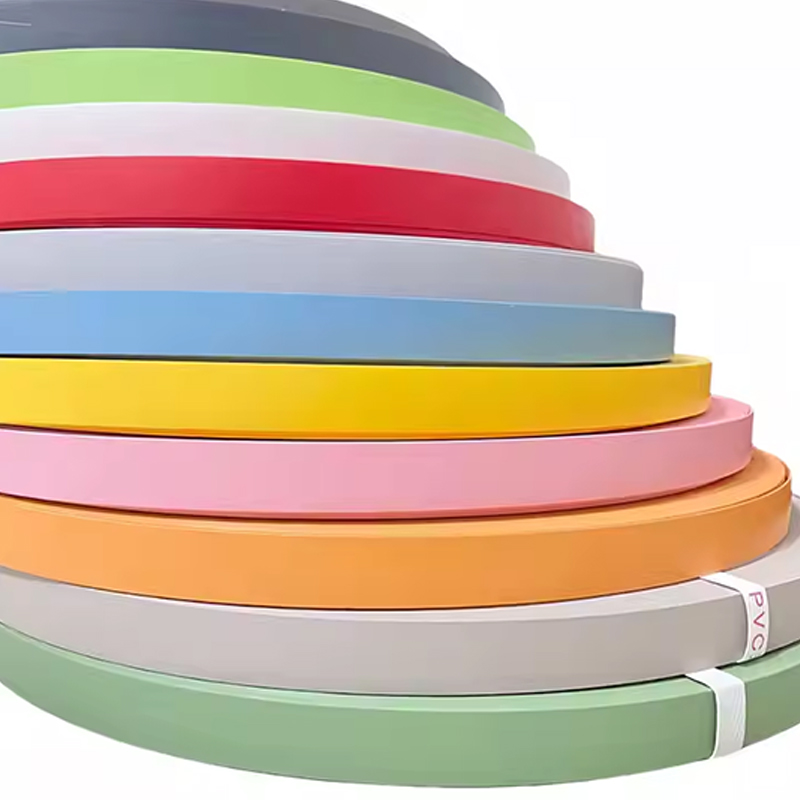
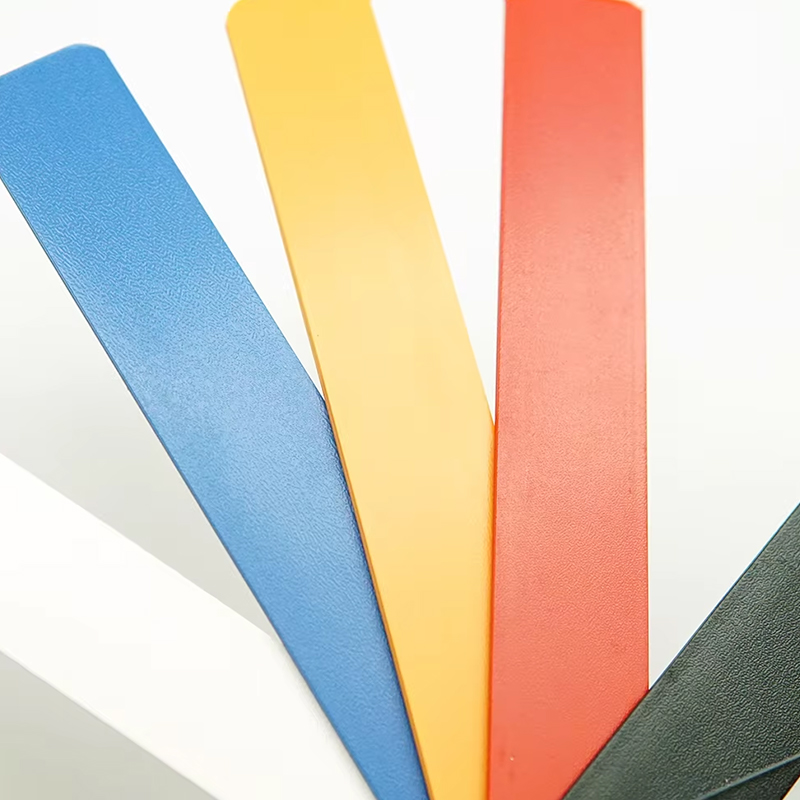
Solid Color PVC Edge Banding represents one of the most widely specified categories in this product family. Made from polyvinyl chloride (PVC) as the base material, it is processed through extrusion molding and surface treatment to produce a uniform, dense strip with a consistent matte or gloss finish across the entire surface. Unlike wood grain or decorative pattern variants, solid color versions deliver a clean, contemporary aesthetic that integrates naturally into modern furniture styles—from minimalist residential cabinetry to commercial interior fitouts. The combination of material properties, processing precision, and available specifications makes it a reliable choice for both high-volume manufacturers and custom furniture workshops.
How Extrusion Molding Determines the Quality of PVC Edge Banding
The performance characteristics of Solid Color PVC Edge Banding—its flexibility, dimensional consistency, surface uniformity, and adhesion behavior—are fundamentally determined by the extrusion molding process used to manufacture it. Understanding this process helps procurement teams and product engineers evaluate quality claims made by different suppliers and identify the technical benchmarks that separate premium product from commodity material.
The Extrusion Molding Process Step by Step
In extrusion molding, raw PVC compound—formulated with plasticizers, stabilizers, colorants, and processing aids—is fed into a heated barrel where it is melted and homogenized under controlled temperature and pressure. The molten material is then forced through a precision-machined die that shapes it into a continuous flat strip of the specified width and thickness. After exiting the die, the strip passes through a calibration and cooling station that locks in the dimensional profile. The cooled strip is then wound onto rolls at defined lengths for shipment and storage.
The quality outcomes that depend directly on extrusion molding precision include:
- Dimensional accuracy: Tight control of die geometry and cooling rate ensures that the strip's thickness and width remain within tolerance across the full roll length. Inconsistent dimensions cause adhesion failures and visible gaps at panel edges.
- Surface uniformity: The homogeneity of the melt determines whether the finished surface is free of streaks, pinholes, or color variation. Solid color products are particularly unforgiving of surface defects because there is no pattern to obscure them.
- Flexibility and bend behavior: Proper plasticizer distribution during extrusion controls how the strip responds when bent around tight radii. Insufficient plasticization produces brittle material that cracks during edge wrapping; excessive plasticization causes the strip to deform under post-installation heat exposure.
- Color consistency between batches: Colorant dispersion is controlled during the compounding stage before extrusion. Reputable manufacturers maintain strict color formula records and use spectrophotometric testing to verify batch-to-batch consistency—critical for production runs that extend across multiple orders.
Post-Extrusion Surface Treatment
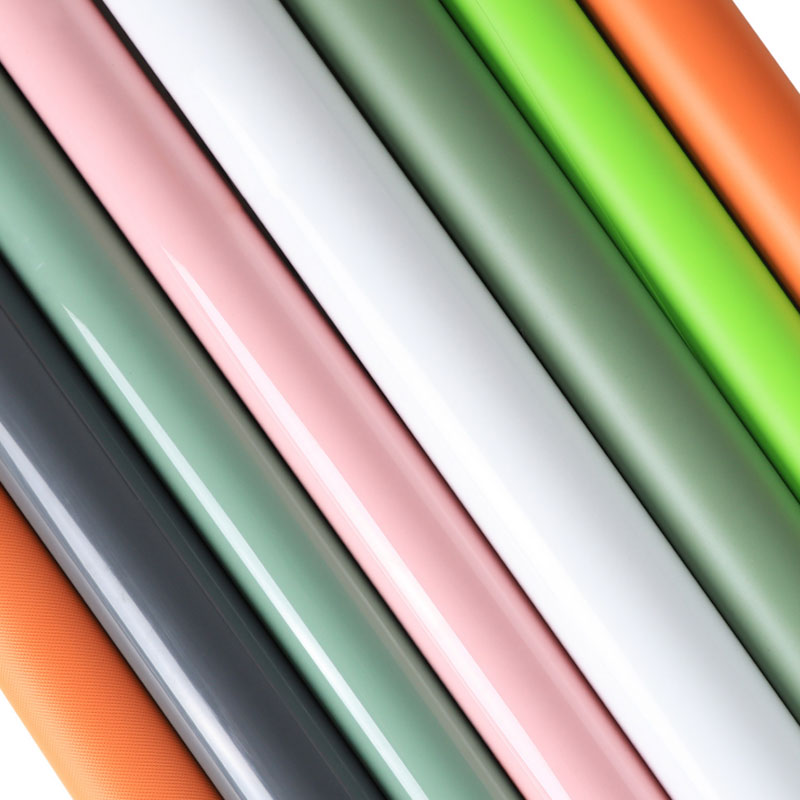
After the primary extrusion step, Solid Color PVC Edge Banding typically undergoes surface treatment to enhance its performance and aesthetic properties. This may include corona treatment to improve adhesive bonding receptivity, UV coating application to increase scratch and abrasion resistance, or embossing to introduce a subtle texture that reduces fingerprint visibility. The surface treatment stage is where premium products differentiate themselves from basic commodity strips—buyers should request technical data on surface hardness and coating adhesion when evaluating suppliers.
Thickness and Width Specifications: Matching the Right Dimension to the Application
Selecting the correct thickness and width specifications is one of the most consequential decisions in the edge banding sourcing process. Specifying the wrong dimension results in either a visually mismatched edge, an adhesion failure, or a profile that cannot be trimmed cleanly with standard edge banding machinery. Solid Color PVC Edge Banding is available across a well-defined specification range that maps to specific furniture and cabinetry applications.
Thickness Range: 0.35mm to 1.2mm
The standard thickness range for Solid Color PVC Edge Banding runs from 0.35mm to 1.2mm. Each point in this range serves a distinct functional purpose:
- 0.35mm – 0.45mm (thin): Used for post-form applications and curved panel edges where the strip must conform to tight radii without cracking. Also appropriate for lightweight decorative paneling where edge protection requirements are minimal and a near-flush finish is desired.
- 0.5mm – 0.8mm (standard): The most widely specified range for flat-panel furniture—shelving, cabinet carcasses, drawer fronts, and wardrobe interiors. Provides sufficient mechanical protection for normal use while remaining fully compatible with standard automatic edge banding machines.
- 1.0mm – 1.2mm (heavy duty): Specified for high-traffic commercial furniture, worktops, and applications where edge impact resistance is a priority. The increased mass provides better protection against chipping and delamination at the panel corner. May require adjusted trimming parameters on automated machinery.
Width Range: 12mm to 60mm
The width specification must correspond to the thickness of the panel substrate being edged, with sufficient overhang on both faces to allow clean flush trimming. Solid Color PVC Edge Banding is produced in widths from 12mm to 60mm to cover the full range of panel thicknesses used in furniture and interior construction:
| Edge Banding Width | Typical Panel Thickness | Common Application |
|---|---|---|
| 12mm – 18mm | 9mm – 15mm | Thin shelves, lightweight panels, interior liners |
| 22mm – 25mm | 18mm – 22mm | Standard cabinet carcass, wardrobe panels, shelving |
| 28mm – 35mm | 25mm – 30mm | Kitchen cabinet doors, worktop edges, desk surfaces |
| 40mm – 60mm | 35mm – 50mm+ | Thick countertops, commercial furniture, staircase paneling |
Performance Properties: Flexibility, Wear Resistance, and Chemical Resistance
The material properties of Solid Color PVC Edge Banding make it suitable for demanding furniture environments where appearance and durability must both be maintained over a long service life. Three properties are particularly important for specifying and evaluating product quality.
Flexibility is a direct function of the PVC compound formulation and the extrusion molding conditions. High-flexibility grades can be bent to radii of 5mm or below without surface cracking, enabling application on curved panel edges and post-formed profiles. This is especially relevant for customized cabinet doors and radius-edged kitchen furniture where rigid edge banding would fail at the curve.
Wear resistance determines how well the banding surface holds up against everyday friction—the repeated contact of objects placed on shelves, abrasion from cleaning cloths, and impact at cabinet corners. Higher-grade solid color PVC strips incorporate hard surface coatings applied after extrusion that significantly extend surface life compared to uncoated material.
Chemical corrosion resistance is critical for kitchen and bathroom furniture, where the edge banding is regularly exposed to cleaning agents, food acids, grease, and moisture. PVC as a base material naturally resists most common household chemicals, and quality-grade solid color strips maintain surface integrity and color stability through prolonged exposure to these conditions without yellowing, softening, or delaminating.
Environmental Compliance: RoHS and REACH Standards Explained
For manufacturers supplying furniture to European markets or operating within global supply chains that require verified material safety, environmental compliance certification is a non-negotiable requirement. Solid Color PVC Edge Banding that complies with RoHS (Restriction of Hazardous Substances) and REACH (Registration, Evaluation, Authorisation and Restriction of Chemicals) regulations provides documented assurance that the product does not contain restricted substances above threshold levels.
RoHS compliance confirms the absence of heavy metals including lead, cadmium, hexavalent chromium, and mercury in the PVC compound—substances that were historically used as heat stabilizers in PVC processing and are now prohibited. REACH compliance addresses a broader list of substances of very high concern (SVHCs) and requires manufacturers to document their supply chain chemical inputs to ensure no restricted compounds are present in the finished product. When sourcing Solid Color PVC Edge Banding for regulated markets, buyers should request current compliance declarations and third-party test reports alongside product samples.
Application Scenarios and Sourcing Recommendations
Solid Color PVC Edge Banding is applied across a wide range of furniture and interior construction contexts. Its most common applications include:
- Furniture panel edge sealing: Particleboard and MDF panels used in flat-pack and assembled furniture require edge sealing to prevent moisture absorption and surface delamination at exposed cross-sections.
- Interior decoration: Wall paneling, fitted furniture, and built-in storage systems benefit from color-matched edge banding that creates a seamless, finished appearance at all visible edges.
- Customized cabinet manufacturing: Kitchen, bathroom, and office cabinetry producers apply solid color PVC banding to match panel face colors precisely, maintaining design consistency across complex assemblies.
When sourcing, request full technical data sheets that specify the thickness and width specifications, compound formulation details, flexibility rating, surface hardness, and compliance certifications. Evaluate samples under consistent lighting conditions to verify color accuracy against the target board surface. Confirm that the supplier's extrusion molding process includes in-line dimensional monitoring and surface inspection, as these controls are the most reliable indicators of consistent batch quality over time.
Recommended Articles
-
1.1 What is PP Decorative Film? PP decorative film is a type of surface material made primarily from polypropylene, a versatile and widely used thermoplastic po...
View More -
Is your furniture looking tired, outdated, or damaged? Imagine transforming it effortlessly into something stunning, durable, and uniquely yours. Enter PVC deco...
View More -
1.Introduction Edge banding is a crucial finishing process used in woodworking and furniture manufacturing to cover and seal the exposed sides of materials such...
View More
Xuanyi

Feel free to contact us
Xuanyi, dedicated to the application and research and development of new materials. Furniture Decorative Film Maufacturers and Factory.
Product Fast Links
Contact Information
-
 Room G, 4th Floor, Bailingshi Building, Haizhou Street, Haining City, Jiaxing City, Zhejiang Province, 314400, China
-
 [email protected]
-
 +86-15059290610
-
 +86-15059290610
Copyright © 2024Jiaxing Xuanyi International Trade Co.,Ltd All Rights Reserved. PVC/PP/PET Lamination Film for MDF WPC Plywood

