
 English
 Español
 عربى
عربى


Industry News
Super Matte Soft Touch PVC Film Guide
2026-04-29
Content
Material Composition and Tactile Engineering
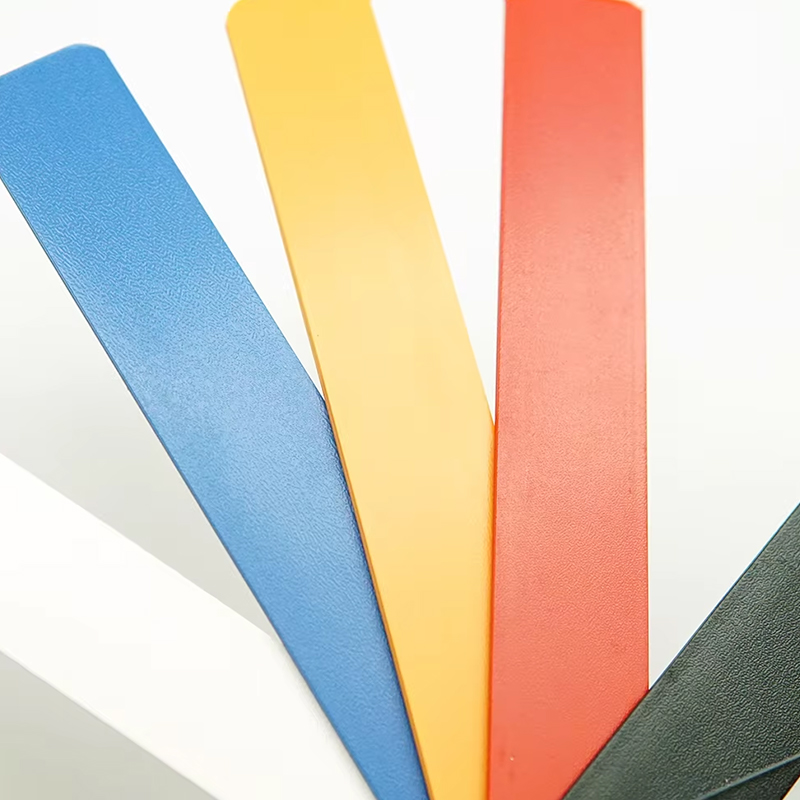
The development of advanced surface overlays has shifted toward materials that combine visual subtlety with exceptional tactile feedback. As a specialized variant within the broader PVC Decorative Film category, the Super Matte Soft Touch PVC Decorative Film utilizes a precisely calibrated polymer matrix that eliminates surface gloss while delivering a distinctive velvety finish. The base resin formulation incorporates modified plasticizers and micro-particle matting agents that migrate to the surface during extrusion, creating a controlled topography that diffuses light and reduces specular reflection. This molecular arrangement produces a smooth, silk-like hand feel reminiscent of natural peach skin or infant tactile surfaces, which significantly elevates the perceived quality of wrapped components. Manufacturers achieve this texture without relying on heavy post-extrusion coatings, ensuring that the material maintains structural flexibility and dimensional stability across varying production environments.
The engineering behind this tactile performance requires strict control over polymer chain orientation and additive dispersion. During calendering and casting processes, resin viscosity, roll temperature differentials, and cooling rates are synchronized to prevent micro-void formation or surface irregularities. The resulting film exhibits uniform thickness tolerances typically ranging between zero point one millimeters and zero point three millimeters, allowing consistent adhesion on flat substrates and complex three-dimensional profiles. Unlike standard glossy or lightly textured alternatives, the ultra-matte formulation incorporates cross-linking surface modifiers that enhance cohesion between the polyvinyl chloride backbone and the outer friction layer. This structural integrity ensures that the material retains its soft hand feel even after repeated mechanical stress, thermal cycling, and exposure to ambient humidity fluctuations common in residential and commercial interiors.
Surface Architecture and Anti-Scuff Performance
A critical advantage of this overlay lies in its engineered anti-scuff properties, which directly address the wear patterns associated with high-contact furniture and architectural millwork. Traditional decorative surfaces often degrade through micro-abrasions caused by routine cleaning, object placement, and human interaction, resulting in visible gloss patches, fingerprint retention, and color shift over time. The Super Matte Soft Touch PVC Decorative Film counteracts these degradation pathways through a dual-layer surface architecture. The primary matting layer utilizes silica-based and organic wax derivatives that establish a low-friction boundary, while a secondary UV-cured topcoat forms a resilient network that dissipates localized pressure without compromising the velvety aesthetic. This combination reduces the coefficient of friction enough to prevent drag-induced scuffing while maintaining sufficient grip to avoid slippery handling during installation and daily use.
Laboratory testing confirms that the anti-scuff formulation resists surface deformation under standardized abrasion cycles, maintaining consistent optical density and tactile uniformity. The material effectively masks minor surface imperfections on underlying substrates, such as wood grain variations, MDF edge porosity, or minor machining marks, which simplifies quality control requirements for manufacturers. Furthermore, the non-porous surface chemistry prevents the absorption of oils, moisture, and common household contaminants, eliminating the need for aggressive chemical cleaners. This characteristic proves particularly valuable in kitchen cabinetry, healthcare furniture, and high-traffic commercial installations where hygiene standards and aesthetic longevity must coexist without frequent refinishing or panel replacement.
Application Workflows and Lamination Techniques
Successful integration of thermal lamination films requires precise alignment between adhesive systems, substrate preparation, and equipment calibration. The Super Matte Soft Touch PVC Decorative Film is primarily engineered for one-sided lamination but performs equally effectively in double-sided configurations when symmetric tension control and matched curing profiles are maintained. Substrate preparation begins with thorough surface cleaning using lint-free wipes and isopropyl-based solutions to eliminate machining residues, dust particulates, and natural oils. For porous materials like medium-density fiberboard or particleboard, a light sanding pass followed by primer sealing ensures uniform adhesive penetration and prevents outgassing during thermal activation. Non-porous substrates such as metal, glass-reinforced panels, or high-pressure laminates require surface activation through flame treatment or plasma corona discharge to increase surface energy and promote mechanical interlocking.
Adhesive selection directly influences bond strength, flexibility, and long-term edge retention. Water-based polyurethane dispersions, solvent-free hot melt systems, and single-component moisture-curing polyurethanes represent the most reliable options for this film type. The adhesive must exhibit low initial viscosity to wet the substrate thoroughly, followed by controlled open time to accommodate manual positioning or automated feeding. During thermal lamination, heated pressure rollers typically operate between eighty and one hundred twenty degrees Celsius, depending on film thickness and adhesive formulation. Pressure settings range from two to four bar, ensuring complete contact without compressing the micro-textured surface or forcing adhesive bleed-through along edges. Operators must synchronize feed rates with cooling conveyor speeds to prevent thermal shock, which can induce internal stress or micro-wrinkling in the final assembly.
Vacuum Pressing and Thermal Bonding Parameters
Vacuum pressing applications demand careful management of temperature gradients, membrane contact pressure, and dwell time to achieve seamless contour wrapping. The material responds optimally to vacuum pressures between zero point six and zero point eight bar, which draws the film tightly around edges, radiused corners, and recessed profiles without stretching beyond its elastic recovery threshold. Pre-heating cycles should gradually raise substrate temperature to sixty to seventy degrees Celsius before initiating vacuum draw, allowing the polyvinyl chloride matrix to soften uniformly and conform to complex geometries. Rapid temperature spikes cause localized thinning or surface gloss variation, while insufficient heat results in incomplete adhesion and visible edge lifting during post-processing.
Post-lamination cooling requires controlled environmental conditions to stabilize the bond line and prevent residual stress accumulation. Assemblies should remain undisturbed for a minimum of twenty-four hours before routing, drilling, or edge trimming operations. When cutting wrapped components, diamond-tipped or carbide blades with negative rake angles minimize fiber pull-out and film delamination. Sealants and edge banding must demonstrate chemical compatibility with the polyvinyl chloride base to avoid plasticizer migration or adhesive softening over time. Proper workflow sequencing ensures that the final product maintains dimensional accuracy, surface consistency, and structural reliability across its intended service life.
| Surface Characteristic | Standard Gloss PVC Film | Super Matte Soft Touch PVC Decorative Film |
| Light Reflection | High (80+ gloss units) | Ultra-Low (5-8 gloss units) |
| Fingerprint Visibility | High | Minimal |
| Abrasion Resistance | Moderate | High (Anti-Scuff Coated) |
| Ideal Application | Display Panels, Signage | Cabinetry, Furniture, Wall Panels |
Commercial Viability and Lifecycle Maintenance
Market adoption of premium surface materials depends heavily on cost efficiency, production scalability, and long-term performance predictability. The Super Matte Soft Touch PVC Decorative Film delivers competitive pricing relative to natural veneers, acrylic laminates, and powder-coated alternatives while maintaining consistent batch-to-batch color accuracy and tactile uniformity. Manufacturers benefit from reduced material waste during vacuum wrapping operations, as the film exhibits excellent stretch recovery and edge sealing properties that minimize trim requirements and reject rates. Retailers and interior designers value the material for its ability to elevate product positioning without compromising margin structures, making it a strategic choice for mid-range to premium furniture lines, architectural millwork, and residential renovation projects.
Lifecycle management requires adherence to structured cleaning protocols that preserve the anti-scuff surface and prevent chemical degradation. Routine maintenance eliminates the need for abrasive polishing compounds or solvent-based degreasers that compromise the matte topography. Instead, facility managers and end users should implement gentle cleaning routines using pH-neutral detergents and microfiber applicators to remove surface contaminants without altering friction coefficients. Periodic inspection of high-contact zones helps identify early signs of edge wear or adhesive softening, allowing targeted maintenance before full panel replacement becomes necessary. When integrated correctly, the material sustains its aesthetic and functional properties through years of daily use while meeting stringent indoor air quality and environmental compliance standards.
- Apply pH-neutral cleaning agents diluted according to manufacturer specifications to avoid surface etching or gloss disruption.
- Use lint-free microfiber cloths with gentle circular motions to remove dust, oils, and daily residues without abrading the matte layer.
- Avoid ammonia-based cleaners, alcohol concentrates, and abrasive scouring pads that degrade the cross-linked topcoat and alter tactile feedback.
- Inspect seam boundaries and edge profiles quarterly to verify adhesive integrity and address localized lifting before moisture infiltration occurs.
- Coordinate end-of-life disposal through certified recycling channels to recover polyvinyl chloride components and support circular material management initiatives.
The strategic deployment of this material across residential, commercial, and industrial applications demonstrates how advanced polymer engineering directly translates to user satisfaction and operational efficiency. By aligning installation parameters with material characteristics and maintaining disciplined surface care routines, manufacturers and facility operators achieve reliable performance metrics while optimizing production costs. The combination of tactile refinement, anti-scuff durability, and versatile lamination compatibility positions this film as a foundational solution for modern interior manufacturing, supporting consistent quality standards across diverse design requirements and environmental conditions.
Recommended Articles
-
1.1 What is PP Decorative Film? PP decorative film is a type of surface material made primarily from polypropylene, a versatile and widely used thermoplastic po...
View More -
Is your furniture looking tired, outdated, or damaged? Imagine transforming it effortlessly into something stunning, durable, and uniquely yours. Enter PVC deco...
View More -
1.Introduction Edge banding is a crucial finishing process used in woodworking and furniture manufacturing to cover and seal the exposed sides of materials such...
View More
Xuanyi

Feel free to contact us
Xuanyi, dedicated to the application and research and development of new materials. Furniture Decorative Film Maufacturers and Factory.
Product Fast Links
Contact Information
-
 Room G, 4th Floor, Bailingshi Building, Haizhou Street, Haining City, Jiaxing City, Zhejiang Province, 314400, China
-
 [email protected]
-
 +86-15059290610
-
 +86-15059290610
Copyright © 2024Jiaxing Xuanyi International Trade Co.,Ltd All Rights Reserved. PVC/PP/PET Lamination Film for MDF WPC Plywood

