
 English
 Español
 عربى
عربى
 Home / Blog / Industry News / Furniture Wrapping Guide: PVC, PP and PET Decorative Films for Cabinet Surfaces
Industry News
Furniture Wrapping Guide: PVC, PP and PET Decorative Films for Cabinet Surfaces
2026-09-08
Picture a mid-sized cabinet factory that receives a rush order for 300 thermofoil doors in three wood tones. The production manager has to choose between sanding and painting each MDF panel or pressing a wood-grain film onto the surface. In most situations, furniture wrapping with decorative film wins. It delivers a consistent finish in minutes per door, uses far less labor than spraying, and lets the shop switch between oak, walnut and grey tones without reconfiguring an entire paint line.
Furniture wrapping with a properly matched decorative film typically produces a uniform surface within minutes per door, avoids long drying schedules, and allows fast colour changes without investing in a new finishing line.
Content
Core Principles of Furniture Wrapping
Furniture wrapping is not a single technique. In practice, it covers three related processes: vacuum pressing, flat lamination and profile wrapping. All three use heat, pressure and an adhesive to conform a film to a substrate. The film itself usually has three layers: a carrier substrate (PVC, PP or PET), a printed design layer and a protective top coat.
- Vacuum pressing: the film is heated and pulled by vacuum around routed MDF door profiles, creating a seamless wrap over edges and recesses.
- Flat lamination: the film is pressed onto flat particleboard or plywood panels using heated rollers.
- Profile wrapping: a continuous film is applied to linear edges, rails or narrow mouldings with hot-melt adhesive.
Choosing the right carrier layer comes down to formability, durability and the end-use environment. For a manufacturer, this decision affects scrap rates as much as final appearance. Working with a supplier that controls the complete coating process can simplify that decision, because the film’s thickness, adhesive and surface finish have already been matched during an integrated manufacturing flow.
What happens at the film level
The printed wood-grain layer sits between a colored base film and a clear protective coating. When the film is heated during vacuum pressing, this multi-layer structure stretches evenly if the carrier has been formulated with enough plasticizer or calendering consistency. That is why the same decorative pattern can look different on PVC versus PP versus PET: each substrate responds differently to heat and depth of draw.
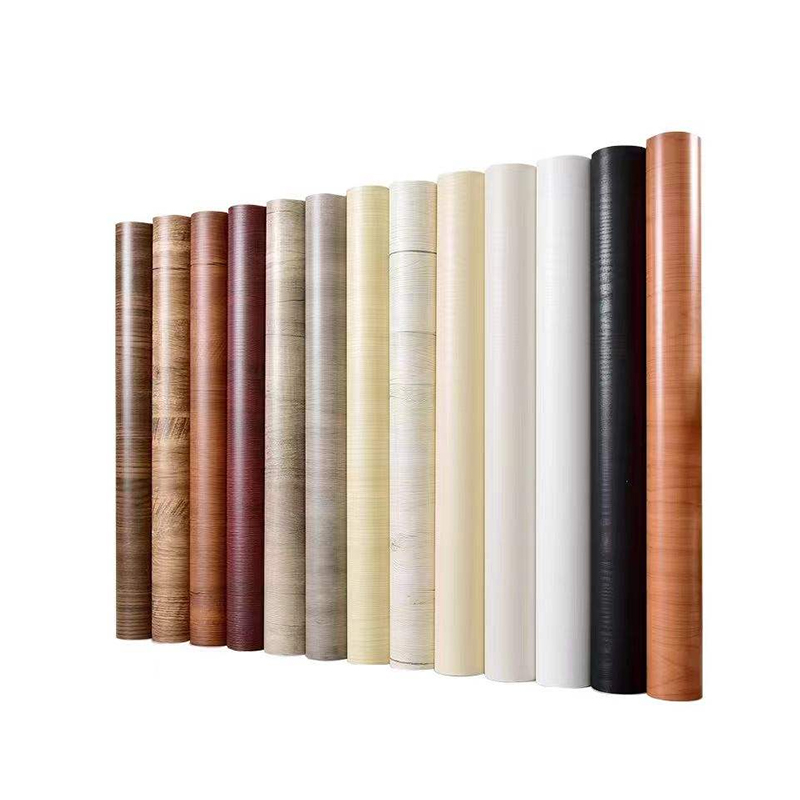
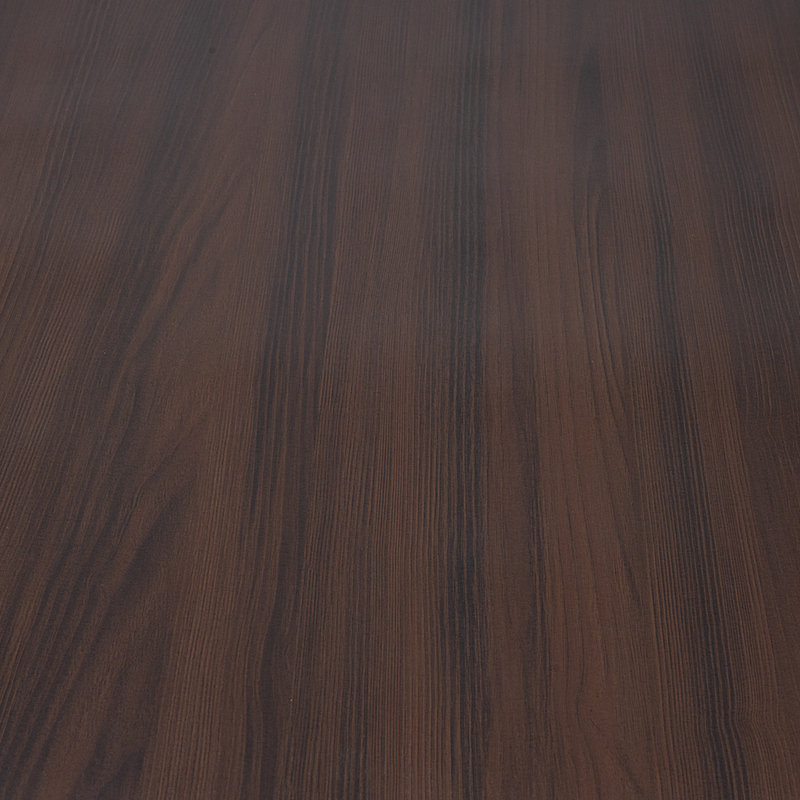
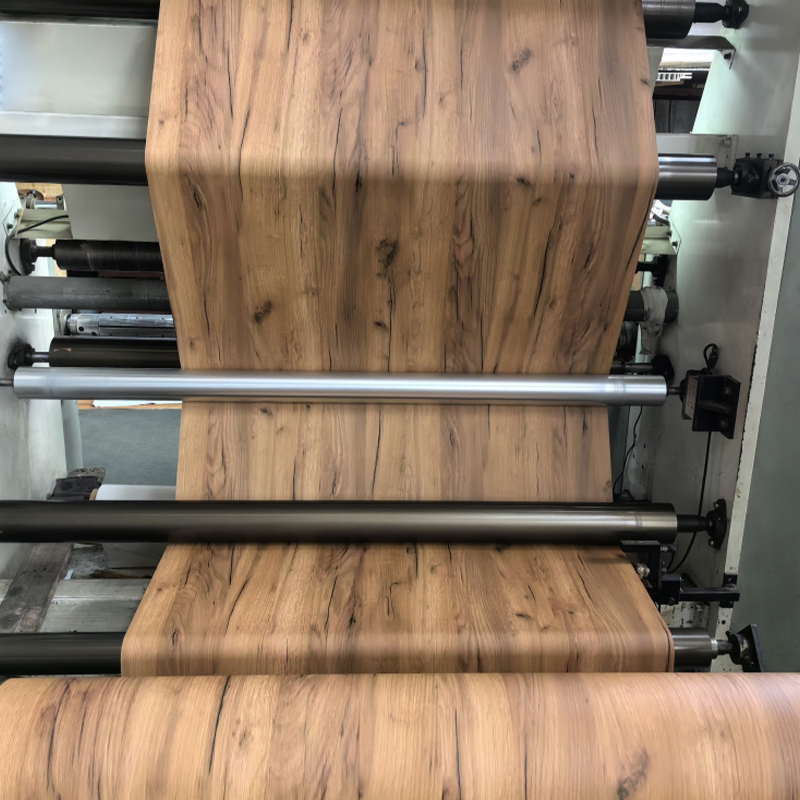 Wood Grain PVC Decorative Film for Furniture and PanelsThis PVC decorative film features a printed wood-grain layer over a colored base with a clear coating. It is available in thicknesses from 0.12 to 0.80 mm and suits vacuum pressing, lamination, and profile wrapping.View Product → — a proven option for vacuum pressing and flat lamination when deep profiles and tight corners are part of the daily batch.
Material Comparison: PVC vs PP vs PET
There is no single “best” film for every cabinet. The table below gives typical characteristics that buyers and factory teams should check before ordering. Exact values depend on thickness, adhesive type and surface lacquer, so treat these numbers as a starting point rather than a specification.
Table 1. Typical characteristics of PVC, PP and PET decorative films used in furniture wrapping.
Property
PVC
PP
PET
Formability
High
Medium-high
Medium
Heat resistance
Up to 70°C
Up to 80°C
Up to 120°C
Chemical resistance
Good
Better
Best
Environmental profile
Contains chlorine
Halogen-free
Recyclable, low odor
Common applications
Membrane-pressed doors, curved fronts
Flat panels, minimal-risk profiles
High-heat or high-scuff areas
A practical way to read this: if the design department asks for deep 3D grain on a routed door, PVC remains easier to form. If the end customer is a hotel that specifies low-emission materials, PP or PET will be easier to justify in the compliance file. If you are not sure, order a sample fan with the actual film thickness and run a vacuum test on the same substrate you plan to use.
Hidden Performance Indicators
Surface adhesion, scratch resistance and cleanability are not always written in bold on a film’s technical sheet, but they are the metrics that decide whether a wrapped cabinet survives daily use. The chart below shows a simplified internal comparison of relative abrasion resistance for furniture wrapping films. It is not a test standard; it is an angular way of reminding buyers that “wood grain finish” is only part of the story.
These relative scores underline a common buying mistake: selecting a film purely on colour and price. A slightly higher investment in PET or a scratch-resistant top coat often reduces warranty claims and keeps furniture looking clean near handles, desks and kitchen worktops.
Industry Application Breakdown
Furniture wrapping is not limited to kitchen cabinets. From our conversations with laminators and furniture plants, the same film families appear again and again in different product lines. The pie chart below gives a rough distribution of where furniture wrapping films are typically used, based on manufacturer inquiries rather than official market statistics.
- Kitchen cabinets and doors — 40%
- Wardrobe and closet systems — 25%
- Interior doors and panels — 20%
- Retail and commercial furniture — 15%
For factories that supply several of these segments, the practical implication is simple: standardize the film carrier where possible, but keep three or four surface textures in the warehouse. Wood grain, solid colour and a low-sheen matt finish cover most requests without forcing a full inventory change.
Selection, ROI and Workflow
Most furniture wrapping decisions come down to total cost per finished panel, not film cost alone. A cheaper film that fails adhesion or scratches easily increases rework and delivery delays. A more stable film from a supplier that offers matched edge banding can lower overall risk.
- Define the substrate and wrapping method first. A high-moisture MDF edge needs a different adhesive system than a flat plywood panel.
- Choose carrier type and thickness. 0.15–0.20 mm film is common for flat lamination; 0.30–0.45 mm film is typical for deep vacuum pressing.
- Match the film’s adhesive layer to your line speed and pressing temperature. Ask the supplier for a process window before you order a full roll.
- Run a small prototype with your own machine. This reveals poor film release, surface marks or edge lifting that charts cannot show.
- Calculate ROI using rejected parts, pressing time and line downtime, not just the material price. A detailed look at wrapped door costs can save a surprisingly large amount per batch.
If you want to compare wrapped cabinet doors against painted or laminated alternatives, our earlier analysis of vinyl-wrapped door costs and ROI explains the factors that affect payback.
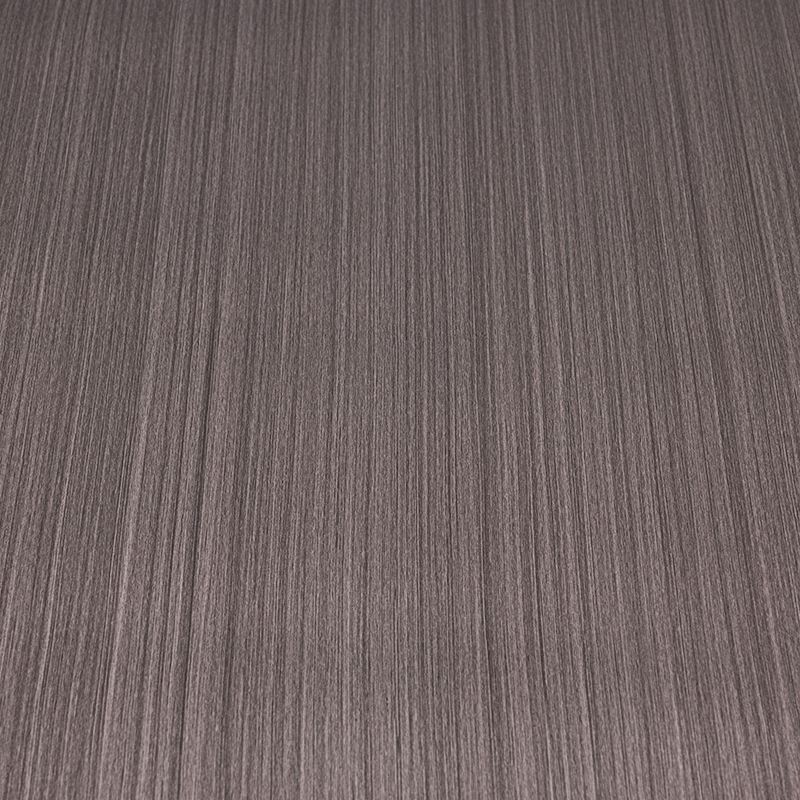
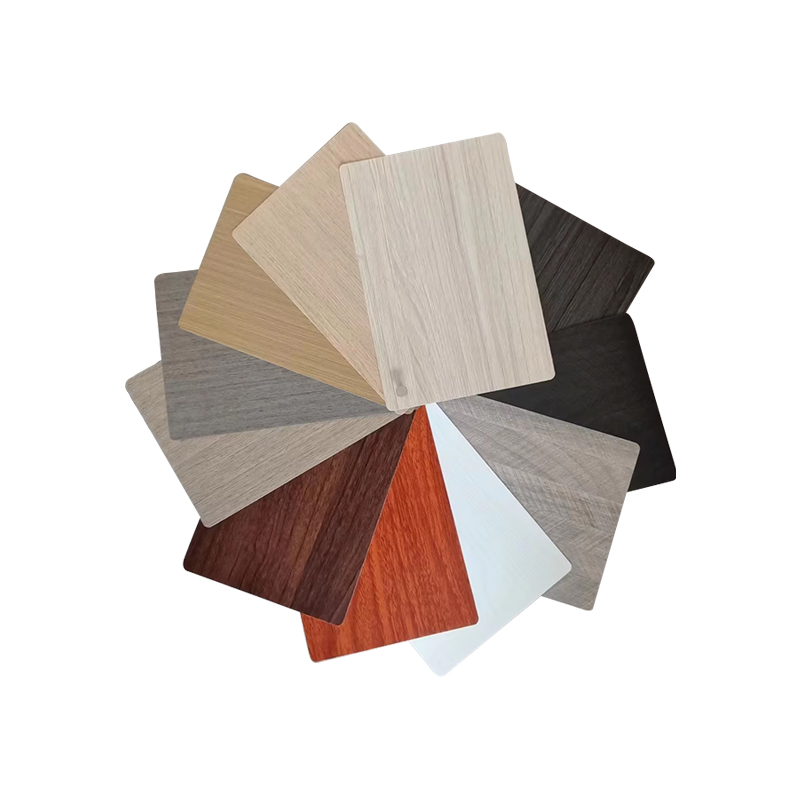 Wood Grain PET Decorative Film with Higher Heat ResistanceA PET-based film that replicates wood grain through gravure or digital printing, offering thermal stability from -40°C to 150°C. It is suited for premium furniture and architectural cladding where better heat resistance is preferred.View Product → — a good candidate for projects that demand low odor, higher heat resistance or a stronger environmental story.
Maintenance and Compliance
A wrapped cabinet surface is easy to maintain when the film is properly applied and the top coat is intact. Dust with a soft cloth, clean with mild soap and water, and avoid abrasive pads or solvents. For kitchen fronts near a hob, check the film’s heat rating; a PET film can handle more heat than most PVC films, but no decorative film should sit directly over intense steam or open flame.
Compliance is just as important as cleaning. Buyers in Europe and North America often ask for REACH, CARB Phase 2 or similar VOC limits. If the project involves schools, healthcare or hospitality, halogen-free PP or PET films are easier to document. A responsible film supplier should be willing to share material structure, adhesive type and emission data before you sign a contract.
For quick maintenance fixes on existing furniture, a self-adhesive film can cover scratches without shutting down a production line. It is not a substitute for vacuum-pressed film on complex profiles, but it works well on flat internal panels and drawer fronts.
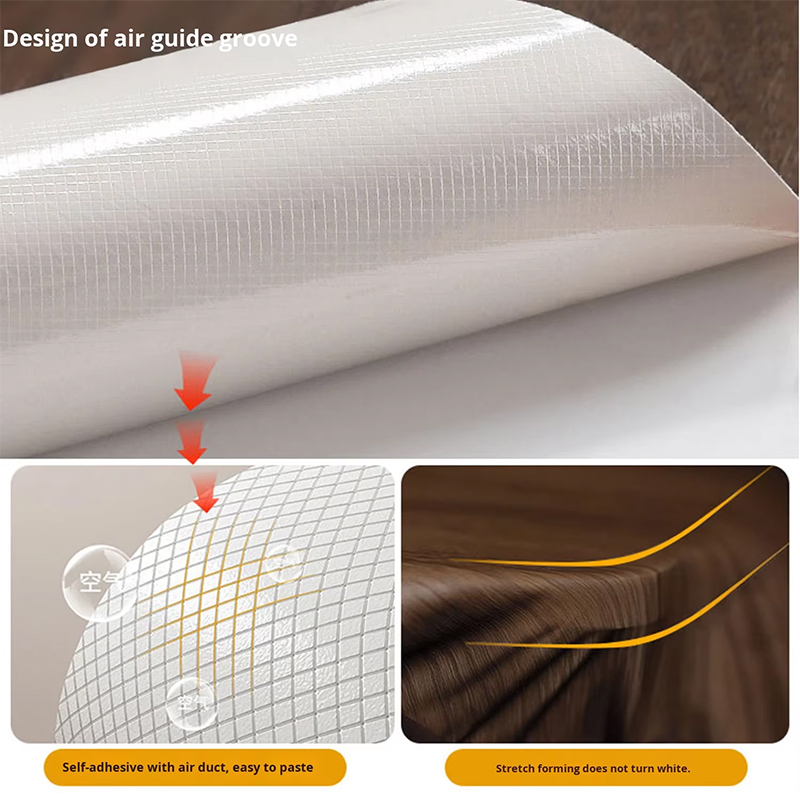
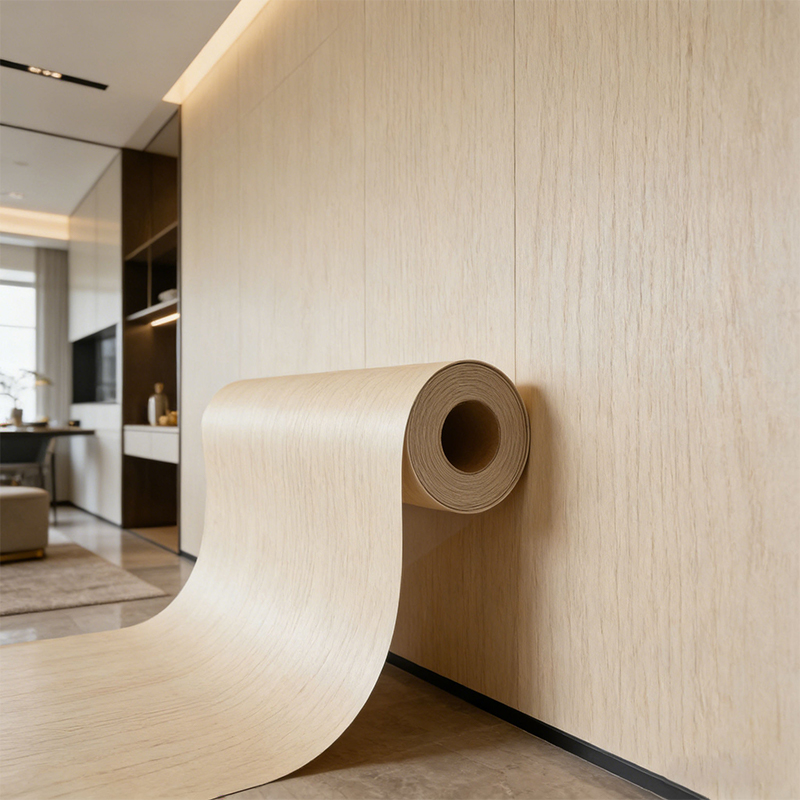 Light Oak Self-Adhesive Decorative Film for Quick RefacingThis self-adhesive film with a light oak grain provides a realistic pattern for covering scratches or refreshing flat surfaces. It works well on internal panels and drawer fronts without requiring production-line shutdowns.View Product → — useful for small repairs, display mock-ups and retail fitting projects where quick application matters more than deep-form performance.
Recommended Articles
-
1.1 What is PP Decorative Film? PP decorative film is a type of surface material made primarily from polypropylene, a versatile and widely used thermoplastic po...
View More -
Is your furniture looking tired, outdated, or damaged? Imagine transforming it effortlessly into something stunning, durable, and uniquely yours. Enter PVC deco...
View More -
1.Introduction Edge banding is a crucial finishing process used in woodworking and furniture manufacturing to cover and seal the exposed sides of materials such...
View More
Xuanyi

Feel free to contact us
Xuanyi, dedicated to the application and research and development of new materials. Furniture Decorative Film Maufacturers and Factory.
Product Fast Links
Contact Information
-
 Room G, 4th Floor, Bailingshi Building, Haizhou Street, Haining City, Jiaxing City, Zhejiang Province, 314400, China
-
 [email protected]
-
 +86-15059290610
-
 +86-15059290610
Copyright © 2024Jiaxing Xuanyi International Trade Co.,Ltd All Rights Reserved. PVC/PP/PET Lamination Film for MDF WPC Plywood

